
How Green Is the High Court
Five cases put environmental laws to the test
The justices this term have taken five environmental cases for decision thus far — a significant number for a relatively small docket. With the exception ofthe already argued case involving Navy sonar and its impact on whales and other marine mammals, this environmental quintet is unlikely to arouse public passions.
But all five cases raise bread-and-butter environmental issues, some with potentially huge implications for the ability of environmentalists and the government to enforce the nation’s major environmental laws and for the wherewithal of business and industry to survive and prosper under those laws.
APPORTIONMENT OF LIABILITY
And, finally, Burlington Northern v. U.S., No. 07-1601, consolidated with Shell Oil v. U.S., No. 07-1607, also has potentially wide ramifications, all contend. The Court faces questions about the standards for apportioning liability among parties for Superfund site cleanups and for imposing so-called “arranger” liability under the same law. The companies here are challenging the 9th Circuit’s refusal to apportion liability and its imposition of joint and several liability as well as arranger liability.
“We have numerous Superfund sites where there’s litigation as to who is responsible for what,” said Kamenar. “Congress intended courts to use common law and the Restatement of Torts for apportioning liability among potentially responsible parties. It’s only if that cannot be done on a reasonable basis, then and only then, does joint and several liability kick in. The case is very important in terms of the standard courts should use in apportioning liability, particularly where there are no records of who did what.”
The issue of arranger liability is also “crucial” to industries such as chemical and pesticides, he added. “Any time a company sells a product to a buyer, if the buyer spills some of chemicals or whatever on the property, which becomes a Superfund site, can the seller be held liable?” he said. “Here the court said Shell was jointly and severally liable.”
In the end, Echeverria predicted, “If one were a gambler, one would bet a majority of the cases the Supreme Court has agreed to hear will come out against the environment.”
The above are extracts from the article.
This website and sisters royaldutchshellplc.com, shellnazihistory.com, royaldutchshell.website, johndonovan.website, and shellnews.net, are owned by John Donovan. There is also a Wikipedia segment.


 Royal Dutch Shell conspired directly with Hitler, financed the Nazi Party, was anti-Semitic and sold out its own Dutch Jewish employees to the Nazis. Shell had a close relationship with the Nazis during and after the reign of Sir Henri Deterding, an ardent Nazi, and the founder and decades long leader of the Royal Dutch Shell Group. His burial ceremony, which had all the trappings of a state funeral, was held at his private estate in Mecklenburg, Germany. The spectacle (photographs below) included a funeral procession led by a horse drawn funeral hearse with senior Nazis officials and senior Royal Dutch Shell directors in attendance, Nazi salutes at the graveside, swastika banners on display and wreaths and personal tributes from Adolf Hitler and Reichsmarschall, Hermann Goring. Deterding was an honored associate and supporter of Hitler and a personal friend of Goring.

 Deterding was the guest of Hitler during a four day summit meeting at Berchtesgaden. Sir Henri and Hitler both had ambitions on Russian oil fields. Only an honored personal guest would be rewarded with a private four day meeting at Hitler’s mountain top retreat.


 IN JULY 2007, MR BILL CAMPBELL (ABOVE, A RETIRED GROUP AUDITOR OF SHELL INTERNATIONAL SENT AN EMAIL TO EVERY UK MP AND MEMBER OF THE HOUSE OF LORDS:


 MORE DETAILS:


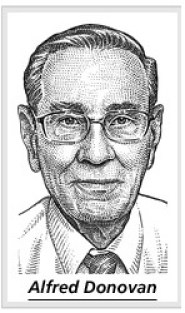 A head-cut image of Alfred Donovan (now deceased) appears courtesy of The Wall Street Journal.