
SINGAPORE, Oct 23 (Reuters) – Oil majors like Shell and Total may emerge unexpected winners from the global credit crisis, as their trading teams fill the void left by battered investment banks, the head of independent trader Arcadia said on Wednesday.
And while Arcadia’s derivatives trading volumes have halved in recent months as credit counterparty anxieties cripple over-the-counter trade across the industry, CEO Peter Bosworth told Reuters he expected oil trading houses to weather the storm as rising margins offset falling volumes.
‘The big gainers will be the Shells, BPs, Totals… oil companies with sophisticated trading departments,’ Bosworth, who’s been an oil trader for 20 years, said in an interview.
‘They will be the new investment bankers of the industry,’ he told Reuters on the sidelines of the Asian oil trading industry’s biggest conference of the year.
Long skilled at managing their own risks, majors such as BP Plc and Royal Dutch Shell have boosted efforts in recent years to sell their expertise to airlines or utilities who aim to hedge their exposure to volatile prices, and grab a bigger piece of the billion-dollar energy risk management business.
Airlines could deal with majors directly for jet fuel hedging for instance, Bosworth said, as banks tighten their business and some corporates grew more wary of dealing with banks after the collapse of Lehman Brothers and last-ditch rescue of others.
The transformation of Morgan Stanley and Goldman Sachs <GS.N> into commercial banks may also leave the industry’s dominant derivatives traders with
less appetite for risk.
That could open the door for oil majors to provide services that banks normally offer, such as bundling project finance or loan deals together with hedging, while maintaining some of their own conservative business model at a time of crisis.
BUSINESS HALVES
Arcadia, which counts itself as one of the five largest players in the paper or derivatives trading market, has been hit like most of its peers by shrinking over-the-counter trade as unprecedented price volatility and heightened concern over counterparty credit risk drive many traders to the sidelines.
Arcadia is now trading about 4 million barrels per day (bpd) of derivatives, down from 6-8 million bpd, and Bosworth does not expect to see any growth next year.
But the veteran trader, who started off at U.S. refiner Sun Refining and Marketing and has worked for Arcadia for 17 years, still expects trading companies to survive the crisis.
‘There will be less business but higher margins. Traders’ margins should improve because if people need to do business, they will have fewer parties to do it with,’ Bosworth said.
A strong balance sheet will also keep trading firms afloat and Arcadia, which holds no assets other than a storage facility being built in Cushing, Oklahoma, is banking on the firm’s lack of debt and strong capital.
‘I am not saying that we are stronger than other companies but we are more flexible,’ he said.
London-based Arcadia was founded by Japan’s second-largest trading house Mitsui & Co in 1988 and sold in 2006 to Cyprus-based Farahead Holding Ltd, part of a group of companies involved in oil shipping and offshore drilling.
It trades about 1.2 million bpd of physical crude this year, and would stay around that level in 2009, Bosworth said.
Arcadia also trades refined oil products, but on a much smaller scale.
On the future of oil prices, Bosworth said he expected the Organization of the Petroleum Exporting Countries to cut production by about 1.0 million and 1.5 million bpd at the cartel’s emergency meeting on Friday, helping stabilise prices after they more than halved from July’s record high above $147.
‘Oil in the $60s, $70s would be good’ in the short term, he said, with prices at between $80 and $100 seen as reasonable for the longer term.
(Editing by Ramthan Hussain) . lw
Copyright Thomson Financial News Limited 2008. All rights reserved.
This website and sisters royaldutchshellplc.com, shellnazihistory.com, royaldutchshell.website, johndonovan.website, and shellnews.net, are owned by John Donovan. There is also a Wikipedia segment.


 Royal Dutch Shell conspired directly with Hitler, financed the Nazi Party, was anti-Semitic and sold out its own Dutch Jewish employees to the Nazis. Shell had a close relationship with the Nazis during and after the reign of Sir Henri Deterding, an ardent Nazi, and the founder and decades long leader of the Royal Dutch Shell Group. His burial ceremony, which had all the trappings of a state funeral, was held at his private estate in Mecklenburg, Germany. The spectacle (photographs below) included a funeral procession led by a horse drawn funeral hearse with senior Nazis officials and senior Royal Dutch Shell directors in attendance, Nazi salutes at the graveside, swastika banners on display and wreaths and personal tributes from Adolf Hitler and Reichsmarschall, Hermann Goring. Deterding was an honored associate and supporter of Hitler and a personal friend of Goring.

 Deterding was the guest of Hitler during a four day summit meeting at Berchtesgaden. Sir Henri and Hitler both had ambitions on Russian oil fields. Only an honored personal guest would be rewarded with a private four day meeting at Hitler’s mountain top retreat.


 IN JULY 2007, MR BILL CAMPBELL (ABOVE, A RETIRED GROUP AUDITOR OF SHELL INTERNATIONAL SENT AN EMAIL TO EVERY UK MP AND MEMBER OF THE HOUSE OF LORDS:


 MORE DETAILS:


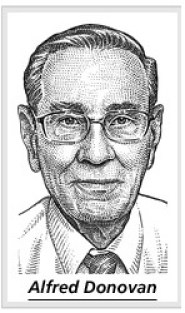 A head-cut image of Alfred Donovan (now deceased) appears courtesy of The Wall Street Journal.