
BP to do away with nine-day fortnight
BP is to scrap its nine-day fortnight for thousands of workers as part of a wide-ranging efficiency drive.
The decision was taken after a review of business practices by an unnamed firm of consultants.
A BP spokesman said that the nine-day fortnight had been inherited from Amoco, the American company acquired by BP in 1998. It had applied at several BP offices for the past decade, including Sunbury-on-Thames on the western outskirts of London, where about 2,000 staff are based and where employees can take every other Friday off if they work a set number of hours every fortnight. Sunbury is the headquarters of several of BP’s business units, including exploration and production, gas, power and renewables, chemicals and international shipping.
BP said that the practice was not observed at corporate headquarters at St James’s Square, Central London, where Tony Hayward, the chief executive, is based.
In a 2003 report on flexible working, BP was named as one of 50 model employers by the Department of Trade and Industry in its approach to employees’ work-life balance. In a foreword to the report, Flexible Working – 50 Success Stories, Patricia Hewitt, then Secretary of State, wrote: I hope these examples prove the business benefits that flexible working can bring, and that they help inspire other organisations to follow suit. Another report produced in 2005 by the Department for Transport said that the option, which is open to most staff, had been introduced to avoid employee burn out’.
BP’s decision to abolish the nine-day fortnight forms part of a wider effort to trim expenditure at BP. In February, Mr Hayward unveiled plans to shed 5,000 jobs and to shave up to $1.5 billion (£804 million) from the company’s annual cost base. BP employs nearly 100,000 people in about 100 countries.


 Royal Dutch Shell conspired directly with Hitler, financed the Nazi Party, was anti-Semitic and sold out its own Dutch Jewish employees to the Nazis. Shell had a close relationship with the Nazis during and after the reign of Sir Henri Deterding, an ardent Nazi, and the founder and decades long leader of the Royal Dutch Shell Group. His burial ceremony, which had all the trappings of a state funeral, was held at his private estate in Mecklenburg, Germany. The spectacle (photographs below) included a funeral procession led by a horse drawn funeral hearse with senior Nazis officials and senior Royal Dutch Shell directors in attendance, Nazi salutes at the graveside, swastika banners on display and wreaths and personal tributes from Adolf Hitler and Reichsmarschall, Hermann Goring. Deterding was an honored associate and supporter of Hitler and a personal friend of Goring.

 Deterding was the guest of Hitler during a four day summit meeting at Berchtesgaden. Sir Henri and Hitler both had ambitions on Russian oil fields. Only an honored personal guest would be rewarded with a private four day meeting at Hitler’s mountain top retreat.


 IN JULY 2007, MR BILL CAMPBELL (ABOVE, A RETIRED GROUP AUDITOR OF SHELL INTERNATIONAL SENT AN EMAIL TO EVERY UK MP AND MEMBER OF THE HOUSE OF LORDS:


 MORE DETAILS:


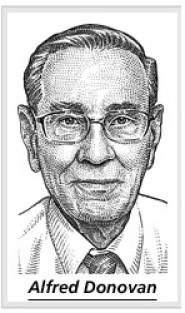 A head-cut image of Alfred Donovan (now deceased) appears courtesy of The Wall Street Journal.