
The Battle for Oil: EUs hope to bypass Russian energy may be a pipe dream
By Claire Soares
Tuesday, 12 August 2008

Georgia may have no natural resources to speak of, yet it has become a key player for Europe, due to 155 miles of pipeline that snake across its territory.
The Baku-Tbilisi-Ceyhan pipeline is the only practical route for carrying Caspian oil to Western markets that avoids Russia a treasured asset for the a European Union trying to reduce energy dependence on Moscow.
The BTC, which connects Baku in Azerbaijan, via the Georgian capital Tbilisi with Ceyhan, a port on the south-eastern Mediterranean coast of Turkey, was once billed as the “pipeline of peace”. Now it finds itself on the fringes of war zone as Russian and Georgia face off.
“The whole conflict is not being waged over the pipeline. The reasons are definitely geopolitical,” explained Natalia Leshchenko, a Russia analyst at Global Insight. “However, the Russians know the pipeline is important to Georgia and may try to damage it. They have the capability to do so.”
As fighting raged over the weekend, Georgian officials said Russian fighter jets had targeted the pipeline, but missed. “This shows that Russia has not just targeted Georgian economic outlets but international economic outlets,” said Economic Development Minister Ekaterina Sharashidze, tying her nation’s fate firmly to that of the West. There was no independent confirmation of the raids although BP, with a 30 per cent stake in the project, were unaware of explosions.
The security of the pipeline was already in the spotlight after an attack on a Turkish section by Kurdish separatists last week, and the Russian/Georgian conflict will not ease those concerns. The pipeline runs 35 miles from the South Ossetian border.
The European Union is keen to wean itself off Russia, which supplies a quarter of its oil and half its natural gas, and is targeting central Asia, one of the world’s few untapped oil provinces.
The BTC pipeline, which cost $4bn to build, is the heart of that effort. It was bitterly opposed by Moscow, which feared an easing of its energy stranglehold and a dilution of influence in the region.
The pipeline, which featured in the James Bond film The World is Not Enough, can pump around a million barrels a day. Lesser amounts of crude flow through Baku-Supsa line. Gas also transits Georgia through the Baku-Tbilisi-Erzurum pipeline, which provides over 6.5 billion cubic meters a year. But it is not so much quantity as comfort.
“For Europeans, an alternative supply route is psychological reassurance. It’s having a route that does not go through Russia,” said Ms Leshchenko. “But the other countries the pipeline passes through may ultimately prove more unreliable.”
There are plans afoot for another gas EU route, the Nabucco pipeline, which is meant to transport non-Russian gas and pass through territory independent of Moscow. Until recently Georgia was the ideal candidate.
“But if Georgia is no longer a safe passageway, then all of these schemes for diminished dependency on Russia go up in smoke,” says Michael Klare, author of Rising Powers, Shrinking Planet: The New Geopolitics of Energy.
Related Articles
- Russia tightens the noose
- The Russian Leadership: Putin in his element as successor is left in the back seat
- The Beleaguered President: High-stakes gambler who risked his country and links with the West
- Mary Dejevsky: Intervention may breed instability
- Kim Sengupta: ‘They dont like us. I dont know when they will stop the attacks’
- Matt Siegel: ‘I came here to defend my people from genocide
- Leading article: Careless talk can cost lives
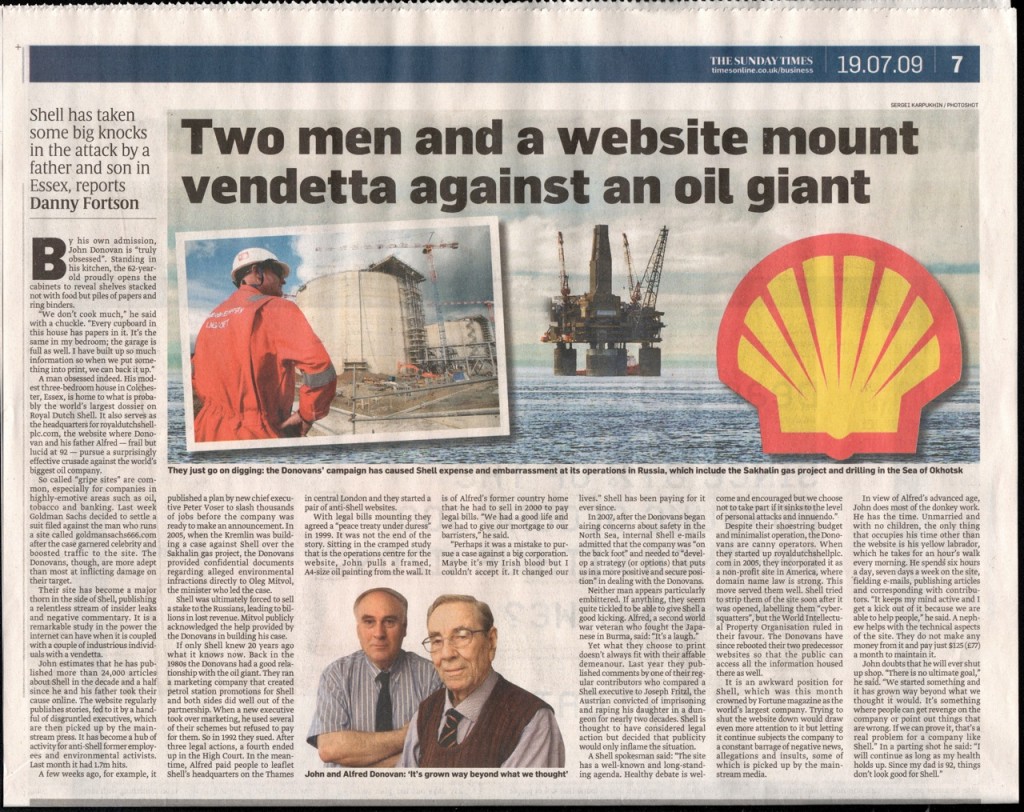
This website and sisters royaldutchshellplc.com, shellnazihistory.com, royaldutchshell.website, johndonovan.website, and shellnews.net, are owned by John Donovan. There is also a Wikipedia segment.


 Royal Dutch Shell conspired directly with Hitler, financed the Nazi Party, was anti-Semitic and sold out its own Dutch Jewish employees to the Nazis. Shell had a close relationship with the Nazis during and after the reign of Sir Henri Deterding, an ardent Nazi, and the founder and decades long leader of the Royal Dutch Shell Group. His burial ceremony, which had all the trappings of a state funeral, was held at his private estate in Mecklenburg, Germany. The spectacle (photographs below) included a funeral procession led by a horse drawn funeral hearse with senior Nazis officials and senior Royal Dutch Shell directors in attendance, Nazi salutes at the graveside, swastika banners on display and wreaths and personal tributes from Adolf Hitler and Reichsmarschall, Hermann Goring. Deterding was an honored associate and supporter of Hitler and a personal friend of Goring.

 Deterding was the guest of Hitler during a four day summit meeting at Berchtesgaden. Sir Henri and Hitler both had ambitions on Russian oil fields. Only an honored personal guest would be rewarded with a private four day meeting at Hitler’s mountain top retreat.


 IN JULY 2007, MR BILL CAMPBELL (ABOVE, A RETIRED GROUP AUDITOR OF SHELL INTERNATIONAL SENT AN EMAIL TO EVERY UK MP AND MEMBER OF THE HOUSE OF LORDS:


 MORE DETAILS:


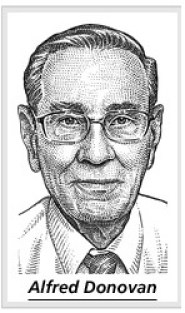 A head-cut image of Alfred Donovan (now deceased) appears courtesy of The Wall Street Journal.