
BP production hit after attacks in the Caucasus
Russian shares plunged by more than 6 per cent last night to their lowest level in 14 months as investors reacted to an outbreak of fierce fighting in South Ossetia.
BP also said it had been forced to slash oil production from its fields in Azerbaijan because of an unconnected attack in neighbouring Turkey on a pipeline that runs directly through the volatile Caucasus region.
As Russian troops were reported to have begun pouring into the disputed Georgian territory, Moscows RTS index slipped 119.30 points, or 6.5 per cent, to 1,723, while the Micex index lost 81.93 points, or 5.71 per cent, to 1,353. The rouble fell, while the cost of insuring Russian debt in the credit markets soared. Five-year spreads increased to 116-117 basis points from 102 on Thursday, meaning it would cost $116,000 to insure $10 million of debt.
Overall, the RTS has fallen 25 per cent since July 1. Since then, sliding oil prices, the battle for control of TNK-BP, Russias third-largest crude producer, and criticism of Mechel, the coalminer, by Vladimir Putin have all compounded the sell-off.
Carlo Gallo, Russia analyst at Control Risks Group, said the economic impact of the conflict was hard to gauge but was likely to delay Russias entry into the World Trade Organisation until at least 2010 and would further undermine the attractions of Russia to foreign investors. Confidence has already been battered by the battle for ownership of TNK-BP.
BP was also forced to cut oil production by at least 400,000 barrels a day from its Azeri-Chirag Gunashli oil-fields in Azerbaijan after an explosion last week on the Baku-Tbilisi-Ceyhan pipeline (BTC), which pumps oil from the Caspian Sea through Georgia and to the Mediterranean. Kurdish separatists claimed responsibility for the attack, which took place in Turkey but the violence in Georgia has stoked concerns about the pipelines security.
A spokesman for BP denied that the conflict was having any significant impact on the BTC pipeline: There is no reason why this should affect it. BP was one of several partners in the pipeline, he added.
Meanwhile, a Moscow court yesterday ruled that Robert Dudley, chief executive of TNK-BP, had violated the Russian labour code. He was fined 500 roubles (£10.80) but escaped a three-year ban from doing his job.
http://business.timesonline.co.uk/tol/business/industry_sectors/natural_resources/article4489078.ece


 Royal Dutch Shell conspired directly with Hitler, financed the Nazi Party, was anti-Semitic and sold out its own Dutch Jewish employees to the Nazis. Shell had a close relationship with the Nazis during and after the reign of Sir Henri Deterding, an ardent Nazi, and the founder and decades long leader of the Royal Dutch Shell Group. His burial ceremony, which had all the trappings of a state funeral, was held at his private estate in Mecklenburg, Germany. The spectacle (photographs below) included a funeral procession led by a horse drawn funeral hearse with senior Nazis officials and senior Royal Dutch Shell directors in attendance, Nazi salutes at the graveside, swastika banners on display and wreaths and personal tributes from Adolf Hitler and Reichsmarschall, Hermann Goring. Deterding was an honored associate and supporter of Hitler and a personal friend of Goring.

 Deterding was the guest of Hitler during a four day summit meeting at Berchtesgaden. Sir Henri and Hitler both had ambitions on Russian oil fields. Only an honored personal guest would be rewarded with a private four day meeting at Hitler’s mountain top retreat.


 IN JULY 2007, MR BILL CAMPBELL (ABOVE, A RETIRED GROUP AUDITOR OF SHELL INTERNATIONAL SENT AN EMAIL TO EVERY UK MP AND MEMBER OF THE HOUSE OF LORDS:


 MORE DETAILS:


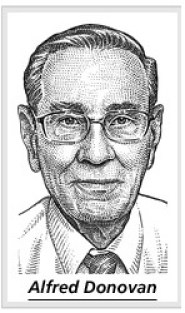 A head-cut image of Alfred Donovan (now deceased) appears courtesy of The Wall Street Journal.