
State group faces overhaul as Nigeria weighs plans to boost oil output
By Matthew Green in Lagos
Published: August 5 2008 03:00 | Last updated: August 5 2008 03:00
Plans for an overhaul of Nigeria’s oil industry took a step forward yesterday when energy advisers submitted proposals to Umaru Yar’Adua to restructure the state-owned oil company in an effort to reverse declining production.
A combination of attacks by militants and a lack of investment in new projects has undermined supply from Africa’s biggest crude exporter – which dipped to 1.5m barrels a day in June, its lowest level in 20 years – spurring the rally that recently took oil prices to record highs.
Mr Yar’Adua, the president, set up a committee a year ago to advise on ways to plug the funding shortfalls hitting joint ventures between the Nigerian National Petroleum Corporation and Western groups, which account for about 70 per cent of Nigeria’s oil -production.
The state group’s repeated failure to meet its share of development costs for operations with companies including Royal Dutch Shell and Chevron has stalled the development of key projects needed to boost output.
The contents of the report submitted by the committee, headed by Rilwanu Lukman, a former Opec secretary-general, were not made public. Since he took office in May last year, Mr Yar’Adua has, however, repeatedly -signalled his intention to reform the joint ventures to allow them to raise private capital instead of relying on government funds.
An interim report submitted to Mr Yar’Adua in January, seen by the Financial Times, also recommends breaking up NNPC to streamline the government’s role in regulation, oil and gas exploration.
The document warned that Nigeria’s oil production could fall by a third by 2015 unless financing issues in the joint ventures were addressed. A lack of investment to replace ageing pipelines and open new fields has compounded production losses in Nigeria since an explosion of militant violence in early 2006, and a spate of attacks this year.
Nigerian officials say an average of 650,000 barrels of crude per day is being shut-in due to attacks by militants. Industry experts estimate Nigeria’s installed capacity is about 2.5m b/d.
The NNPC agreed to borrow more than $6bn from Western groups this year to tackle arrears and liberate funds for new developments, but delays by government officials in approving new projects have led to delays in spending the money.
Copyright The Financial Times Limited 2008
This website and sisters royaldutchshellplc.com, shellnazihistory.com, royaldutchshell.website, johndonovan.website, and shellnews.net, are owned by John Donovan. There is also a Wikipedia segment.


 Royal Dutch Shell conspired directly with Hitler, financed the Nazi Party, was anti-Semitic and sold out its own Dutch Jewish employees to the Nazis. Shell had a close relationship with the Nazis during and after the reign of Sir Henri Deterding, an ardent Nazi, and the founder and decades long leader of the Royal Dutch Shell Group. His burial ceremony, which had all the trappings of a state funeral, was held at his private estate in Mecklenburg, Germany. The spectacle (photographs below) included a funeral procession led by a horse drawn funeral hearse with senior Nazis officials and senior Royal Dutch Shell directors in attendance, Nazi salutes at the graveside, swastika banners on display and wreaths and personal tributes from Adolf Hitler and Reichsmarschall, Hermann Goring. Deterding was an honored associate and supporter of Hitler and a personal friend of Goring.

 Deterding was the guest of Hitler during a four day summit meeting at Berchtesgaden. Sir Henri and Hitler both had ambitions on Russian oil fields. Only an honored personal guest would be rewarded with a private four day meeting at Hitler’s mountain top retreat.


 IN JULY 2007, MR BILL CAMPBELL (ABOVE, A RETIRED GROUP AUDITOR OF SHELL INTERNATIONAL SENT AN EMAIL TO EVERY UK MP AND MEMBER OF THE HOUSE OF LORDS:


 MORE DETAILS:


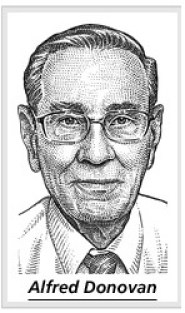 A head-cut image of Alfred Donovan (now deceased) appears courtesy of The Wall Street Journal.