
Is now the winter of our discontent?
By John Willman
Published: June 20 2008 03:00 | Last updated: June 20 2008 03:00
Mervyn King did much to settle the City’s nerves in his Mansion House speech this week, with his bleak assessment of the threat posed by rising inflation. His letter to the chancellor on Monday had been seen as a sign that the Bank of England had gone soft on monetary discipline by appearing to accept that high inflation was here to stay – and beyond domestic control. But in his speech, the governor emphasised the threat posed by inflation and his willingness to see a fall in living standards to squeeze it out.
He rightly stressed the need for wage restraint, as did Alistair Darling in his speech. So it is all the more surprising that the government has been quick to gloss over the pay offer made to Shell tanker drivers of 14 per cent over two years. This inflation- busting award puts the drivers on more than £40,000 a year, much more than almost all classroom teachers, for example. Yet the chancellor has insisted it is specific to the transport sector, while government officials said it reflected long-standing grievances between the drivers and the company that delivers Shell’s products.
The truth is that ministers were keen to see the end of a strike that had led to fuel shortages in parts of the country and which threatened to worsen with renewed walkouts. They may also be lulled into a sense of false security by the weakness of the unions – in stark contrast to the 1970s, when such strikes created mayhem. Since many of them were only at primary school during the winter of discontent, they have little experience of how wage settlements can spiral out of control and entrench inflation.
In 1978, it was an official strike at Ford Motors that bust the 5 per cent pay norm. The union – a forerunner of Unite, which led the successful tanker drivers this time – asked for 30 per cent. Calls for restraint failed, not least because Ford was very profitable and its UK chairman had just had an 80 per cent rise. After seven weeks, Ford settled on 17 per cent, and a few days later, tanker drivers threatened to strike for a 40 per cent rise. They were bought off with 20 per cent, but others poured into the breach – including the public sector workers who remain the most highly unionised in the UK and are chafing at their latest deals promising rises of less than 10 per cent over three years.
Copyright The Financial Times Limited 2008
http://www.ft.com/cms/s/0/63d29a36-3e63-11dd-b16d-0000779fd2ac.html
This website and sisters royaldutchshellplc.com, shellnazihistory.com, royaldutchshell.website, johndonovan.website, and shellnews.net, are owned by John Donovan. There is also a Wikipedia segment.


 Royal Dutch Shell conspired directly with Hitler, financed the Nazi Party, was anti-Semitic and sold out its own Dutch Jewish employees to the Nazis. Shell had a close relationship with the Nazis during and after the reign of Sir Henri Deterding, an ardent Nazi, and the founder and decades long leader of the Royal Dutch Shell Group. His burial ceremony, which had all the trappings of a state funeral, was held at his private estate in Mecklenburg, Germany. The spectacle (photographs below) included a funeral procession led by a horse drawn funeral hearse with senior Nazis officials and senior Royal Dutch Shell directors in attendance, Nazi salutes at the graveside, swastika banners on display and wreaths and personal tributes from Adolf Hitler and Reichsmarschall, Hermann Goring. Deterding was an honored associate and supporter of Hitler and a personal friend of Goring.

 Deterding was the guest of Hitler during a four day summit meeting at Berchtesgaden. Sir Henri and Hitler both had ambitions on Russian oil fields. Only an honored personal guest would be rewarded with a private four day meeting at Hitler’s mountain top retreat.


 IN JULY 2007, MR BILL CAMPBELL (ABOVE, A RETIRED GROUP AUDITOR OF SHELL INTERNATIONAL SENT AN EMAIL TO EVERY UK MP AND MEMBER OF THE HOUSE OF LORDS:


 MORE DETAILS:


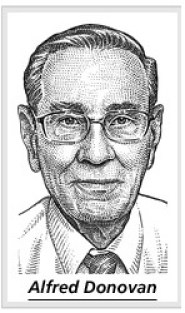 A head-cut image of Alfred Donovan (now deceased) appears courtesy of The Wall Street Journal.