
US watchdog wants London to tighten oil market rules
Robin Pagnamenta
American regulators are heading for a direct confrontation with the Financial Services Authority (FSA) after trying to slap new trading restrictions on the London oil market without the approval of the British watchdog.
The Commodity Futures Trading Commission announced new disclosure requirements yesterday for trading in West Texas Intermediate (WTI) oil futures contracts on the City’s ICE Europe exchange, which controls 30 per cent of the global market. A spokesman for the FSA said that the step had been taken without its approval and ICE Europe said that it would agree to the CFTC’s request only subject to FSA acceptance.
The move comes as London’s oil market has met mounting fire from a powerful clique of US senators, who blame speculative activity in the Square Mile as a key factor driving global crude prices to their existing levels of nearly $140 a barrel.
In a speech to Congress last week, Senator Dianne Feinstein, of California, portrayed the UK regulator as ineffectual and understaffed. The British only have 80 people monitoring market abuses, she said.
Not one of these 80 people is specifically assigned to monitor trading of West Texas Intermediate, American Gasoline or New England Heating Oil. This may explain why the CFTC tells me that British regulators are yet to bring a single manipulation case against traders in any contracts for US delivery.
The CFTC has been pressing the FSA to introduce US-style daily limits on WTI, heating oil and US gasoline contracts bought and sold by traders using ICE Europe by capping the number of contracts that traders can hold.
The proposals, which could come into effect within three months, are intended to stop traders from evading position limits in the United States by trading on ICE Europe – the so-called London loophole. However, the FSA believes that only the market should determine the price.
The watchdog, which has the power to veto the decision, said that it was still in talks with the CFTC. We will need to consult with the market and then decide, a spokesman said.


 Royal Dutch Shell conspired directly with Hitler, financed the Nazi Party, was anti-Semitic and sold out its own Dutch Jewish employees to the Nazis. Shell had a close relationship with the Nazis during and after the reign of Sir Henri Deterding, an ardent Nazi, and the founder and decades long leader of the Royal Dutch Shell Group. His burial ceremony, which had all the trappings of a state funeral, was held at his private estate in Mecklenburg, Germany. The spectacle (photographs below) included a funeral procession led by a horse drawn funeral hearse with senior Nazis officials and senior Royal Dutch Shell directors in attendance, Nazi salutes at the graveside, swastika banners on display and wreaths and personal tributes from Adolf Hitler and Reichsmarschall, Hermann Goring. Deterding was an honored associate and supporter of Hitler and a personal friend of Goring.

 Deterding was the guest of Hitler during a four day summit meeting at Berchtesgaden. Sir Henri and Hitler both had ambitions on Russian oil fields. Only an honored personal guest would be rewarded with a private four day meeting at Hitler’s mountain top retreat.


 IN JULY 2007, MR BILL CAMPBELL (ABOVE, A RETIRED GROUP AUDITOR OF SHELL INTERNATIONAL SENT AN EMAIL TO EVERY UK MP AND MEMBER OF THE HOUSE OF LORDS:


 MORE DETAILS:


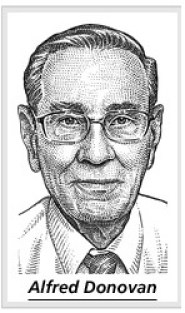 A head-cut image of Alfred Donovan (now deceased) appears courtesy of The Wall Street Journal.