12:53 – 05 November 2007
Many of today’s North Sea leaders cut their teeth during the cost-reduction drives of the mid to late-1990s under the CRINE and CRINE Network issues. This was a period where there was ruthless emphasis on slashing capital costs, with scant regard for long-term operational efficiency of installations.
The culture engendered by these initiatives was very alive in 2000 and echoes even today. The industry is paying the price of CRINE, as far as Whewell is concerned.
“It’s since around 2000 that we recognised the need to focus the industry on major hazard risks,” he says.
“We had concerns that, even without seeing the smoke at that stage, the whole cost-reduction era was having an impact.
“CRINE issues are with us now. There is a remarkable coincidence that a number of CRINE-era installations are the ones we are having issues with now. I’m not saying everything about CRINE was wrong. But there were short-termism elements in it.”
Though Whewell declined to name any, platforms dating from the CRINE era include Andrew, Harding, Piper B, Scott, Alba and Britannia.
However, he pointed out that, in 2000, HSE did take action by setting in place a process integrity programme that ran for three-four years, looking at the way process plant was being managed. It was particularly focusing on trying to reduce hydrocarbon leaks.
As for Shell with its pre-CRINE Brent problems, again Whewell was reluctant to get specific. However, he says that Shell has acknowledged that it took its eye off the ball, but now has a huge programme to upgrade installations and bring them back to the point where they should have been had the company continued to apply steady maintenance.
Highlighting the role of whistle-blower Bill Campbell in the Shell debacle – he ended up being fired – Whewell has made use of his specialist knowledge.
“The crux of the Campbell-Shell battle is that he was an auditor, he carried out an audit for Shell (Brent) and the company didn’t take proper note of the findings of the audit as far as Campbell was concerned. While I don’t want to get involved with that, what Shell has done is look very closely at its business… systems, plant on the ground and so forth.”
On Campbell, he says: “We’ve had two meetings with him… not to talk about Shell per se, but to seek his practical advice on how we can penetrate audit systems more effectively.”
Surely one of the ironies is that some of the implementations that might result from the Campbell dialogue may be applied to Shell itself – and, of course, other companies.
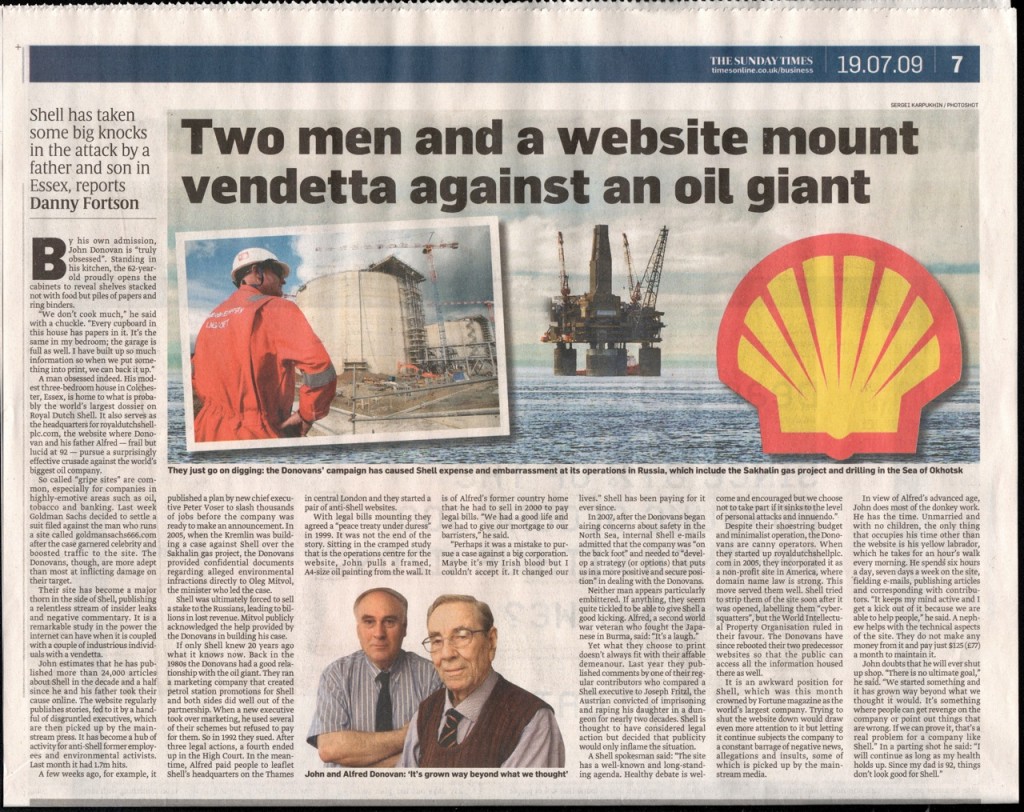
This website and sisters royaldutchshellplc.com, shellnazihistory.com, royaldutchshell.website, johndonovan.website, and shellnews.net, are owned by John Donovan. There is also a Wikipedia segment.


 Royal Dutch Shell conspired directly with Hitler, financed the Nazi Party, was anti-Semitic and sold out its own Dutch Jewish employees to the Nazis. Shell had a close relationship with the Nazis during and after the reign of Sir Henri Deterding, an ardent Nazi, and the founder and decades long leader of the Royal Dutch Shell Group. His burial ceremony, which had all the trappings of a state funeral, was held at his private estate in Mecklenburg, Germany. The spectacle (photographs below) included a funeral procession led by a horse drawn funeral hearse with senior Nazis officials and senior Royal Dutch Shell directors in attendance, Nazi salutes at the graveside, swastika banners on display and wreaths and personal tributes from Adolf Hitler and Reichsmarschall, Hermann Goring. Deterding was an honored associate and supporter of Hitler and a personal friend of Goring.

 Deterding was the guest of Hitler during a four day summit meeting at Berchtesgaden. Sir Henri and Hitler both had ambitions on Russian oil fields. Only an honored personal guest would be rewarded with a private four day meeting at Hitler’s mountain top retreat.


 IN JULY 2007, MR BILL CAMPBELL (ABOVE, A RETIRED GROUP AUDITOR OF SHELL INTERNATIONAL SENT AN EMAIL TO EVERY UK MP AND MEMBER OF THE HOUSE OF LORDS:


 MORE DETAILS:


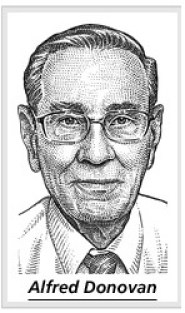 A head-cut image of Alfred Donovan (now deceased) appears courtesy of The Wall Street Journal.