By DAVID L. STERN
Published: September 27, 2007
ALMATY, Kazakhstan, Sept. 26 — The Kazakhstan Parliament took steps on Wednesday to grant the government the right to alter or cancel international energy contracts unilaterally should they run counter to the country’s interests.
The lower house of Parliament — in which all elected seats belong to the Nur Otan Party of President Nursultan A. Nazarbayev — voted unanimously to amend an existing law on subsoil use, spelling out the steps the government could take if a contract failed to live up to its economic promise. The upper house is also dominated by the president’s party and is expected to follow suit.
The legislation foresees cases in which actions “lead to a significant change to the economic interests of the Republic of Kazakhstan, causing a national security threat, and it gives the government the right to ask to change the contract conditions,” said Valery Kotovich, one of the legislation’s authors, according to the Kazakhstan Today press agency.
The law does not spell out what constitutes a national security threat and, if applied liberally, could be used to exact concessions from several natural resources contracts, particularly the one with the foreign oil consortium that is developing Kashagan, the country’s huge offshore oil field in the Caspian Sea.
Kashagan — which is being developed by the Italian oil company Eni and Western multinational companies like Exxon Mobil and Royal Dutch Shell — has had cost overruns and delays, extending the projected start-up date by five years, to late 2010.
“The new law is part of the government’s attempt to pressure Eni specifically,” said Tanya Costello, Europe and Eurasia director at the Eurasia Group, a political risk consulting firm. “One thing that we have noted in Kazakhstan is that often new legislation is passed to justify something that has already happened or is happening.”
Kazakh officials have already suspended the project on environmental grounds. They have threatened to impose fines of more than $10 billion and to take over operating duties with Eni. Negotiations are scheduled to end Oct. 22.
The new legislation adds to investors’ worries, given previous Kazakh demands that existing contracts be altered.
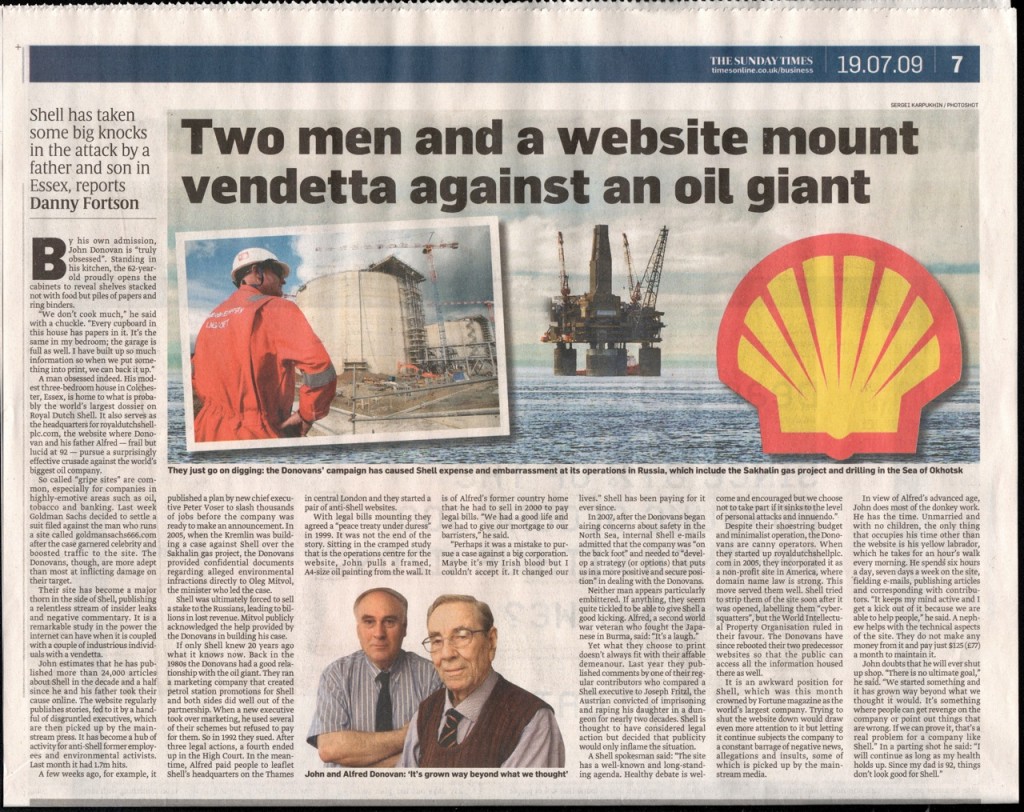
This website and sisters royaldutchshellplc.com, shellnazihistory.com, royaldutchshell.website, johndonovan.website, and shellnews.net, are owned by John Donovan. There is also a Wikipedia segment.


 Royal Dutch Shell conspired directly with Hitler, financed the Nazi Party, was anti-Semitic and sold out its own Dutch Jewish employees to the Nazis. Shell had a close relationship with the Nazis during and after the reign of Sir Henri Deterding, an ardent Nazi, and the founder and decades long leader of the Royal Dutch Shell Group. His burial ceremony, which had all the trappings of a state funeral, was held at his private estate in Mecklenburg, Germany. The spectacle (photographs below) included a funeral procession led by a horse drawn funeral hearse with senior Nazis officials and senior Royal Dutch Shell directors in attendance, Nazi salutes at the graveside, swastika banners on display and wreaths and personal tributes from Adolf Hitler and Reichsmarschall, Hermann Goring. Deterding was an honored associate and supporter of Hitler and a personal friend of Goring.

 Deterding was the guest of Hitler during a four day summit meeting at Berchtesgaden. Sir Henri and Hitler both had ambitions on Russian oil fields. Only an honored personal guest would be rewarded with a private four day meeting at Hitler’s mountain top retreat.


 IN JULY 2007, MR BILL CAMPBELL (ABOVE, A RETIRED GROUP AUDITOR OF SHELL INTERNATIONAL SENT AN EMAIL TO EVERY UK MP AND MEMBER OF THE HOUSE OF LORDS:


 MORE DETAILS:


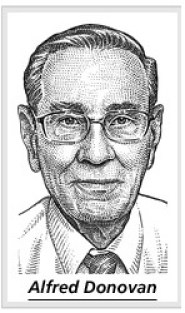 A head-cut image of Alfred Donovan (now deceased) appears courtesy of The Wall Street Journal.