By Ed Crooks in London
Published: September 27 2007 03:00 | Last updated: September 27 2007 03:00
Chevron, the second-largest US oil company, is to spend $15bn on its own shares within the next three years, extending a $5bn-a-year programme that began in 2005.
The move reflects big oil companies’ difficulties in finding uses for their large cash flows, boosted by high oil prices.
Some of Chevron’s rivals among the “big five” international oil companies have been returning even larger sums to shareholders.
The rise of resource nationalism among oil and gas-rich countries, and growing competition from ambitious national oil companies from emerging economies, has made it harder for the international oil companies to find investment projects with attractive commercial terms.
Dave O’Reilly, Chevron’s chairman and chief executive, said: “Our continuing strong cash flows have enabled us to fund a significant capital programme budgeted at almost $20bn in 2007, increase dividends to our stockholders, repurchase our shares in the market and reduce the company’s debt.”
Chevron’s buy-backs are dwarfed by ExxonMobil’s and BP’s. Exxon’s gross share purchases were worth $16bn in the first half of 2007, reducing the shares outstanding by 3.2 per cent. It spent $29.6bn in 2006.
BP, which has a market capitalisation roughly in line with Chevron at about $220bn, is the next heaviest spender. It bought back $15.5bn-worth of shares last year. European rival Royal Dutch Shell was more modest, buying back $8.2bn worth of shares. There have been signs that Shell and BP have been reducing their repurchasing this year. BP’s buy-backs for the year to date have been worth about $5.9bn, and Shell’s were just $1.4bn in the first half.
Shell has questioned the value of buy-backs and some analysts and investors agree there appears to be little correlation between the scale of buy-backs and share price performance.
See Commodities
Copyright The Financial Times Limited 2007
This website and sisters royaldutchshellplc.com, shellnazihistory.com, royaldutchshell.website, johndonovan.website, and shellnews.net, are owned by John Donovan. There is also a Wikipedia segment.


 Royal Dutch Shell conspired directly with Hitler, financed the Nazi Party, was anti-Semitic and sold out its own Dutch Jewish employees to the Nazis. Shell had a close relationship with the Nazis during and after the reign of Sir Henri Deterding, an ardent Nazi, and the founder and decades long leader of the Royal Dutch Shell Group. His burial ceremony, which had all the trappings of a state funeral, was held at his private estate in Mecklenburg, Germany. The spectacle (photographs below) included a funeral procession led by a horse drawn funeral hearse with senior Nazis officials and senior Royal Dutch Shell directors in attendance, Nazi salutes at the graveside, swastika banners on display and wreaths and personal tributes from Adolf Hitler and Reichsmarschall, Hermann Goring. Deterding was an honored associate and supporter of Hitler and a personal friend of Goring.

 Deterding was the guest of Hitler during a four day summit meeting at Berchtesgaden. Sir Henri and Hitler both had ambitions on Russian oil fields. Only an honored personal guest would be rewarded with a private four day meeting at Hitler’s mountain top retreat.


 IN JULY 2007, MR BILL CAMPBELL (ABOVE, A RETIRED GROUP AUDITOR OF SHELL INTERNATIONAL SENT AN EMAIL TO EVERY UK MP AND MEMBER OF THE HOUSE OF LORDS:


 MORE DETAILS:


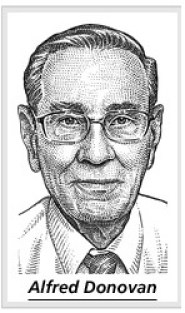 A head-cut image of Alfred Donovan (now deceased) appears courtesy of The Wall Street Journal.