Published: September 6 2007 03:00 | Last updated: September 6 2007 03:00
Oil reserves are slippery. With different companies using various methodologies to assess reserves – sometimes regarding the same field – the numbers can be open to a fair degree of interpretation.
One system most oil investors are familiar with is that of the Securities and Exchange Commission, whereby oil companies attach an unaudited report on their proved reserves to their accounts. The US regulator has signalled, however, that it might update its methodology in response to calls from the industry.
An important aspect involves being allowed to disclose less-certain probable reserves (so-called “2P” reserves, when totted up with proved barrels). An analogy for the different categories is fishing. Proved reserves are akin to sitting in a boat on a lake with a fish caught, weighed and ready to eat. Probable reserves are like looking over the side of the boat: you can see fish swimming around, but the water might make them look bigger than they really are. As for so-called possible reserves: well, there’s this lake, see . . .
Obtaining a clear view on this is fundamentally important: look at what aggressive booking of reserves did to Royal Dutch Shell in 2004. But focusing just on plain-vanilla proved reserves makes little sense, with unconventional resources such as oil sands increasingly important.
A systematic, internationally aligned approach encompassing the bigger picture would make sense – not least because it could help to secure development funding for marginal barrels. Would it also prompt a re-rating upwards for oil companies holding a large proportion of unproved reserves? Possibly, but the effect might be marginal. Companies already do their utmost to highlight the depth of their unproved portfolios – no investor presentation of recent vintage is complete without a slide on “resources” in addition to the more usual “reserves”. These days, if “2P” or not “2P” is often the question, an answer is usually already available.
Copyright The Financial Times Limited 2007
This website and sisters royaldutchshellplc.com, shellnazihistory.com, royaldutchshell.website, johndonovan.website, and shellnews.net, are owned by John Donovan. There is also a Wikipedia segment.


 Royal Dutch Shell conspired directly with Hitler, financed the Nazi Party, was anti-Semitic and sold out its own Dutch Jewish employees to the Nazis. Shell had a close relationship with the Nazis during and after the reign of Sir Henri Deterding, an ardent Nazi, and the founder and decades long leader of the Royal Dutch Shell Group. His burial ceremony, which had all the trappings of a state funeral, was held at his private estate in Mecklenburg, Germany. The spectacle (photographs below) included a funeral procession led by a horse drawn funeral hearse with senior Nazis officials and senior Royal Dutch Shell directors in attendance, Nazi salutes at the graveside, swastika banners on display and wreaths and personal tributes from Adolf Hitler and Reichsmarschall, Hermann Goring. Deterding was an honored associate and supporter of Hitler and a personal friend of Goring.

 Deterding was the guest of Hitler during a four day summit meeting at Berchtesgaden. Sir Henri and Hitler both had ambitions on Russian oil fields. Only an honored personal guest would be rewarded with a private four day meeting at Hitler’s mountain top retreat.


 IN JULY 2007, MR BILL CAMPBELL (ABOVE, A RETIRED GROUP AUDITOR OF SHELL INTERNATIONAL SENT AN EMAIL TO EVERY UK MP AND MEMBER OF THE HOUSE OF LORDS:


 MORE DETAILS:


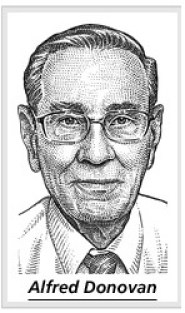 A head-cut image of Alfred Donovan (now deceased) appears courtesy of The Wall Street Journal.