By ANDREW E. KRAMER
Published: August 28, 2007
MOSCOW, Aug. 27 — The government of Kazakhstan suspended environmental permits on Monday for a consortium of foreign energy companies developing a potentially huge oil field in the Caspian Sea, threatening to slow development of the largest oil find in the world since the discovery of Prudhoe Bay off Alaska three decades ago.
The suspension came as Kazakh officials and the consortium, led by the Italian oil company Eni, were negotiating new terms for a $20 billion development contract for the Kashagan field, arousing speculation that the move was an effort to press the companies into ceding a larger share of future profits to the Kazakh government.
The stakes are high because of the field’s vast reserves. The Kashagan field is a centerpiece of Western and Japanese efforts to diversify oil supplies away from the Middle East to other regions like the Caspian Sea basin.
The suspension of the environmental permits, announced Monday, was not considered to be a significant threat to the project in the long term.
Speaking Monday after a ministerial meeting in Astana, the Kazakh capital, the environment minister, Nurlan Iskakov, said operations would be suspended at the field for three months. “The environmental protection requirements are not being observed today,” he said.
Yet a deputy minister, Zeinulla S. Sarsembayev, said in a telephone interview that the consortium could continue drilling during the suspension period if it paid fines to do so.
“The company itself will decide,” he said. “We have given this right to the company.” He did not specify the amount of the fines.
Still, the suspension of environmental permits seemed to raise the stakes in a dispute that began this month when Eni announced cost overruns and a delay in bringing the Kashagan field online.
Kazakhstan’s prime minister, Karim K. Masimov, responded by demanding a sweeping renegotiation of the contract with the consortium, which besides Eni is composed of Exxon Mobil, Royal Dutch Shell, ConocoPhillips, Total of France and Inpex Holdings of Japan. The state oil company, KazMunaiGaz, is also a member of the consortium.
Kazakh officials announced `that they would suspend the permits on the same day that Eni executives opened talks with the government on their disagreement over cost overruns and delays.
Also Monday, Kazakh fire inspectors said they had uncovered safety violations at an oil-processing plant near the field.
And the finance ministry said it had opened a criminal investigation into a contractor, Agip, an Eni unit, on suspicion of violating customs rules while importing two helicopters. President Nursultan Nazarbayev fired the energy minister who had overseen the project.
The regulatory barrage recalled methods used by the Russian government against Shell in the Sakhalin II project last autumn. After a lengthy campaign charging environmental damage, Shell eventually agreed to cede control to Gazprom, the Russian state-owned energy company.
Eni released a subdued statement Monday saying only that it had “received a letter in the last few days with an offer for friendly rediscussion of the contract.”
Kazakhstan, the largest country in formerly Soviet Central Asia, now produces roughly a million barrels of oil a day, or about a tenth of the output of Saudi Arabia. It is expected to triple production within 10 years as the Kashagan field and other projects come online.
The field lies under shallow water in the northeastern corner of the Caspian Sea and is technically complex. The companies’ drilling in winter includes breaking through ice floes and habitat for marine life, including sturgeon, the source of black caviar.
The oil companies estimate that they can recover up to 13 billion barrels of oil from Kashagan, using drilling rigs built on artificial islands. By comparison, Prudhoe Bay field off Alaska, one of the largest finds in recent history, held an estimated 25 billion barrels of oil. Eni says Kashagan is expected to produce roughly 1.5 million barrels of oil a day.
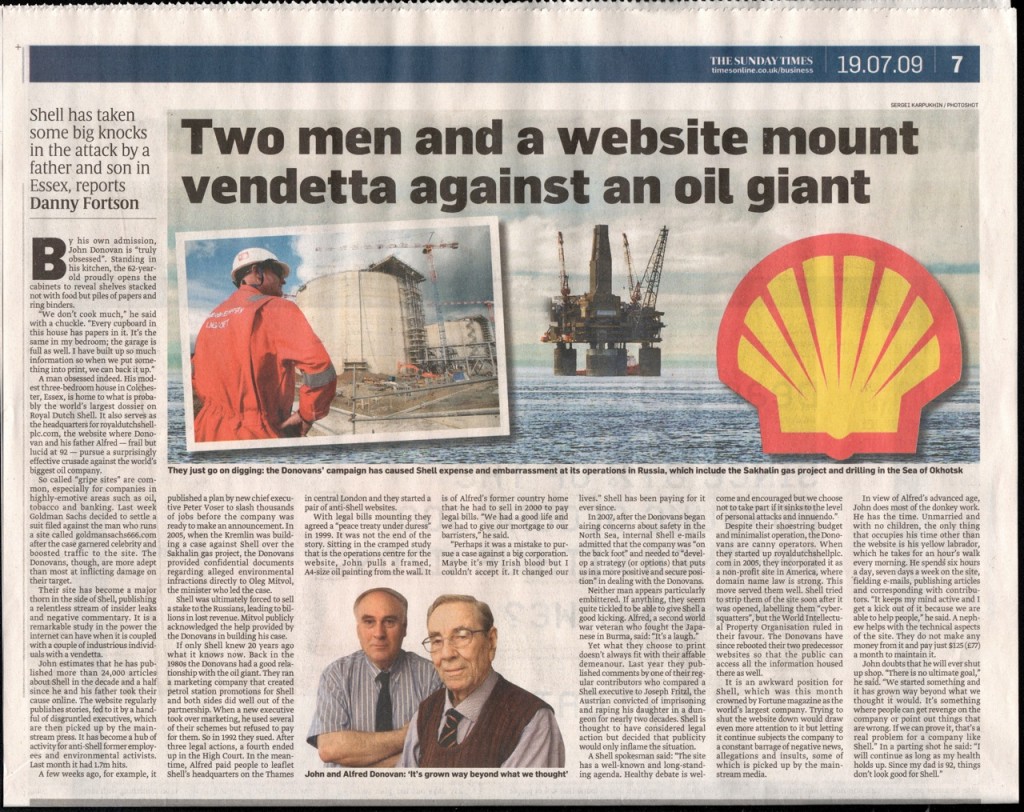
This website and sisters royaldutchshellplc.com, shellnazihistory.com, royaldutchshell.website, johndonovan.website, and shellnews.net, are owned by John Donovan. There is also a Wikipedia segment.


 Royal Dutch Shell conspired directly with Hitler, financed the Nazi Party, was anti-Semitic and sold out its own Dutch Jewish employees to the Nazis. Shell had a close relationship with the Nazis during and after the reign of Sir Henri Deterding, an ardent Nazi, and the founder and decades long leader of the Royal Dutch Shell Group. His burial ceremony, which had all the trappings of a state funeral, was held at his private estate in Mecklenburg, Germany. The spectacle (photographs below) included a funeral procession led by a horse drawn funeral hearse with senior Nazis officials and senior Royal Dutch Shell directors in attendance, Nazi salutes at the graveside, swastika banners on display and wreaths and personal tributes from Adolf Hitler and Reichsmarschall, Hermann Goring. Deterding was an honored associate and supporter of Hitler and a personal friend of Goring.

 Deterding was the guest of Hitler during a four day summit meeting at Berchtesgaden. Sir Henri and Hitler both had ambitions on Russian oil fields. Only an honored personal guest would be rewarded with a private four day meeting at Hitler’s mountain top retreat.


 IN JULY 2007, MR BILL CAMPBELL (ABOVE, A RETIRED GROUP AUDITOR OF SHELL INTERNATIONAL SENT AN EMAIL TO EVERY UK MP AND MEMBER OF THE HOUSE OF LORDS:


 MORE DETAILS:


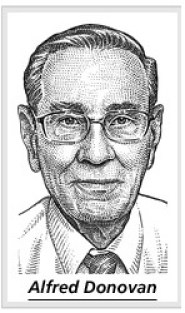 A head-cut image of Alfred Donovan (now deceased) appears courtesy of The Wall Street Journal.