August 23, 2007
Richard Owen in Rome
Romano Prodi, the Italian Prime Minister, is to meet Karim Masimov, his Kazakh counterpart, in an attempt to stave off the cancellation of Eni’s Kashagan oil project because of alleged ecological damage to the Caspian Sea and its wildlife.
Nurlan Iskakov, the Kazakh Environment Minister, said: “Taking into account the company’s previous failure to meet its obligations, we must withdraw the permit, as the company’s work is causing irreparable damage.”
However, energy analysts said that the real reason for the move is that Kazakhstan, like Russia and Venezuela, is putting pressure on international oil companies to agree to more favourable terms. Last month, its Government demanded 40 per cent of the profits from the Kashagan project, rather than the original 10 per cent, claiming that its costs had more than doubled to $136 billion (£68 billion).
Kazakhstan, the second-largest oil producer in the former Soviet Union after Russia, hopes to exploit the Kashagan field – which is due to start pumping in 2010 – to meet its target of tripling production by 2015.
Kazakh officials claim that levels of nitrogen compounds in the Caspian Sea are “above acceptable norms”.
Mr Iskakov said: “We have reason to believe that the operator is not complying with ecological legislation.”
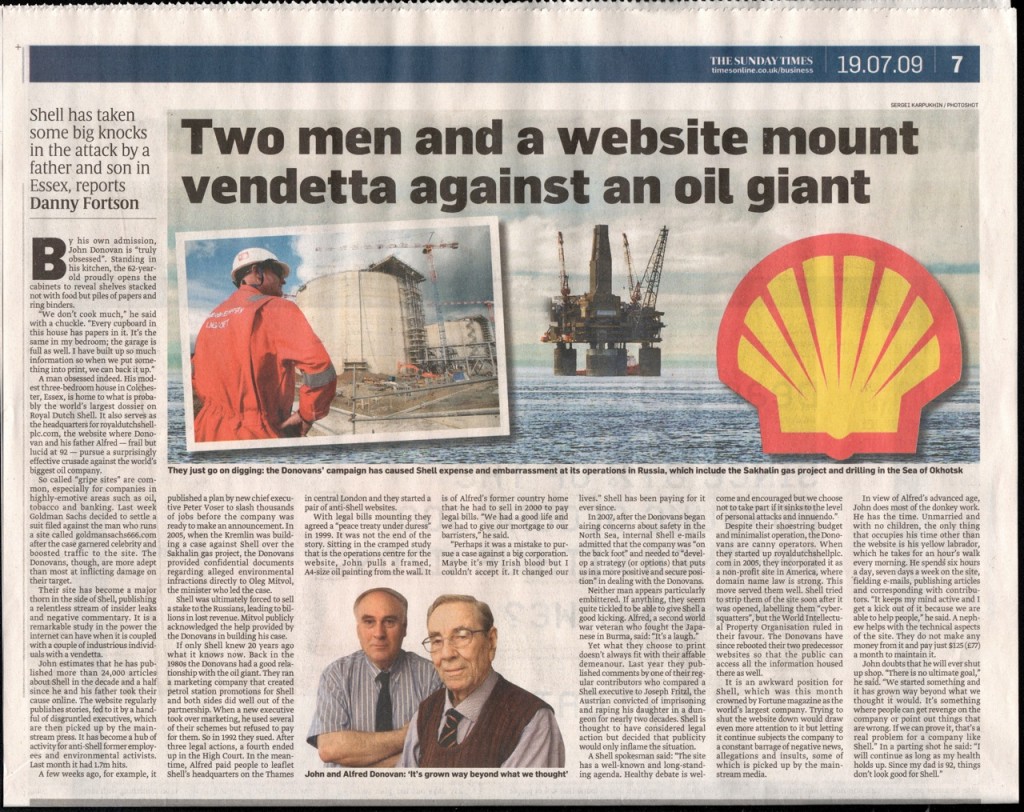
Il Giornale, the Italian newspaper, said that the Kazakh move was reminiscent of Russia’s threat last year to halt Sakhalin2, a $20 billion oil and gas project led by Shell on Sakhalin Island, on environmental grounds. In the end, Shell agreed to sell its majority holding to Gazprom, Russia’s state-run gas company.
Exxon Mobil, a partner in the Eni-led Kashagan project, said that it had sent engineers to investigate. Eni, the Italian oil group, Exxon, Total, of France, and Royal Dutch Shell all hold stakes in Kashagan. The oilfield is expected to produce more than 1.5 billion barrels a day when it comes on stream. Eni said that it had been “notified about alleged environmental violations” and was “considering them”.
La Repubblica, another Italian daily, said that dead seals and sturgeon had been found on the shores of the Caspian, the world’s biggest lake. The consortium denied that the deaths were linked to the oilfield project.
Paolo Scaroni, chief executive of Eni, is expected to go to Kazakhstan next week, followed by Mr Prodi.
http://business.timesonline.co.uk/tol/business/industry_sectors/natural_resources/article2310295.ece
This website and sisters royaldutchshellplc.com, shellnazihistory.com, royaldutchshell.website, johndonovan.website, and shellnews.net, are owned by John Donovan. There is also a Wikipedia segment.


 Royal Dutch Shell conspired directly with Hitler, financed the Nazi Party, was anti-Semitic and sold out its own Dutch Jewish employees to the Nazis. Shell had a close relationship with the Nazis during and after the reign of Sir Henri Deterding, an ardent Nazi, and the founder and decades long leader of the Royal Dutch Shell Group. His burial ceremony, which had all the trappings of a state funeral, was held at his private estate in Mecklenburg, Germany. The spectacle (photographs below) included a funeral procession led by a horse drawn funeral hearse with senior Nazis officials and senior Royal Dutch Shell directors in attendance, Nazi salutes at the graveside, swastika banners on display and wreaths and personal tributes from Adolf Hitler and Reichsmarschall, Hermann Goring. Deterding was an honored associate and supporter of Hitler and a personal friend of Goring.

 Deterding was the guest of Hitler during a four day summit meeting at Berchtesgaden. Sir Henri and Hitler both had ambitions on Russian oil fields. Only an honored personal guest would be rewarded with a private four day meeting at Hitler’s mountain top retreat.


 IN JULY 2007, MR BILL CAMPBELL (ABOVE, A RETIRED GROUP AUDITOR OF SHELL INTERNATIONAL SENT AN EMAIL TO EVERY UK MP AND MEMBER OF THE HOUSE OF LORDS:


 MORE DETAILS:


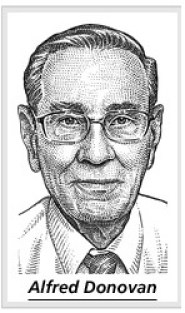 A head-cut image of Alfred Donovan (now deceased) appears courtesy of The Wall Street Journal.