Created: 2 August 2007
Written by: Paul Mumford
Just occasionally the markets feel so cyclical you almost want to accuse them of unoriginality. Rewind a year and we were riding out another summer of volatility (albeit the drivers were quite different). Pundits were predicting that oil prices could hit $100/barrel. Now, a recent report from Goldman Sachs suggests the slightly more modest figure of $95 by the end of the year.
Yet second time around, the story is more interesting, as supply and demand data indicates that oil & gas is much more remarkable than the commodities ‘bubble’ so derided by the market’s volatility last year.
Recent International Energy Agency (IEA) data claims that demand will increase by 2 per cent annually, eroding any spare capacity in oil production and producing a supply ‘crunch’ within the next five years. Yet for next year, the IEA predicts an increase in Organisation of the Petroleum Exporting Countries (Opec) production and expansion in refinery capacity.
What is so interesting about this seemingly schizophrenic outlook is that it helps to explain why the oil price can be predicted at $100/barrel and then fall almost $20 that same autumn (as it did last year).
If world economic growth continues, a shortage will be felt. However, it is a delicate case of judging when the fundamentals are likely to tip supply. As of now, the IEA has slapped a 5-year horizon on oil supply unless a slowdown in Gross Domestic Product (GDP) growth provides a breather.
This raises important questions for investors. Let’s take Shell and its robust earnings for the second quarter. These were largely due to Shell’s downstream business, particularly refining. However, Shell’s strategic copybook was blotted. Upstream, its geographical portfolio needs rejuvenation.
Yet it is precisely this exploration and production which is needed to help feed reserves – a fact which makes Big Oil’s juicy share buybacks as frustrating as they are appealing, considering the urgent need to generate future supplies.
For this reason, some of the smaller oil companies are looking tempting, not least as last year’s painful pricking of the commodities bubble has helped to improve quality. Crucially, smaller players have also found it easier to penetrate foreign markets and form meaningful partnerships, which is vital as geopolitical reliance increases. Now, there are many opportunities among the minnows, particularly on the Alternative Investment Market (Aim) where growth potential is huge and a number of companies have well-diversified geographical interests that are already showing promise.
Undoubtedly, there is a bumpy road ahead for this important sector. Speculation in oil futures alone is witnessing a huge level of volatility. Yet for those in it for the long haul, oil may just prove a slick investment.
——————————————————————————–
ABOUT THE AUTHOR
Paul Mumford is Senior Fund Manager at Cavendish Asset Management, heading the Cavendish Opportunities and Cavendish AIM funds.


 Royal Dutch Shell conspired directly with Hitler, financed the Nazi Party, was anti-Semitic and sold out its own Dutch Jewish employees to the Nazis. Shell had a close relationship with the Nazis during and after the reign of Sir Henri Deterding, an ardent Nazi, and the founder and decades long leader of the Royal Dutch Shell Group. His burial ceremony, which had all the trappings of a state funeral, was held at his private estate in Mecklenburg, Germany. The spectacle (photographs below) included a funeral procession led by a horse drawn funeral hearse with senior Nazis officials and senior Royal Dutch Shell directors in attendance, Nazi salutes at the graveside, swastika banners on display and wreaths and personal tributes from Adolf Hitler and Reichsmarschall, Hermann Goring. Deterding was an honored associate and supporter of Hitler and a personal friend of Goring.

 Deterding was the guest of Hitler during a four day summit meeting at Berchtesgaden. Sir Henri and Hitler both had ambitions on Russian oil fields. Only an honored personal guest would be rewarded with a private four day meeting at Hitler’s mountain top retreat.


 IN JULY 2007, MR BILL CAMPBELL (ABOVE, A RETIRED GROUP AUDITOR OF SHELL INTERNATIONAL SENT AN EMAIL TO EVERY UK MP AND MEMBER OF THE HOUSE OF LORDS:


 MORE DETAILS:


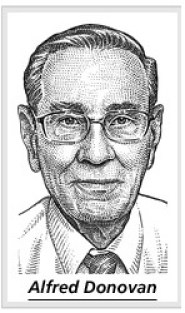 A head-cut image of Alfred Donovan (now deceased) appears courtesy of The Wall Street Journal.