By Neil Buckley in Moscow and Roman Olearchyk in Kiev
Published: April 2 2007 03:00 | Last updated: April 2 2007 03:00
Mergers and acquisitions in Russia and other former Soviet republics surged to record highs last year, highlighting the region’s continuing economic recovery, according to a report from Ernst & Young.
Russia’s M&A activity soared 41 per cent to $71bn (€53bn, £36bn), making it by far the biggest M&A market in the Commonwealth of Independent States. Metals and mining led activity for the first time in value terms, overtaking oil and gas. Other active sectors included financial services, media and retail.
The surge is underpinned by Russian economic growth, which has averaged more than 6.6 per cent for seven years. Enhanced spending power among Russian consumers is making the country an important investment destination for foreign companies in sectors such as consumer goods and banking.
The strength of the figures also suggests foreign investors have not been put off by setbacks such as the Yukos case or the pressure on the Shell-led Sakhalin-2 oil and gas project, which led Shell last year to cede majority control to Russia’s Gazprom. Acquisitions in Russia by foreign companies nearly doubled in 2006 to $13.7bn.
The biggest deal involving foreign investment was the joint acquisition by China’s Sinopec and Russia’s Rosneft of the assets of the Udmurtneft oil company, highlighting the trend for foreign energy companies to team up with Russian groups. But western companies were particularly active in financial services, with European groups including UniCredit, Société Générale, Raiffeisen International and OTP Bank, all making acquisitions.
Leading Russian companies such as Rusal, the aluminium group; Evraz, the steel company; and Norilsk Nickel were increasingly active in overseas expansion. Acquisitions abroad by Russian companies reached $11.4bn.
The share of state-owned companies in M&A deals remained high but roughly halved from 2005 to about 23 per cent of deals in 2006.
Russia’s biggest deal of 2006 – the three-way merger of Rusal, Sual and the alumina assets of Switzerland’s Glencore to create the world’s largest aluminium producer – involved only private companies. The largest deal of 2005, by contrast, was state-controlled Gazprom’s $13bn takeover of oil company Sibneft.
Acquisition activity in energy-rich Kazakhstan and Ukraine were also high, according to Ernst & Young.
M&A deals in Kazakhstan reached $7.6bn, with oil and gas accounting for the majority but the financial services sector attracting increasing numbers of buyers.
Almost $4.8bn in M&A transactions were closed in Ukraine, with a flurry of bank acquisitions by European financial groups and rising real estate investments.
Last year’s total was less than the ground-breaking $7.7bn Ukraine recorded in 2005 but the lion’s share of that amount was accounted for by one deal: the privatisation of steel mill Kryvorizhstal by Mittal Steel for $4.8bn.
Copyright The Financial Times Limited 2007
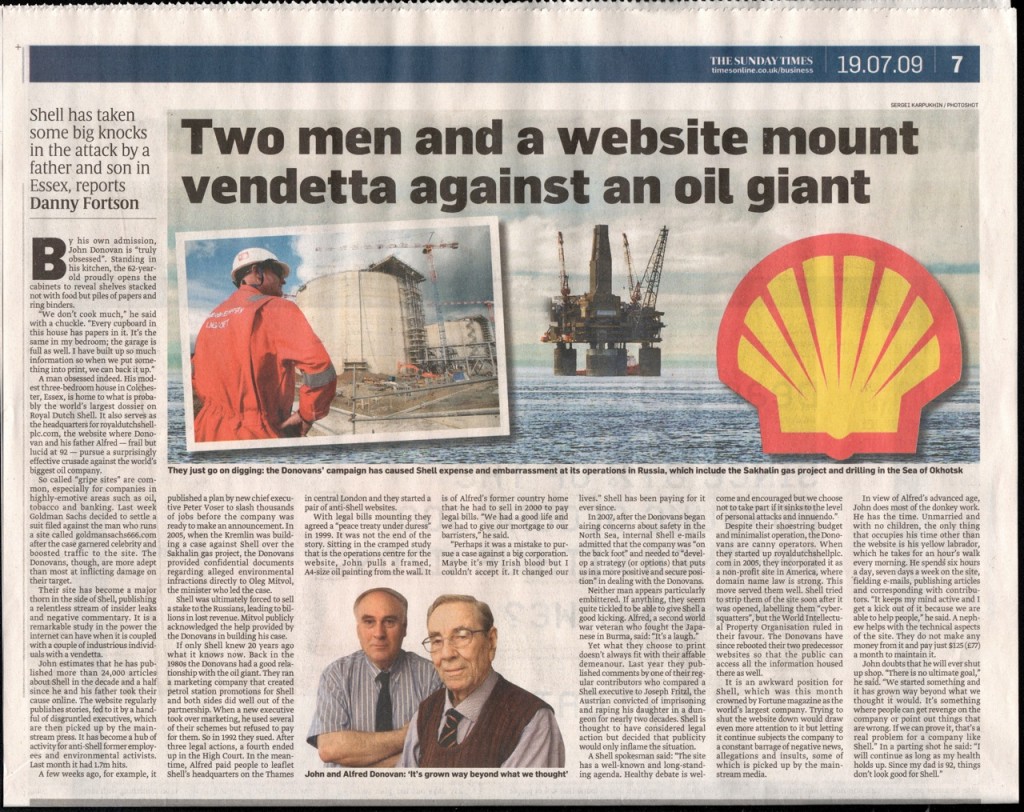
This website and sisters royaldutchshellplc.com, shellnazihistory.com, royaldutchshell.website, johndonovan.website, and shellnews.net, are owned by John Donovan. There is also a Wikipedia segment.


 Royal Dutch Shell conspired directly with Hitler, financed the Nazi Party, was anti-Semitic and sold out its own Dutch Jewish employees to the Nazis. Shell had a close relationship with the Nazis during and after the reign of Sir Henri Deterding, an ardent Nazi, and the founder and decades long leader of the Royal Dutch Shell Group. His burial ceremony, which had all the trappings of a state funeral, was held at his private estate in Mecklenburg, Germany. The spectacle (photographs below) included a funeral procession led by a horse drawn funeral hearse with senior Nazis officials and senior Royal Dutch Shell directors in attendance, Nazi salutes at the graveside, swastika banners on display and wreaths and personal tributes from Adolf Hitler and Reichsmarschall, Hermann Goring. Deterding was an honored associate and supporter of Hitler and a personal friend of Goring.

 Deterding was the guest of Hitler during a four day summit meeting at Berchtesgaden. Sir Henri and Hitler both had ambitions on Russian oil fields. Only an honored personal guest would be rewarded with a private four day meeting at Hitler’s mountain top retreat.


 IN JULY 2007, MR BILL CAMPBELL (ABOVE, A RETIRED GROUP AUDITOR OF SHELL INTERNATIONAL SENT AN EMAIL TO EVERY UK MP AND MEMBER OF THE HOUSE OF LORDS:


 MORE DETAILS:


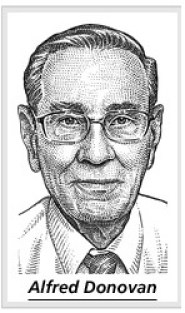 A head-cut image of Alfred Donovan (now deceased) appears courtesy of The Wall Street Journal.