By Andrew Hill
Published: August 31 2006 03:00 | Last updated: August 31 2006 03:00
In the midst of Shell’s investigation into its reserves crisis, in April 2004, Lord Oxburgh, then chairman of Shell Transport and Trading, said “human failings, not structural deficiencies” were to blame for the problems.
At the time, it seemed more likely to be a combination of both.
But the US Securities and Exchange Commission’s decision this week not to take action against Sir Philip Watts, Shell’s former chief executive, means that regulators on both sides of the Atlantic have now decided to punish the company rather than any individuals. The Financial Services Authority’s decision to close its investigation into Sir Philip was announced last November.
Sir Philip, not unnaturally, is “extremely pleased” and that at least must be a relief for weary watchdogs.
Even the 2004 FSA notice that imposed a record fine on his former employer had angered him – hasty, unfair and prejudicial, said his lawyers – though it did not mention Sir Philip by name. At least now the pugnacious former oilman will start to put this saga behind him. Investors should do the same.
It may seem unsatisfactory that shareholders alone have paid the price for a scandal that had human fingerprints all over it. But a number of top Shell employees have been punished in kind. Some lost their jobs. The 2004 report into the scandal by a US law firm – which laid bare the open war between Sir Philip and Walter van de Vijver, then head of exploration and production, over the reporting of reserves – was damning enough for their reputations.
The structural deficiencies that Lord Oxburgh seemed unwilling to admit had played a part in the scandal also had to be addressed. It remains to be seen whether uniting the dual holding companies last year to form Royal Dutch Shell has put a complete end to dysfunction. But the management would have resisted even that step had it not been for the close attention and strong pressure of the regulators. Now move on.
Copyright The Financial Times Limited 2006
This website and sisters royaldutchshellplc.com, shellnazihistory.com, royaldutchshell.website, johndonovan.website, and shellnews.net, are owned by John Donovan. There is also a Wikipedia segment.


 Royal Dutch Shell conspired directly with Hitler, financed the Nazi Party, was anti-Semitic and sold out its own Dutch Jewish employees to the Nazis. Shell had a close relationship with the Nazis during and after the reign of Sir Henri Deterding, an ardent Nazi, and the founder and decades long leader of the Royal Dutch Shell Group. His burial ceremony, which had all the trappings of a state funeral, was held at his private estate in Mecklenburg, Germany. The spectacle (photographs below) included a funeral procession led by a horse drawn funeral hearse with senior Nazis officials and senior Royal Dutch Shell directors in attendance, Nazi salutes at the graveside, swastika banners on display and wreaths and personal tributes from Adolf Hitler and Reichsmarschall, Hermann Goring. Deterding was an honored associate and supporter of Hitler and a personal friend of Goring.

 Deterding was the guest of Hitler during a four day summit meeting at Berchtesgaden. Sir Henri and Hitler both had ambitions on Russian oil fields. Only an honored personal guest would be rewarded with a private four day meeting at Hitler’s mountain top retreat.


 IN JULY 2007, MR BILL CAMPBELL (ABOVE, A RETIRED GROUP AUDITOR OF SHELL INTERNATIONAL SENT AN EMAIL TO EVERY UK MP AND MEMBER OF THE HOUSE OF LORDS:


 MORE DETAILS:


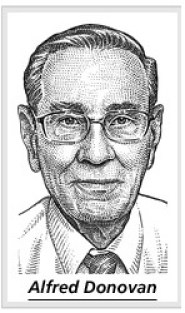 A head-cut image of Alfred Donovan (now deceased) appears courtesy of The Wall Street Journal.