By Carola Hoyos
Published: August 31 2006 03:00 | Last updated: August 31 2006 03:00
The US Securities and Exchange Commission has decided not to take action against Sir Philip Watts, the ousted chairman of Royal Dutch Shell, the energy group.
The decision ends the regulator’s two-year investigation into the role Sir Philip played in the reserves scandal that cost the Anglo-Dutch energy group its three most senior executives and £8bn of its market value.
Adriaen Morse, counsel at Mayer, Brown, Rowe & Maw, which represented Sir Philip, said: “Sir Philip’s integrity is beyond reproach. The closing of the investigation lays to rest any doubt as to whether Sir Philip acted properly while chairman of Royal Dutch/Shell.”
But others were surprised that the SEC dropped such a high-profile case, during which an independent investigation had uncovered seemingly damning e-mails linking Sir Philip with the incorrect booking of Shell’s reserves with the SEC. Joseph Goldstein, partner at Mayer, Brown, Rowe & Maw, said the report had “created an atmosphere in which Phil did leave Shell. But at the end of the day, and at the end of a very thorough and rigorous investigation of all the facts and circumstances of Shell’s reserves reporting, the lead regulators [the UK’s Financial Services Authority and the SEC] decided not to bring any action.”
Robert Turner, who works at Simmons & Simmons and advises UK companies being investigated by the FSA, said: “The main lessons here are about making sure regulators have the evidence to stand these cases up before taking them on, or announcing them, especially given the reputational stakes involved and the sanction levels.”
He added that a regulator dropping an investigation did not necessarily mean the individual or party in question was innocent.
He said: “It has very much to do with evidence and whether or not they have enough evidence and whether that evidence would have been admissible in court.”
Sir Philip has long maintained his innocence but was forced to leave Shell in March 2004 after the company came under heavy pressure from the SEC for wrongly reporting a quarter of its oil and gas reserves.
In the following months the FSA and SEC found Shell guilty of market abuse and fined the company a total of $150m (£80m).
Copyright The Financial Times Limited 2006
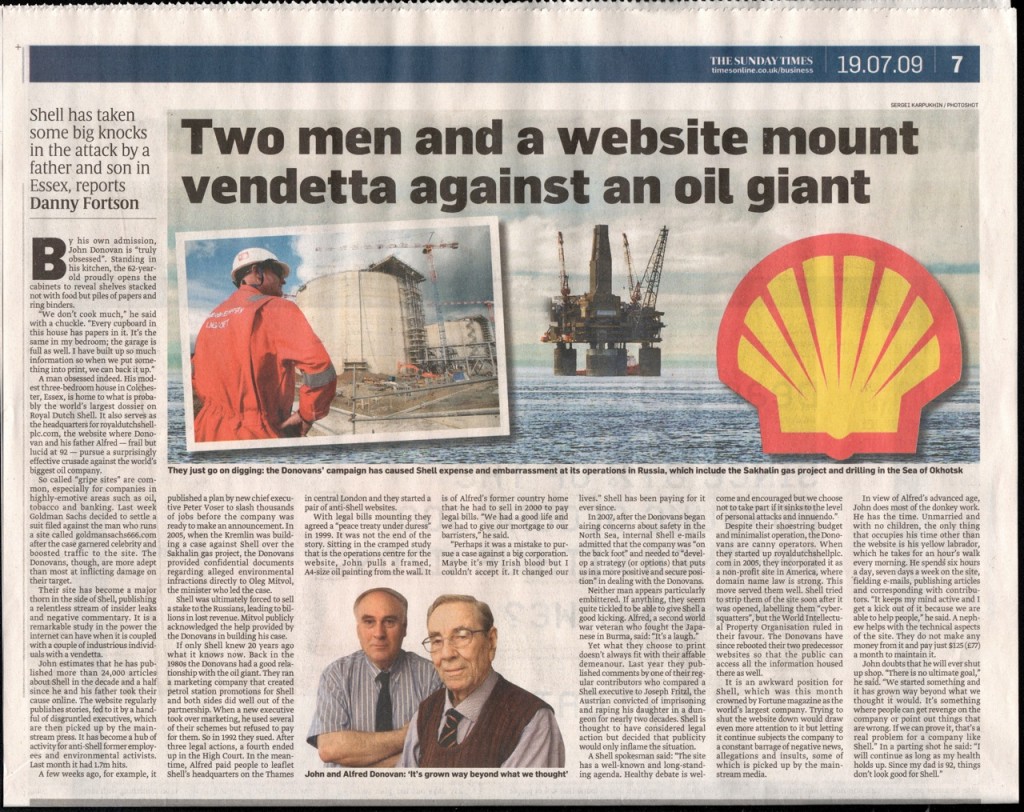
This website and sisters royaldutchshellplc.com, shellnazihistory.com, royaldutchshell.website, johndonovan.website, and shellnews.net, are owned by John Donovan. There is also a Wikipedia segment.


 Royal Dutch Shell conspired directly with Hitler, financed the Nazi Party, was anti-Semitic and sold out its own Dutch Jewish employees to the Nazis. Shell had a close relationship with the Nazis during and after the reign of Sir Henri Deterding, an ardent Nazi, and the founder and decades long leader of the Royal Dutch Shell Group. His burial ceremony, which had all the trappings of a state funeral, was held at his private estate in Mecklenburg, Germany. The spectacle (photographs below) included a funeral procession led by a horse drawn funeral hearse with senior Nazis officials and senior Royal Dutch Shell directors in attendance, Nazi salutes at the graveside, swastika banners on display and wreaths and personal tributes from Adolf Hitler and Reichsmarschall, Hermann Goring. Deterding was an honored associate and supporter of Hitler and a personal friend of Goring.

 Deterding was the guest of Hitler during a four day summit meeting at Berchtesgaden. Sir Henri and Hitler both had ambitions on Russian oil fields. Only an honored personal guest would be rewarded with a private four day meeting at Hitler’s mountain top retreat.


 IN JULY 2007, MR BILL CAMPBELL (ABOVE, A RETIRED GROUP AUDITOR OF SHELL INTERNATIONAL SENT AN EMAIL TO EVERY UK MP AND MEMBER OF THE HOUSE OF LORDS:


 MORE DETAILS:


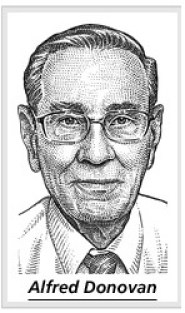 A head-cut image of Alfred Donovan (now deceased) appears courtesy of The Wall Street Journal.