At US-Arab economic forum, energy execs say energy independence is “naive”
By: STEVE QUINN
Associated Press
Published: Jun 27, 2006
Becoming energy independent is “naive” and would harm U.S. relations with Arab countries, energy executives told world and business leaders at a forum designed to improve those nations’ ties.
Executives from Exxon Mobil Corp., Chevron Corp., ConocoPhillips Co., Marathon Oil Co. and Shell Oil Co. took the stage at the U.S. Arab Economic Forum on Tuesday, the forum’s second day, and spoke out against the idea advanced by lawmakers that the United States is being crippled by its dependence on foreign oil.
“Energy isolation is naive; energy dependence is uncomfortable; energy interdependence makes sense,” said Shell President John Hofmeister. “We are trying to bring the message to help people understand that we are the world of users and world of producers.”
The executives called for an energy policy that diversifies the supply to include renewable energy but without biting the hand that helps supply the United States.
The Bush administration, faced with growing public frustration over rising gasoline prices, has pushed for greater dependence on domestic production, including opening to exploration a pristine wildlife refuge in Alaska believed to hold between five to 10 billion barrels of crude oil. In his State of the Union Address, President George W. Bush also pledged to increase development of alternative fuels with a goal of reducing U.S. oil imports from the Middle East by 75 percent.
At the same time, some U.S. officials have taken aim at multinational oil giants and OPEC producers, accusing them of squeezing the market to prop up the price of crude oil _ allegations that the companies and producing nations have denied. The current strength in price, they argue, is based on strong demand and limited ability to boost supply given the dearth of spare production capacity even by the some of world’s largest oil suppliers such as Saudi Arabia.
Bill Berry, ConocoPhillips executive vice president for exploration and production in Europe, Asia and the Middle East, said there is a “glaring disconnect” between policy and reality, one that could have long-term fallouts.
Lawmakers’ discussions about reducing imports from the Middle East will only force the producing nations to sell oil elsewhere and hurt foreign relations, Berry said.
The U.S. imports about 12.2 million barrels of oil a day, roughly 58 percent of the country’s demand, according to the Energy Information Administration. Of that, about 1.5 million barrels come from Saudi Arabia.
“When they speak, you should listen to them (the executives),” Prince Turki Al-Faisal, Saudi Arabia’s ambassador to the U.S., said after the forum.
He also criticized using “addiction” to describe oil needs.
“It’s misleading,” Al-Faisal said. “Oil is like oxygen and water. It’s a necessity of life. It is misinformed to think that any country can do without oil.”
Berry said cutbacks on oil imports to the U.S. could have Arab nations sending their product to India or China, whose growing and competing economies are calling for more supplies.
In April, Chinese President Hu Jintao visited Saudi Arabia in a trip some analysts said highlighted that the kingdom may be indicating that it has options other than the Untied States, where suspicion of Arabs and expanding Arab business interests in the country has run high following the Sept. 11, 2001 attacks. Fifteen of the 19 hijackers were Saudis.
“Repeated pronouncements by U.S. policymakers about backing off Middle East imports may deter Arab countries from expanding capacity at the very time the world needs them to do so,” Berry said. “We need to discard the illusion that energy security will come through so-called energy-independent America. Self-sufficient is neither attainable nor desirable.”
Copyright 2006 Associated Press
This website and sisters royaldutchshellplc.com, shellnazihistory.com, royaldutchshell.website, johndonovan.website, and shellnews.net, are owned by John Donovan. There is also a Wikipedia segment.


 Royal Dutch Shell conspired directly with Hitler, financed the Nazi Party, was anti-Semitic and sold out its own Dutch Jewish employees to the Nazis. Shell had a close relationship with the Nazis during and after the reign of Sir Henri Deterding, an ardent Nazi, and the founder and decades long leader of the Royal Dutch Shell Group. His burial ceremony, which had all the trappings of a state funeral, was held at his private estate in Mecklenburg, Germany. The spectacle (photographs below) included a funeral procession led by a horse drawn funeral hearse with senior Nazis officials and senior Royal Dutch Shell directors in attendance, Nazi salutes at the graveside, swastika banners on display and wreaths and personal tributes from Adolf Hitler and Reichsmarschall, Hermann Goring. Deterding was an honored associate and supporter of Hitler and a personal friend of Goring.

 Deterding was the guest of Hitler during a four day summit meeting at Berchtesgaden. Sir Henri and Hitler both had ambitions on Russian oil fields. Only an honored personal guest would be rewarded with a private four day meeting at Hitler’s mountain top retreat.


 IN JULY 2007, MR BILL CAMPBELL (ABOVE, A RETIRED GROUP AUDITOR OF SHELL INTERNATIONAL SENT AN EMAIL TO EVERY UK MP AND MEMBER OF THE HOUSE OF LORDS:


 MORE DETAILS:


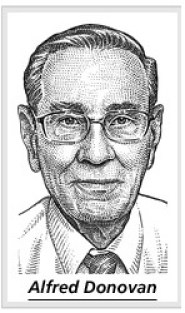 A head-cut image of Alfred Donovan (now deceased) appears courtesy of The Wall Street Journal.