From The Moscow Times
Friday, June 23, 2006. Issue 3438. Page 7.
By Anna Smolchenko
Staff Writer
Imagine the public reaction if a terrorist attack killed 100 people and injured another 800. Then imagine a similar mayhem happening every day.
“That’s exactly what’s happening on the roads” in car accidents across Russia, said Max Mosley, president of the International Automobile Federation.
Yet, there is virtually no public reaction and little action beyond government rhetoric on the issue, he said. “Why is the political will missing?”
This was one of the questions Mosley and other leading road-safety specialists posed Thursday at an annual conference organized by the Global Road Safety Partnership. Established in 1999 by the World Bank, the program aims to bring together government, business and civil society in developing countries to address the issue of road deaths and injuries, and the costs associated with them.
The organization chose to hold its annual conference in Moscow to put a focus on Russia in advance of next month’s G8 summit in St. Petersburg.
Some 35,000 people were killed in accidents on the country’s roads last year — a rate of deaths per vehicle 10 times higher than in Britain or Germany. Traffic accidents are officially estimated to cost about 2.5 percent of the country’s gross domestic product.
In a sign that Russian authorities are now more willing to tackle the problem, the Transportation Ministry in 2004 asked its European counterparts to review the country’s road-safety record.
That study — carried out by the European Conference of Transport Ministers and released this April — said Russia faced “a growing road-safety crisis” that would get worse as more cars hit the road and the economy grew.
Unless an aggressive road-safety campaign is begun, it could take another 20 to 30 years until Russians start driving more safely, said Tony Bliss, a Washington-based road-safety expert at the World Bank. “And that’s far too long,” he said.
The country’s top traffic policeman, Viktor Kiryanov, told the conference the authorities had already launched a nationwide road-safety program set to run through 2012. President Vladimir Putin drew attention to the problem at a State Council meeting last November and most recently during his state-of-the-nation address in May.
Official statistics show that 68,128 road accidents occurred from January through May, an increase of 2 percent compared to the same period last year, while the number of fatalities fell by 9 percent, to 8,743.
On Sakhalin Island, accident rates have been cut to European levels, according to Shell, which is involved in a road-safety program on the island with local road traffic police.
David Greer, deputy CEO of Sakhalin Energy Investment Company, a Shell-led joint venture, told the conference that the company had begun a campaign due to a high number of traffic accidents involving its employees.
The company had to cover most of the costs from those accidents and had to invest a lot of time investigating them, Greer said. Some of the accidents were “so horrific” that “inside the company we decided to act,” he said, adding that the company’s staff drove 6 million kilometers on the island per year.
In 2004, the firm launched a road-safety program to improve driving practices among employees, and that project later grew into the island-wide initiative supported by local authorities.
Since the program’s inception, the number of injuries has dramatically fallen, Greer said.
In 2004, Sakhalin saw 53 injures per 100 million vehicle-kilometers, while in 2005 that number had fallen to 21. It stands at 6.5 this year. Those rates, Greer said, are now on a par with Britain, where 8 injuries per 100 million vehicle-kilometers were recorded in 2004.
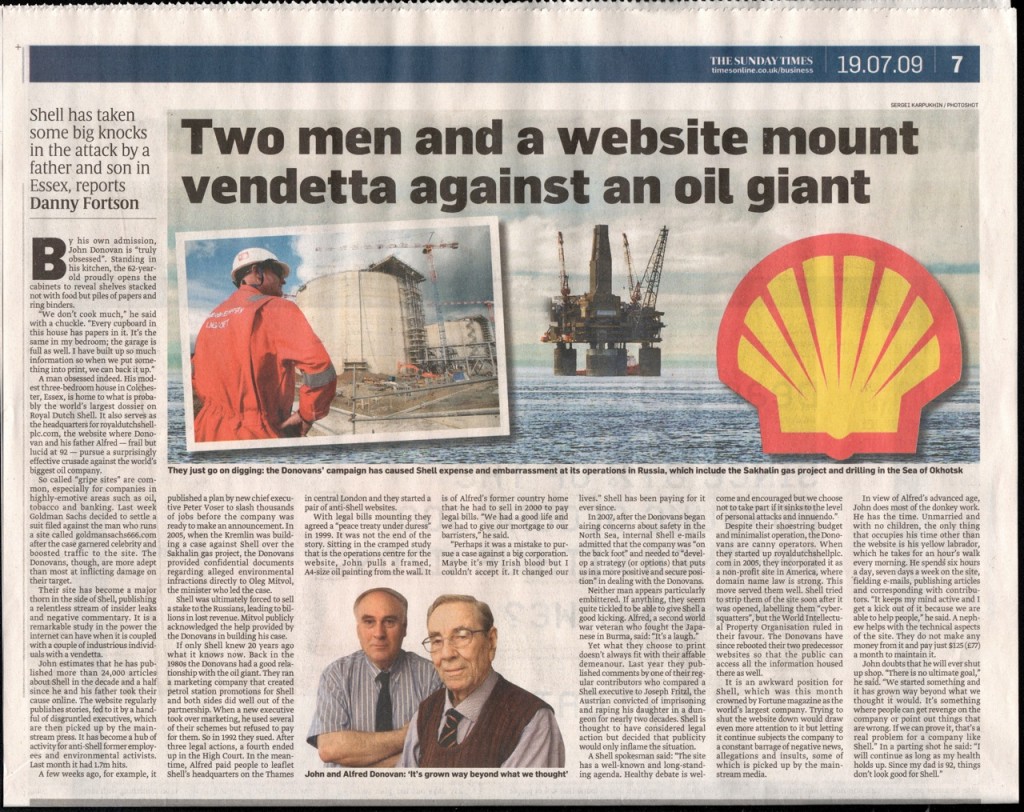
This website and sisters royaldutchshellplc.com, shellnazihistory.com, royaldutchshell.website, johndonovan.website, and shellnews.net, are owned by John Donovan. There is also a Wikipedia segment.


 Royal Dutch Shell conspired directly with Hitler, financed the Nazi Party, was anti-Semitic and sold out its own Dutch Jewish employees to the Nazis. Shell had a close relationship with the Nazis during and after the reign of Sir Henri Deterding, an ardent Nazi, and the founder and decades long leader of the Royal Dutch Shell Group. His burial ceremony, which had all the trappings of a state funeral, was held at his private estate in Mecklenburg, Germany. The spectacle (photographs below) included a funeral procession led by a horse drawn funeral hearse with senior Nazis officials and senior Royal Dutch Shell directors in attendance, Nazi salutes at the graveside, swastika banners on display and wreaths and personal tributes from Adolf Hitler and Reichsmarschall, Hermann Goring. Deterding was an honored associate and supporter of Hitler and a personal friend of Goring.

 Deterding was the guest of Hitler during a four day summit meeting at Berchtesgaden. Sir Henri and Hitler both had ambitions on Russian oil fields. Only an honored personal guest would be rewarded with a private four day meeting at Hitler’s mountain top retreat.


 IN JULY 2007, MR BILL CAMPBELL (ABOVE, A RETIRED GROUP AUDITOR OF SHELL INTERNATIONAL SENT AN EMAIL TO EVERY UK MP AND MEMBER OF THE HOUSE OF LORDS:


 MORE DETAILS:


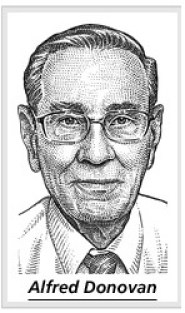 A head-cut image of Alfred Donovan (now deceased) appears courtesy of The Wall Street Journal.