Main page content:
| 'Bid' exposes UK's double standards in its dealings with foreign investorsBy Eugene G Zhukov Published: April 19 2006 03:00 | Last updated: April 19 2006 03:00 
From Mr Eugenue G. Zhukov.
Sir, I found Jean Eaglesham's report “Centrica threat led to rethink on mergers” (April 17) fascinating. I am far from being a specialist in UK government's affairs, but I found the fact that the Department of Trade and Industry has had to hold eight meetings to discuss possible ways to block a non-existing bid by Russia's Gazprom for UK's Centrica to be quite revealing in itself. The UK, which has built up a very solid reputation for being open and fair in dealing with foreign investors, is in danger of exposing itself to charges of double standards. Yes, Gazprom is a government-dominated company, but more than 49 per cent of its shares are in private, including British, hands. The shares of the company have been good enough to be traded by the London Stock Exchange. Yet the company is not good enough to be able to submit a bid for the UK-based gas distributor. Certainly it is the UK government's right to set up the rules of the game in the country's energy sector. However, this seems to be a case when the rules are being changed in the middle of the game in favour of one of the sides. At the end of it all, the UK faces a choice: either build expensive liquefied natural gas terminals and import liquefied gas from faraway and not always stable or democratic places, or give access to Gazprom and secure a stable supply of energy for years to come. The first option would help the UK to ensure “independence” from Gazprom. However, as the price of the liquefied gas is likely to be higher, it would further undermine the UK's competitiveness and is likely to saddle British households with even higher energy bills. There is another angle to this story. BP and Royal Dutch Shell have significant business interests in Russia. Both companies work closely with Gazprom. How do you think the Russian government would react towards these, or any other companies with significant UK interests, if any legislation blocking a Gazprom bid is passed? Eugenue G. Zhukov, Manila, Philippines |


 Royal Dutch Shell conspired directly with Hitler, financed the Nazi Party, was anti-Semitic and sold out its own Dutch Jewish employees to the Nazis. Shell had a close relationship with the Nazis during and after the reign of Sir Henri Deterding, an ardent Nazi, and the founder and decades long leader of the Royal Dutch Shell Group. His burial ceremony, which had all the trappings of a state funeral, was held at his private estate in Mecklenburg, Germany. The spectacle (photographs below) included a funeral procession led by a horse drawn funeral hearse with senior Nazis officials and senior Royal Dutch Shell directors in attendance, Nazi salutes at the graveside, swastika banners on display and wreaths and personal tributes from Adolf Hitler and Reichsmarschall, Hermann Goring. Deterding was an honored associate and supporter of Hitler and a personal friend of Goring.

 Deterding was the guest of Hitler during a four day summit meeting at Berchtesgaden. Sir Henri and Hitler both had ambitions on Russian oil fields. Only an honored personal guest would be rewarded with a private four day meeting at Hitler’s mountain top retreat.


 IN JULY 2007, MR BILL CAMPBELL (ABOVE, A RETIRED GROUP AUDITOR OF SHELL INTERNATIONAL SENT AN EMAIL TO EVERY UK MP AND MEMBER OF THE HOUSE OF LORDS:


 MORE DETAILS:


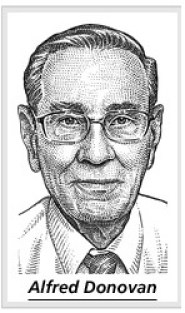 A head-cut image of Alfred Donovan (now deceased) appears courtesy of The Wall Street Journal.