The Guardian: Watchdog says LPG firms overcharge
“Shell downplayed the report, saying that customers were mostly content with their suppliers. It said it was cooperating fully with the commission.”
Wednesday August 24, 2005
Terry Macalister
The competition authorities are looking at ways to crack down on energy companies, including BP and Shell, after mounting evidence that homeowners are paying too much for liquefied gas.
A report by the Competition Commission said there are various aspects of the domestic liquefied petroleum gas (LPG) market that “prevent, restrict or distort competition”.
This has led to customers paying higher than expected prices, obtaining few discounts and leaving suppliers with high rates of return, the commission said.
“We have provisionally concluded that competition is not working as effectively as it should and that consumers are losing out,” said Peter Freeman, chairman of the inquiry.
Customers face many hurdles in obtaining a quote from another supplier, and have to change storage tanks when they switch to another firm.
“We are now moving on to consider how best to remedy this,” said Mr Freeman, who led a five-man inquiry into LPG and its use for household heating and cooking in mainly rural areas.
More than 90% of the LPG market is dominated by a small number of firms: BP and Shell, but also Calor – owned by the Dutch group SHV – and Flogas, which is controlled by Ireland’s DCC.
BP said it welcomed any steps that promoted greater transparency for consumers but said the commission would have to tread carefully.
“We will now consider whether the remedies proposed by the Competition Commission are feasible; do not compromise BP’s safety standards, and whether or not they are likely to result in any real benefits to customers as opposed to the possibility of higher prices as a result of increased cost of supply,” it said.
Shell downplayed the report, saying that customers were mostly content with their suppliers. It said it was cooperating fully with the commission.
“We respectfully note the position that the commission has reached … we have not come to any of our own conclusions on them but we will be analysing them in detail,” Shell added.
The independent consumer group Energywatch welcomed the findings and called for changes. “The whole point of competition is that it should work for the consumers, not against them,” said its spokesman, Graham Kerr.
http://www.guardian.co.uk/business/story/0,,1555055,00.html
This website and sisters royaldutchshellplc.com, shellnazihistory.com, royaldutchshell.website, johndonovan.website, and shellnews.net, are owned by John Donovan. There is also a Wikipedia segment.


 Royal Dutch Shell conspired directly with Hitler, financed the Nazi Party, was anti-Semitic and sold out its own Dutch Jewish employees to the Nazis. Shell had a close relationship with the Nazis during and after the reign of Sir Henri Deterding, an ardent Nazi, and the founder and decades long leader of the Royal Dutch Shell Group. His burial ceremony, which had all the trappings of a state funeral, was held at his private estate in Mecklenburg, Germany. The spectacle (photographs below) included a funeral procession led by a horse drawn funeral hearse with senior Nazis officials and senior Royal Dutch Shell directors in attendance, Nazi salutes at the graveside, swastika banners on display and wreaths and personal tributes from Adolf Hitler and Reichsmarschall, Hermann Goring. Deterding was an honored associate and supporter of Hitler and a personal friend of Goring.

 Deterding was the guest of Hitler during a four day summit meeting at Berchtesgaden. Sir Henri and Hitler both had ambitions on Russian oil fields. Only an honored personal guest would be rewarded with a private four day meeting at Hitler’s mountain top retreat.


 IN JULY 2007, MR BILL CAMPBELL (ABOVE, A RETIRED GROUP AUDITOR OF SHELL INTERNATIONAL SENT AN EMAIL TO EVERY UK MP AND MEMBER OF THE HOUSE OF LORDS:


 MORE DETAILS:


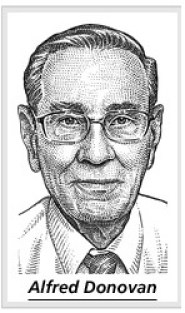 A head-cut image of Alfred Donovan (now deceased) appears courtesy of The Wall Street Journal.