Daily Telegraph: Shell pays $90m to settle staff suit
“The class action was filed by current and former US employees who participated in certain savings plans.”
Wednesday 13 July 2005
By Philip Aldrick (Filed: 13/07/2005)
Shell, the oil and gas giant, yesterday agreed to pay $90m (£50m) to settle a lawsuit brought by employees last year following its reserves crisis.
The proposed settlement comes only two weeks after US federal prosecutors decided not to file a criminal charge against the Anglo-Dutch major after investigating the overstatements, citing its good co-operation.
Last year Shell admitted it had overstated its “proven” oil and gas reserves – a key indicator of future profits – by over 25pc, sparking a drop in the share price and a management shake-up.
The class action was filed by current and former US employees who participated in certain savings plans. They claimed the value of their pension benefits had been hurt by a drop in the share price, which fell up to 15pc in the two months that followed the restatements in January 2004. Shell said the proposed agreement was an “important step” towards putting litigation behind it.
Shell paid $120m in a settlement with the Securities and Exchange Commission in the US last year and was also hit with a £17m fine by the Financial Services Authority – the heaviest penalty ever imposed by the UK regulator.
One London analyst said the proposed settlement was “absorbable” and should help Shell “draw a line under the reserves scandal”. However, it still faces two other related legal actions. Pending approval by the US Federal Court in New Jersey, Shell said it had agreed to pay more than $90m, of which around $25m is covered by insurance policies. It has also agreed to pay up to $1m of expenses for the plaintiffs’ counsel, New York-based Milberg Weiss.
Beat Hess, Shell’s legal director, said: “We are hopeful that the court will approve the settlement, which represents an important step toward putting litigation relating to the reserves recategorisations behind us.” Shell discovered last week that it would not face criminal charges from federal authorities in the US over the overstatement of its reserves. A federal prosecutor in the US said regulatory fines imposed on Shell and its willingness to co-operate with the investigation meant a prosecution would not be in the public interest.
The fiasco led Shell to propose ending its twin-board structure in the biggest shake-up in its history.
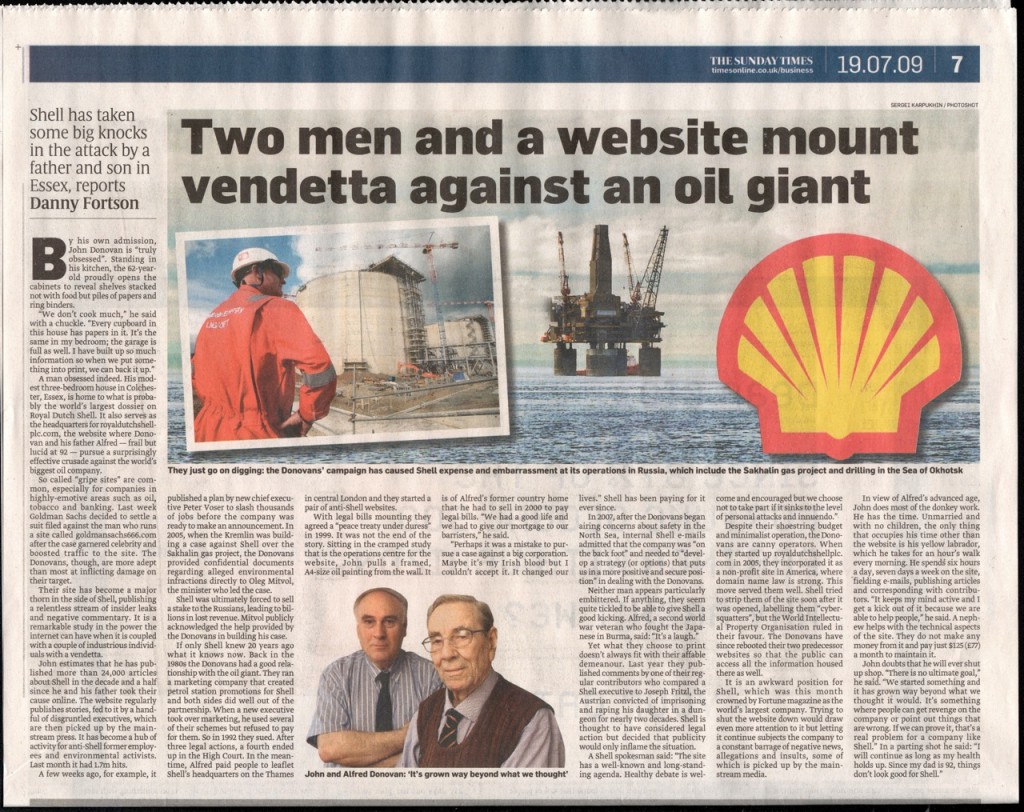
This website and sisters royaldutchshellplc.com, shellnazihistory.com, royaldutchshell.website, johndonovan.website, and shellnews.net, are owned by John Donovan. There is also a Wikipedia segment.


 Royal Dutch Shell conspired directly with Hitler, financed the Nazi Party, was anti-Semitic and sold out its own Dutch Jewish employees to the Nazis. Shell had a close relationship with the Nazis during and after the reign of Sir Henri Deterding, an ardent Nazi, and the founder and decades long leader of the Royal Dutch Shell Group. His burial ceremony, which had all the trappings of a state funeral, was held at his private estate in Mecklenburg, Germany. The spectacle (photographs below) included a funeral procession led by a horse drawn funeral hearse with senior Nazis officials and senior Royal Dutch Shell directors in attendance, Nazi salutes at the graveside, swastika banners on display and wreaths and personal tributes from Adolf Hitler and Reichsmarschall, Hermann Goring. Deterding was an honored associate and supporter of Hitler and a personal friend of Goring.

 Deterding was the guest of Hitler during a four day summit meeting at Berchtesgaden. Sir Henri and Hitler both had ambitions on Russian oil fields. Only an honored personal guest would be rewarded with a private four day meeting at Hitler’s mountain top retreat.


 IN JULY 2007, MR BILL CAMPBELL (ABOVE, A RETIRED GROUP AUDITOR OF SHELL INTERNATIONAL SENT AN EMAIL TO EVERY UK MP AND MEMBER OF THE HOUSE OF LORDS:


 MORE DETAILS:


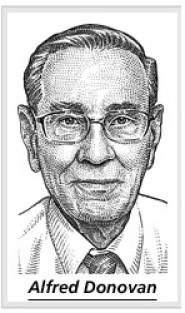 A head-cut image of Alfred Donovan (now deceased) appears courtesy of The Wall Street Journal.