The Times (UK): Record gas discovery in India could hit projects
June 28, 2005
By Carl Mortishead, International Business Editor
INDIA has claimed its biggest gas discovery, a deposit in the Bay of Bengal that could double the country’s gas production and bring into question major projects to import liquefied natural gas into the country.
Gujarat State Petroleum Corporation (GSPC), a state-owned enterprise, said that it had found 20 trillion cubic feet of gas in the Krishna Godavari Basin, an area offshore of Andhra Pradesh state in the southeast of the sub-continent.
Narendra Modi, the state’s chief minister, hailed the find as of international significance, worth some $50 billion (£27 billion). But the Indian Oil Ministry played down the initial projections.
V.K. Sibal, the ministry’s hydrocarbons director, said: “They have made a rough calculation. A lot of work needs to be done. You can say the initial testing is very encouraging.”
India’s current gas reserves – 82 trillion cubic feet – are insufficient to meet soaring demand for fuel from power stations as well as buses and taxis that have converted to natural gas in India’s cities.
Shell recently built India’s second terminal to import liquefied natural gas and several import schemes are under way. Iran and India recently signed a deal to import five million tonnes per year from 2009. Another project, costed at $4 billion, to lay a pipeline linking Iran’s gasfields with India via Pakistan, has been dogged by the continued tensions between Pakistan and India over the disputed Himalayan territory of Kashmir.
Energy analysts yesterday questioned whether the new gas find could jeopardise further import schemes but India’s Oil Minister, Mani Shankar Aiyar, said that the proposed pipeline was “based on modest projections of economic growth”.
The GSPC find eclipses the 14 trillion cubic feet discovery, also in the Krishna Godavari Basin, in 2002 by Reliance Industries, India’s largest private energy and petrochemical company.
Located six kilometres offshore the well was drilled to a depth of five kilometres and the Oil Ministry described it as “a frontier well” in which high temperatures and pressures could pose problems. “There are bound to be problems. The equipment and measuring instruments will have some challenges,” Mr Sibal said.
This website and sisters royaldutchshellplc.com, shellnazihistory.com, royaldutchshell.website, johndonovan.website, and shellnews.net, are owned by John Donovan. There is also a Wikipedia segment.


 Royal Dutch Shell conspired directly with Hitler, financed the Nazi Party, was anti-Semitic and sold out its own Dutch Jewish employees to the Nazis. Shell had a close relationship with the Nazis during and after the reign of Sir Henri Deterding, an ardent Nazi, and the founder and decades long leader of the Royal Dutch Shell Group. His burial ceremony, which had all the trappings of a state funeral, was held at his private estate in Mecklenburg, Germany. The spectacle (photographs below) included a funeral procession led by a horse drawn funeral hearse with senior Nazis officials and senior Royal Dutch Shell directors in attendance, Nazi salutes at the graveside, swastika banners on display and wreaths and personal tributes from Adolf Hitler and Reichsmarschall, Hermann Goring. Deterding was an honored associate and supporter of Hitler and a personal friend of Goring.

 Deterding was the guest of Hitler during a four day summit meeting at Berchtesgaden. Sir Henri and Hitler both had ambitions on Russian oil fields. Only an honored personal guest would be rewarded with a private four day meeting at Hitler’s mountain top retreat.


 IN JULY 2007, MR BILL CAMPBELL (ABOVE, A RETIRED GROUP AUDITOR OF SHELL INTERNATIONAL SENT AN EMAIL TO EVERY UK MP AND MEMBER OF THE HOUSE OF LORDS:


 MORE DETAILS:


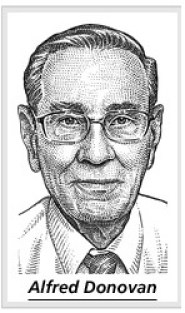 A head-cut image of Alfred Donovan (now deceased) appears courtesy of The Wall Street Journal.