The Guardian (UK): Only job-creating businesses can really make poverty history
By Kurt Hoffman
Monday June 6, 2005
On the face of it, making poverty history seems a straightforward task. Virtually everyone, including the poor in Africa, lives in a cash economy. With cash, you can access food, clothing, shelter, health care and education.
So creating millions of new jobs should be at the very heart of the efforts of the international community’s endeavours, because this is the only thing that offers poor people a chance to escape poverty permanently.
Hopefully Tony Blair and Gordon Brown will be successful in winning agreement from G8 countries on aid, trade and debt.
More important than the substance of any deal, however, is whether Blair and his counterparts truly believe that the international development community – the donors, aid agencies, academics and NGOs – can play the lead role in converting hard-won political concessions into real job opportunities for the poor.
But although it is experienced in many things, the development community does not know how to start up and grow businesses.
The International Labour Organisation last year pointed out that between 1985 and 2002, the poorest third of developing countries saw their share of world trade fall by a quarter (3.6% to 2.7%), their share of world GDP more than halve (4.5% to 2%) and their share of global foreign direct investment collapse by two-thirds (3.3% to 1.1%).
Fortunately, however, there is plenty of real world enterprise experience available that can help make progress in creating jobs.
One source is the poor themselves: millions of Africans have to be entrepreneurs to make enough money to simply survive, starting new informal sector businesses every month. They work hard to make these businesses succeed, although many will ultimately fail. But in both cases, there is much valuable knowledge gained about the obstacles to success.
The second source of knowledge is established businesses that have figured out responsible ways to prosper in difficult trading conditions – corruption, poor infrastructure and iniquitous trade regulations. In being able to turn a profit, these enterprises have accumulated valuable insights into market distortions, country by country.
But neither local entrepreneurs nor established wealth-creating businesses are often part of the conversations going on in New York, Washington and London about how to make poverty history.
In the case of big business, it’s the wrong company representatives talking to the development community: instead of talking to the core value creators of companies, the development community ends up talking to experts in corporate social responsibility.
It’s time that Africa’s wealth creators were asked to take the lead in providing the real development insight and expertise the development community so patently lacks. That means anybody from the biggest inward investors to the smallest African enterprises. Both will tell you how to dismantle the obstacles to growth.
In the end it’s this sort of action, rather than dropping debt or doubling aid, that will open permanent routes out of poverty for the poor.
Kurt Hoffman is director of the Shell Foundation. Enterprise Solutions to Poverty can be downloaded at www.shellfoundation.org
http://www.guardian.co.uk/business/story/0,,1499929,00.html
This website and sisters royaldutchshellplc.com, shellnazihistory.com, royaldutchshell.website, johndonovan.website, and shellnews.net, are owned by John Donovan. There is also a Wikipedia segment.


 Royal Dutch Shell conspired directly with Hitler, financed the Nazi Party, was anti-Semitic and sold out its own Dutch Jewish employees to the Nazis. Shell had a close relationship with the Nazis during and after the reign of Sir Henri Deterding, an ardent Nazi, and the founder and decades long leader of the Royal Dutch Shell Group. His burial ceremony, which had all the trappings of a state funeral, was held at his private estate in Mecklenburg, Germany. The spectacle (photographs below) included a funeral procession led by a horse drawn funeral hearse with senior Nazis officials and senior Royal Dutch Shell directors in attendance, Nazi salutes at the graveside, swastika banners on display and wreaths and personal tributes from Adolf Hitler and Reichsmarschall, Hermann Goring. Deterding was an honored associate and supporter of Hitler and a personal friend of Goring.

 Deterding was the guest of Hitler during a four day summit meeting at Berchtesgaden. Sir Henri and Hitler both had ambitions on Russian oil fields. Only an honored personal guest would be rewarded with a private four day meeting at Hitler’s mountain top retreat.


 IN JULY 2007, MR BILL CAMPBELL (ABOVE, A RETIRED GROUP AUDITOR OF SHELL INTERNATIONAL SENT AN EMAIL TO EVERY UK MP AND MEMBER OF THE HOUSE OF LORDS:


 MORE DETAILS:


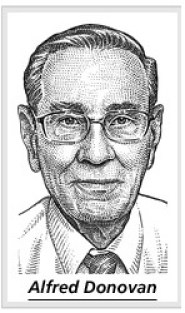 A head-cut image of Alfred Donovan (now deceased) appears courtesy of The Wall Street Journal.