Shells CEO designate Peter Voser would have to have been terminally naïve to assume that his extraordinary internal Email to staff would not immediately be placed in the public domain – as indeed it was within minutes of its transmission. Assuming that Voser knew exactly what he is doing lets analyse what this message means for Shells battered stakeholders.
The fact that Voser chose to send out the Email when there is a still a month to go before he takes over as CEO is remarkable – and crassly insensitive to the feelings of the current man in charge Jeroen van der Veer. Van der Veer will no doubt also be aggrieved that the tone of the Email is so fiercely critical of the Shell of today – a Shell that has been moulded over the past six years by his efforts. Outside stakeholders will also want to ask why, if things at Shell are quite so bad as Voser says, van der Veer has been remunerated to the extent of around 10million Euros a year, why he is to receive a pension of well over one million Euros a year and why his contract with Shell was extended well beyond the normal Shell retirement age of 60.


 The leaked news, yet to be confirmed but buzzing around the City, that the two regal corporations Royal Bank of Scotland and Royal Dutch Shell are to merge has caught analysts and legislators off their guard.
  The idea that a failing bank and a struggling oil company should pool there resources seems extraordinary but no stranger than the bizarre train of circumstances that has led to this apparent accord. The further leaked insider information that the two beknighted ex-CEOs of Shell and RBS, Sir Philip Watts and Sir Fred Goodwin, are to be jointly tasked with the creation of the new global giant has rocked the city to its foundations Its as if Lehman Brothers went bust one insider said over a large glass of Château Margaux 1986.


 First there is an announcement unusually couched in slogans about the need for “greater efficiency” or “More focused business” or “delayering” then we get the call to arms and the “challenges” – these are pretty unsophisticated – usually with some finite value target such as “reduce costs by 15% minimum”. Then reality kicks in with the realisation that reducing costs means employing less people as much of the rest of the cost base is not very suitable for more than a bit of cosmetic trimming on the margin. Maintenance and repair budgets always suffer so the petrol stations start to look a bit dowdy and the repainting schedule at installations gets extended again. Expenditure that protects Heath and Safety should be immune from these attacks – but as we have seen over the years there are too many shocking examples of where Health and Safety has been put at risk because maintenance budgets have been cut.The buzz word that is often used when the cost-cutting imperative comes to the fore is “discretionary” expenditure. As the term suggests this is supposed to describe things that you would perhaps like to spend your money on but don’t absolutely have to – at least in the short term. This tends not to be the bonuses of the high priced help, although it certainly should mean these. It very often does mean expenditure for which the benefit is difficult to quantify in the short term and for which the payback may not be easily expressed in monetary terms. Advertising and other communications expenditure is a classic example of this.


 Shell has been twice criticised by the Advertising Standards Authority and BP and others have also outraged the environmental lobby by the sheer effrontery of many of their claims. But where did it all begin?

 Â


 Royal Dutch Shell conspired directly with Hitler, financed the Nazi Party, was anti-Semitic and sold out its own Dutch Jewish employees to the Nazis. Shell had a close relationship with the Nazis during and after the reign of Sir Henri Deterding, an ardent Nazi, and the founder and decades long leader of the Royal Dutch Shell Group. His burial ceremony, which had all the trappings of a state funeral, was held at his private estate in Mecklenburg, Germany. The spectacle (photographs below) included a funeral procession led by a horse drawn funeral hearse with senior Nazis officials and senior Royal Dutch Shell directors in attendance, Nazi salutes at the graveside, swastika banners on display and wreaths and personal tributes from Adolf Hitler and Reichsmarschall, Hermann Goring. Deterding was an honored associate and supporter of Hitler and a personal friend of Goring.

 Deterding was the guest of Hitler during a four day summit meeting at Berchtesgaden. Sir Henri and Hitler both had ambitions on Russian oil fields. Only an honored personal guest would be rewarded with a private four day meeting at Hitler’s mountain top retreat.


 IN JULY 2007, MR BILL CAMPBELL (ABOVE, A RETIRED GROUP AUDITOR OF SHELL INTERNATIONAL SENT AN EMAIL TO EVERY UK MP AND MEMBER OF THE HOUSE OF LORDS:


 MORE DETAILS:


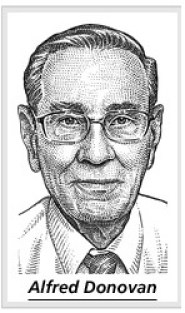 A head-cut image of Alfred Donovan (now deceased) appears courtesy of The Wall Street Journal.