

The Health and Safety Executive has written to all oil and gas operators expressing concern about the number of gas releases in the industry.
The regulator said some had come “perilously close to disaster” and that more needed to be done to tackle them.
The HSE said a “lack of leadership” was often to blame for leaks, and called for firms to review their processes.
Operators have until July to respond with a summary of their planned improvements.
The HSE has written to operators ahead of the 30th anniversary of the Piper Alpha disaster. The platform exploded in July 1988, leaving 167 men dead.
It said it had become concerned by the number of releases still happening.
‘Safety threat’
The plan is to then feed back the findings to the sector at an event later in the year.
Chris Flint, the HSE’s director of energy division, said: “Every HCR (hydrocarbon release) is a safety threat, as it represents a failure in an operator’s management of its risks.
“I recognise the steps the industry has taken to reduce the overall number of HCRs, however HCRs remain a concern, particularly major HCRs because of their greater potential to lead to fires, explosions and multiple losses of life.
“There have been several such releases in recent years that have come perilously close to disaster.”
He added: “Experience from our investigations is that HCRs typically happen because there have been failings across the board.
“If you get the safety culture right, staff will be much more likely to spot hazards, challenge when standards aren’t right, and be engaged in improvement.”
‘Important work’
Oil & Gas UK’s chief executive Deirdre Michie said: “As the HSE recognise in the letter sent to our members, our industry has delivered “a substantial and welcome downward trend in the total number of HCRs since 2005.
“However, we all know there is never room for complacency.
“We understand why the HSE wants to highlight areas where industry can further improve and we continue to work closely with them to reduce hydrocarbon releases.
“The industry is committed to ensuring lessons are learned and good practice is shared, and look forward to using the results of this initiative to progress this important work.”
In 2012, a leak on Total’s Elgin platform continued for 51 days.
The company was fined more than £1m.
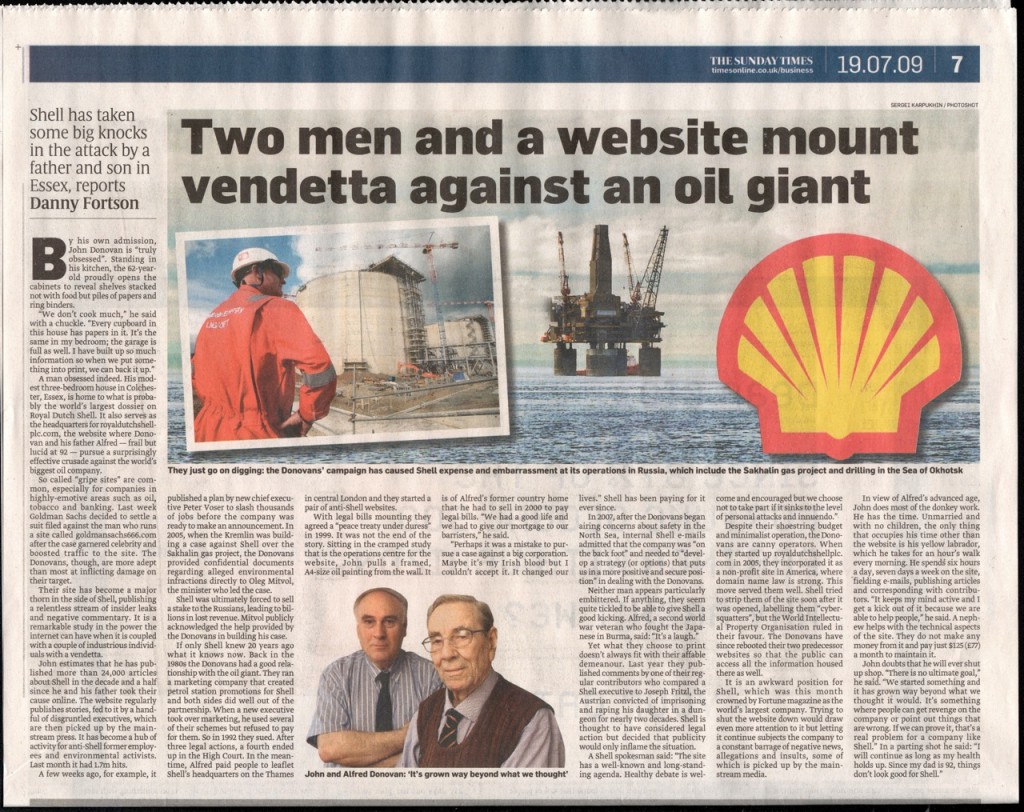
This website and sisters royaldutchshellplc.com, shellnazihistory.com, royaldutchshell.website, johndonovan.website, and shellnews.net, are owned by John Donovan. There is also a Wikipedia segment.


 Royal Dutch Shell conspired directly with Hitler, financed the Nazi Party, was anti-Semitic and sold out its own Dutch Jewish employees to the Nazis. Shell had a close relationship with the Nazis during and after the reign of Sir Henri Deterding, an ardent Nazi, and the founder and decades long leader of the Royal Dutch Shell Group. His burial ceremony, which had all the trappings of a state funeral, was held at his private estate in Mecklenburg, Germany. The spectacle (photographs below) included a funeral procession led by a horse drawn funeral hearse with senior Nazis officials and senior Royal Dutch Shell directors in attendance, Nazi salutes at the graveside, swastika banners on display and wreaths and personal tributes from Adolf Hitler and Reichsmarschall, Hermann Goring. Deterding was an honored associate and supporter of Hitler and a personal friend of Goring.

 Deterding was the guest of Hitler during a four day summit meeting at Berchtesgaden. Sir Henri and Hitler both had ambitions on Russian oil fields. Only an honored personal guest would be rewarded with a private four day meeting at Hitler’s mountain top retreat.


 IN JULY 2007, MR BILL CAMPBELL (ABOVE, A RETIRED GROUP AUDITOR OF SHELL INTERNATIONAL SENT AN EMAIL TO EVERY UK MP AND MEMBER OF THE HOUSE OF LORDS:


 MORE DETAILS:


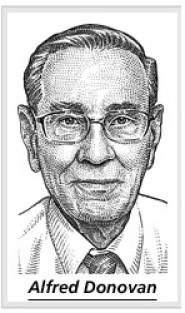 A head-cut image of Alfred Donovan (now deceased) appears courtesy of The Wall Street Journal.