
By Ed Crooks: October 7, 2016
Two international agreements have dominated the week’s energy news. Both have futures that are still shrouded in uncertainty, but are important landmarks if only because countries with widely diverging interests were able to come together and sign up to a shared course of action.
One was the Paris climate accord, which this week secured support from enough countries to come into force formally next month. The UN said 73 countries and the EU, accounting for more than 55 per cent of global greenhouse gas emissions, had ratified the agreement, crossing the thresholds set when the accord was adopted last December. More of the 195 countries that agreed the deal then are expected to join it formally in the coming weeks, months and years.
What exactly “entering into force” means is complex. The foundation of the accord is contributions to greenhouse gas emissions curbs that countries have proposed for themselves, and are not legally bound to deliver. The World Resources Institute has a useful set of FAQs (scroll down), and Carbon Brief also had a good explainer.
(Making the Nationally Determined Contributions to emissions reduction non-binding was a requirement for the US at Paris, to secure the legal position of the accord against challenges because the administration could not secure support for the agreement in the Senate.)
In another global move to curb emissions, almost 200 countries signed up to the first ever international climate deal for aviation. It will mean airlines offsetting their emissions growth with investments in projects that cut carbon, such as wind and solar power generation.
The other agreement still dominating energy news is Opec’s plan to cut production, announced at the ministerial meeting in Algiers last month. The plan has continued to support crude prices, but there are still big questions over how the proposed cuts will be shared out between Opec members. Grant Smith at Bloomberg pointed out that Saudi Arabia was facing the risk of a rising cost from cutting production while rival producers ramp up.
In September, Opec members’ crude output rose again, to 33.6m barrels per day, according to Reuters. The news agency also had a poll showing that analysts were sceptical about the Algiers deal’s impact on oil prices in 2017.
Russia’s oil minister is expected to meet at least some of his Opec counterparts at the World Energy Congress in Istanbul next week, but analysts doubt he will make any clear commitment to output cuts. Argus described prospects for the meeting as “more a turkey than a delight”.
The prospect of a sustained period of lower oil prices, hit by competition from North American shale production and potentially slower demand growth because of climate policies, is a spur to economic reform in Saudi Arabia. One sign of the momentous changes under way is that Saudi Aramco, the national oil company, is preparing to give investors unprecedented access to its accounts, as it gets ready for its planned IPO in 2018. The company is planning to sell shares in its entire business, not just its refining and distribution operations as has sometimes been suggested, its chief executive told Bloomberg.
Another week, another company reporting a huge oil discovery in the US. The discovery, estimated at up to 2.4bn recoverable barrels, is certainly interesting. But there will be some daunting logistical problems to be overcome before it can be commercially produced.
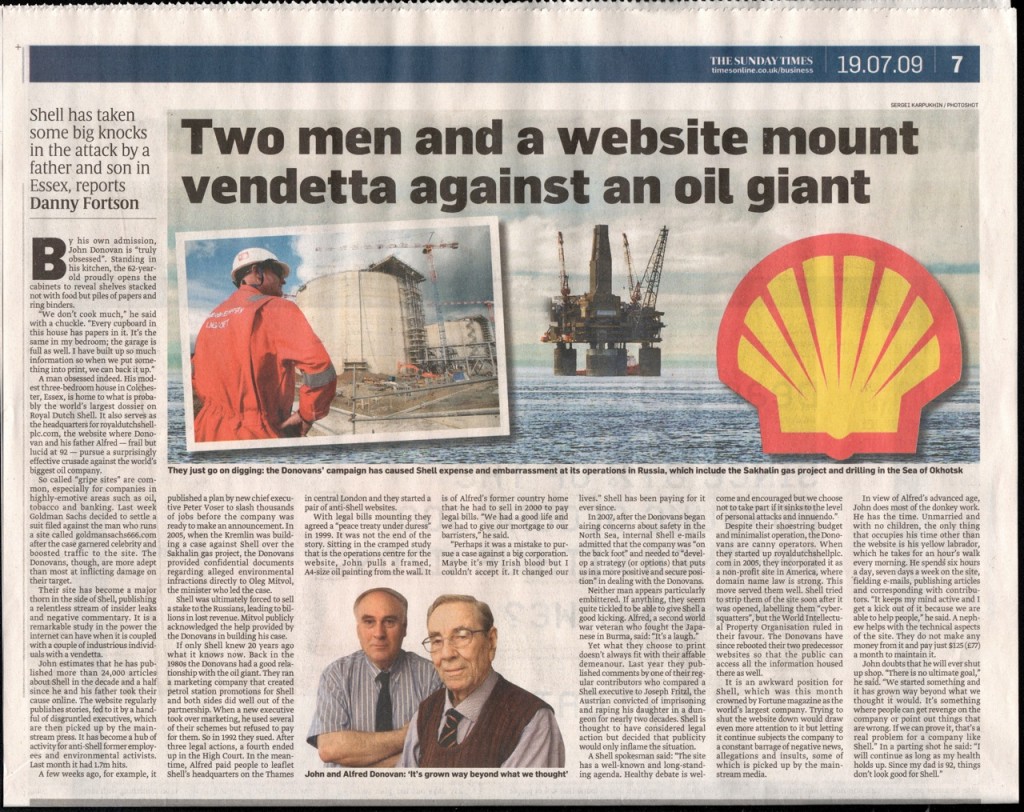
This website and sisters royaldutchshellplc.com, shellnazihistory.com, royaldutchshell.website, johndonovan.website, and shellnews.net, are owned by John Donovan. There is also a Wikipedia segment.


 Royal Dutch Shell conspired directly with Hitler, financed the Nazi Party, was anti-Semitic and sold out its own Dutch Jewish employees to the Nazis. Shell had a close relationship with the Nazis during and after the reign of Sir Henri Deterding, an ardent Nazi, and the founder and decades long leader of the Royal Dutch Shell Group. His burial ceremony, which had all the trappings of a state funeral, was held at his private estate in Mecklenburg, Germany. The spectacle (photographs below) included a funeral procession led by a horse drawn funeral hearse with senior Nazis officials and senior Royal Dutch Shell directors in attendance, Nazi salutes at the graveside, swastika banners on display and wreaths and personal tributes from Adolf Hitler and Reichsmarschall, Hermann Goring. Deterding was an honored associate and supporter of Hitler and a personal friend of Goring.

 Deterding was the guest of Hitler during a four day summit meeting at Berchtesgaden. Sir Henri and Hitler both had ambitions on Russian oil fields. Only an honored personal guest would be rewarded with a private four day meeting at Hitler’s mountain top retreat.


 IN JULY 2007, MR BILL CAMPBELL (ABOVE, A RETIRED GROUP AUDITOR OF SHELL INTERNATIONAL SENT AN EMAIL TO EVERY UK MP AND MEMBER OF THE HOUSE OF LORDS:


 MORE DETAILS:


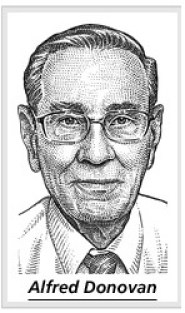 A head-cut image of Alfred Donovan (now deceased) appears courtesy of The Wall Street Journal.