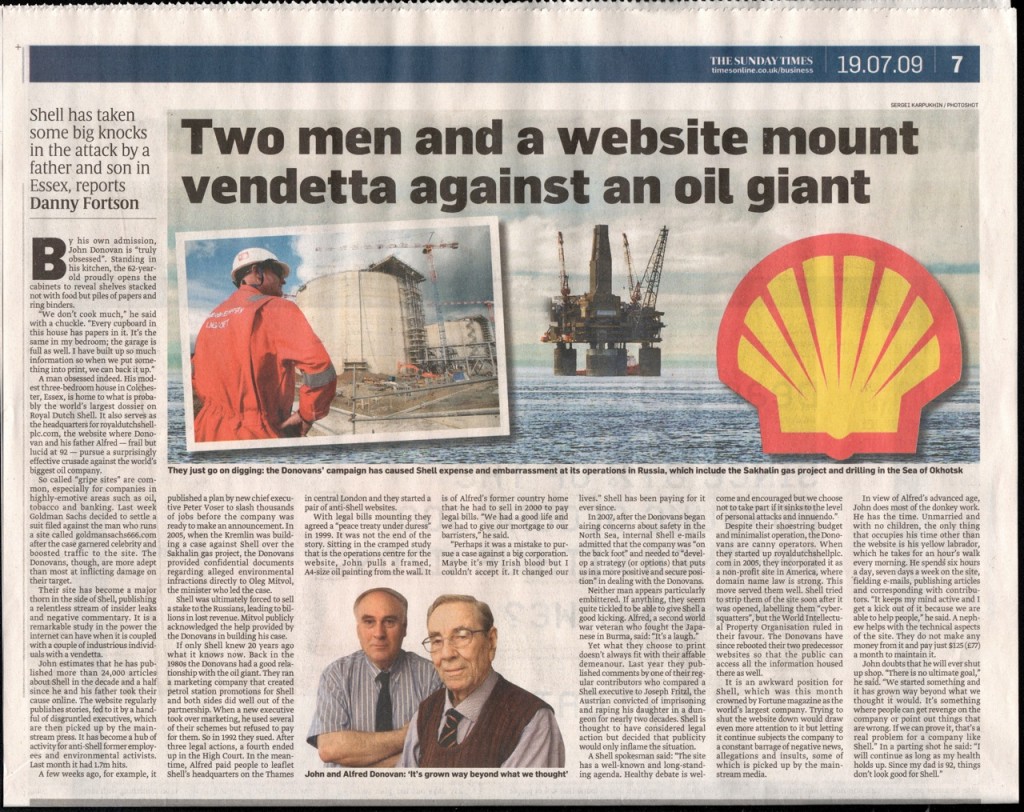

“Executives predict a wave of mergers not seen since 1998, the last time the oil price suffered a precipitous and sustained fall.”
Extracts from a Danny Fortson article published on the front page and page 6 of The Sunday Times Business Section on 28 December 2014 under the headline:
“Oil explorers left high and dry by crude crisis”
How times change. Three years on, Afren, like many of its rivals, is on the ropes thanks to the halving of the oil price from its July high of $114 a barrel to $61. The drop has unleashed chaos in the markets as once-swashbuckling explorers find themselves buckling under debts they took on when the market was booming and with investors, already nursing heavy losses, who are unwilling to bail them out.
Executives predict a wave of mergers not seen since 1998, the last time the oil price suffered a precipitous and sustained fall.
Their larger rivals, which have more diverse revenue streams that include oil trading and refining, have weathered the storm much better. Royal Dutch Shell, for example, has actually seen its share price rise 2% this year while BP, despite its legal problems in America, has lost only 14%.
The upshot is that the shares of the biggest companies now represent a much more valuable takeover currency that could be used to snap up rivals who have hit the buffers. Deals that have been often contemplated but never consummated because of a target’s unrealistic value expectations are now on the table.
The desperation has already started to push some transactions over the line.
How the industry’s players divide into predators and prey depends, to a great degree, on the strength of their balance sheet and how long the oil price stays low.
Last week Ali ai-Naimi, Saudi Arabia’s oil minister, gave the strongest indication yet that the price of crude will stay in the doldrums for the foreseeable future. Speaking on behalf of Opec, the cartel of oil-producing nations that accounts for a third of the world’s output, he said:
“It is not in the interest of Opec producers to cut their production, whatever the price is. Whether it goes down to $20, $40, $50, $60, it is irrelevant.”


 Royal Dutch Shell conspired directly with Hitler, financed the Nazi Party, was anti-Semitic and sold out its own Dutch Jewish employees to the Nazis. Shell had a close relationship with the Nazis during and after the reign of Sir Henri Deterding, an ardent Nazi, and the founder and decades long leader of the Royal Dutch Shell Group. His burial ceremony, which had all the trappings of a state funeral, was held at his private estate in Mecklenburg, Germany. The spectacle (photographs below) included a funeral procession led by a horse drawn funeral hearse with senior Nazis officials and senior Royal Dutch Shell directors in attendance, Nazi salutes at the graveside, swastika banners on display and wreaths and personal tributes from Adolf Hitler and Reichsmarschall, Hermann Goring. Deterding was an honored associate and supporter of Hitler and a personal friend of Goring.

 Deterding was the guest of Hitler during a four day summit meeting at Berchtesgaden. Sir Henri and Hitler both had ambitions on Russian oil fields. Only an honored personal guest would be rewarded with a private four day meeting at Hitler’s mountain top retreat.


 IN JULY 2007, MR BILL CAMPBELL (ABOVE, A RETIRED GROUP AUDITOR OF SHELL INTERNATIONAL SENT AN EMAIL TO EVERY UK MP AND MEMBER OF THE HOUSE OF LORDS:


 MORE DETAILS:


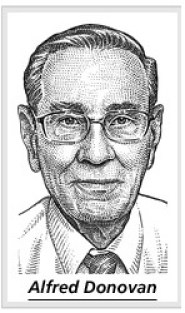 A head-cut image of Alfred Donovan (now deceased) appears courtesy of The Wall Street Journal.