

By Rob Davies: PUBLISHED: 21:53, 26 August 2012 | UPDATED: 21:54, 26 August 2012
Shell paid warlords and militants not to attack its pipelines in the Niger Delta, contributing to armed violence in the troubled region, according to a new report.
According to evidence obtained from leaked US Embassy cables and interviews with local people, the Anglo-Dutch oil giant paid ‘protection’ money to dangerous militant groups.
Shell fights a daily battle against oil theft and the threat to its staff from kidnappers, forcing it to go to great lengths to resolve the security situation.
But campaign group Platform argues that paying local militants fuels instability in the region, at the expense of local communities affected by tribal and criminal violence.
Its report said that ‘from 2005 to 2010, Shell’s routine contracts and payments to armed militants fuelled a range of conflicts’.
In 2003, the managing director of SPDC, Shell’s Nigerian joint venture with the government, said it had ordered staff to make ‘no cash payments to communities other than those specified for legitimate business relations’.
But three months later, US embassy cables say Shell was still offering informal cash payments to local groups that security analysts WAC Global had deemed a ‘prominent trigger’ for conflict.
One diplomatic message, from US ambassador John Campbell, read: ‘The oil companies have poured money into select villages/clans to buy protection or placate local populations.’
‘Over 30 years that money has piled up guns in the hands of Delta villagers.’
As recently as February this year, Mutiu Sunmonu, who heads Shell Nigeria, admitted that the company has struggled to eliminate such payments.
‘You do not know who is a militant and who is a genuine contractor,’ he said at an event in London.
‘So there could be cases in the past where you have thought you were employing, you know, a genuine bona fide contractor, and yet he is probably a militant or a warlord.’
Shell describes some of the payments it makes as ‘surveillance contracts’, rewarding communities for keeping an eye out for oil theft. Platform said such contracts were ‘simply a fig leaf for illegitimate protection payments’.
‘These contracts have fuelled violence between armed youth groups, de-stabilised communities and sparked communal conflicts,’ the group said.
A Shell spokesman said: ‘Protecting our people and our assets is Shell’s highest priority, and we have always acknowledged the difficulties of working in countries like Nigeria. We comply fully with local legislation when making payments to any third party.’
The report comes just a week after it emerged that Shell spent £242m in four years to maintain a 1200-strong private militia to protect its installations.


 Royal Dutch Shell conspired directly with Hitler, financed the Nazi Party, was anti-Semitic and sold out its own Dutch Jewish employees to the Nazis. Shell had a close relationship with the Nazis during and after the reign of Sir Henri Deterding, an ardent Nazi, and the founder and decades long leader of the Royal Dutch Shell Group. His burial ceremony, which had all the trappings of a state funeral, was held at his private estate in Mecklenburg, Germany. The spectacle (photographs below) included a funeral procession led by a horse drawn funeral hearse with senior Nazis officials and senior Royal Dutch Shell directors in attendance, Nazi salutes at the graveside, swastika banners on display and wreaths and personal tributes from Adolf Hitler and Reichsmarschall, Hermann Goring. Deterding was an honored associate and supporter of Hitler and a personal friend of Goring.

 Deterding was the guest of Hitler during a four day summit meeting at Berchtesgaden. Sir Henri and Hitler both had ambitions on Russian oil fields. Only an honored personal guest would be rewarded with a private four day meeting at Hitler’s mountain top retreat.


 IN JULY 2007, MR BILL CAMPBELL (ABOVE, A RETIRED GROUP AUDITOR OF SHELL INTERNATIONAL SENT AN EMAIL TO EVERY UK MP AND MEMBER OF THE HOUSE OF LORDS:


 MORE DETAILS:


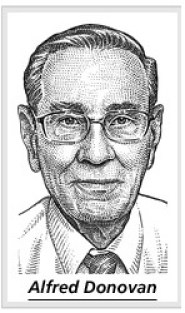 A head-cut image of Alfred Donovan (now deceased) appears courtesy of The Wall Street Journal.