
FROM OUR AUGUST 2004 SHELL NEWS ARCHIVE
The Guardian: Solitary part-timer conducted group audit
“The FSA makes clear that Shell’s reserves difficulties began in 1997”
Terry Macalister
Wednesday August 25, 2004
The crucial auditing of Shell’s global oil and gas reserves was undertaken by one part-time engineer.
The revelation comes in the report by the Financial Services Authority, which describes group reserves auditing (GRA) of a key value indicator as “deficient and ineffective”.
Shell’s decentralised structure needed a robust internal reserves auditing function. Instead, it “had engaged as GRA a petroleum engineer – who worked only part-time and was provided limited resources and no staff – to audit its worldwide operations,” the FSA says.
The FSA makes clear that Shell’s reserves difficulties began in 1997, the year in which former group chairman Sir Philip Watts took over as exploration and production director. In September 1997 Shell revised the way it reported proven reserves and revamped it again afterwards.
A paper in May 1998, Creating Value Through Entrepreneurial Management of Hydrocarbon Reserve Values, set out new standards geared to helping it catch up with rivals’ better performance. The FSA says: “These revised guidelines resulted in an overstatement of proved reserves of 940m barrels of oil equivalents for the two years ending December 1999.”
Nigeria, where Sir Philip had been the boss of operations before becoming group exploration head, was at the heart of the problems. Reserves recorded on December 31 1999 relied on assumptions about improved conditions, such as increases in Shell’s national output restrictions plus Nigeria’s Opec quota.
As the FSA says: “These ‘assumptions’ did not comply with the requirement of the SEC that proved reserves are based on ‘existing conditions’.” Further overstatements came from Brunei, where reserves were related to field developments planned beyond existing contract expiry “for which there was no reasonable certainty”.
http://www.guardian.co.uk/business/story/0,,1290142,00.html
U.S. Securities & Exchange Commission Report
UK Financial Services Authority Report
Press Statement Issued by UK Financial Services Authority
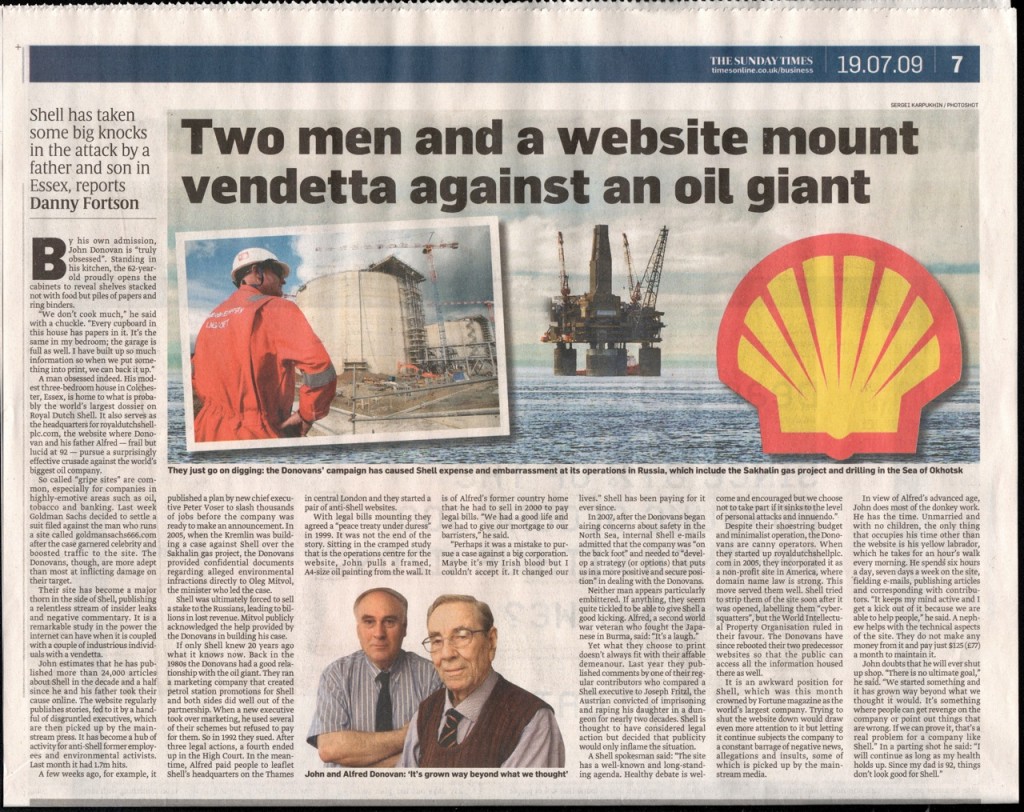
This website and sisters royaldutchshellplc.com, shellnazihistory.com, royaldutchshell.website, johndonovan.website, and shellnews.net, are owned by John Donovan. There is also a Wikipedia segment.


 Royal Dutch Shell conspired directly with Hitler, financed the Nazi Party, was anti-Semitic and sold out its own Dutch Jewish employees to the Nazis. Shell had a close relationship with the Nazis during and after the reign of Sir Henri Deterding, an ardent Nazi, and the founder and decades long leader of the Royal Dutch Shell Group. His burial ceremony, which had all the trappings of a state funeral, was held at his private estate in Mecklenburg, Germany. The spectacle (photographs below) included a funeral procession led by a horse drawn funeral hearse with senior Nazis officials and senior Royal Dutch Shell directors in attendance, Nazi salutes at the graveside, swastika banners on display and wreaths and personal tributes from Adolf Hitler and Reichsmarschall, Hermann Goring. Deterding was an honored associate and supporter of Hitler and a personal friend of Goring.

 Deterding was the guest of Hitler during a four day summit meeting at Berchtesgaden. Sir Henri and Hitler both had ambitions on Russian oil fields. Only an honored personal guest would be rewarded with a private four day meeting at Hitler’s mountain top retreat.


 IN JULY 2007, MR BILL CAMPBELL (ABOVE, A RETIRED GROUP AUDITOR OF SHELL INTERNATIONAL SENT AN EMAIL TO EVERY UK MP AND MEMBER OF THE HOUSE OF LORDS:


 MORE DETAILS:


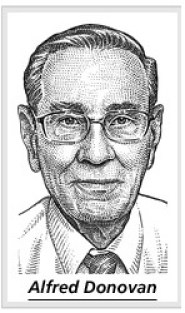 A head-cut image of Alfred Donovan (now deceased) appears courtesy of The Wall Street Journal.