Shell said it needed to improve its inspection policies. “We’re making every effort to improve our inspection program and revisit our maintenance priorities,” Cayley added.

Spilled crude oil from the Gannet field, co-owned by Royal Dutch Shell and Exxon Mobil Corp., floats off the coast of Scotland. The platform will be shut down for routine maintenance on Thursday.
Photograph by: PIUS UTOMI EKPEI AFP, GETTY IMAGES, Reuters 18 August 2011
Major oil producer Royal Dutch Shell said a large volume of oil remained in its leaking pipeline, raising the possibility that Britain’s worst oil spill for a decade could worsen, but said the extra amount would only seep out in a worst-case scenario.
Oil leaked into the sea off the coast of Scotland for a seventh day on Wednesday as Shell said it was planning extensive activity, including the deployment of divers, to completely stop the flow of oil.
The company told reporters on a conference call its estimate of the total volume of oil that had leaked remained at just over 218 tonnes, in line with a figure given on Monday, as oil continued to trickle out at the rate of one barrel a day. Up to 660 tonnes could remain in the pipeline at the Gannet field, however, said Glen Cayley, technical director of Shell’s European exploration and production activities, and the company was focusing on how to deal with it.
The Gannet platform, which Shell co-owns with U.S. oil major Exxon Mobil Corp., was due to be shut down for 30 days on Thursday as part of Shell’s routine maintenance schedule.
The shutdown will go ahead, giving the company the chance to investigate other pipelines connected to the field, Cayley said.
Shell said it needed to improve its inspection policies.
“We’re making every effort to improve our inspection program and revisit our maintenance priorities,” Cayley added.
The U.K. government said in a statement on Wednesday it believed the leak was under control.
“Although the spill was deemed as significant, our information is still that the oil is not expected to reach the shore, and that it will be dispersed naturally,” said Hugh Shaw, the Secretary of State’s representative for maritime salvage and intervention.


 Royal Dutch Shell conspired directly with Hitler, financed the Nazi Party, was anti-Semitic and sold out its own Dutch Jewish employees to the Nazis. Shell had a close relationship with the Nazis during and after the reign of Sir Henri Deterding, an ardent Nazi, and the founder and decades long leader of the Royal Dutch Shell Group. His burial ceremony, which had all the trappings of a state funeral, was held at his private estate in Mecklenburg, Germany. The spectacle (photographs below) included a funeral procession led by a horse drawn funeral hearse with senior Nazis officials and senior Royal Dutch Shell directors in attendance, Nazi salutes at the graveside, swastika banners on display and wreaths and personal tributes from Adolf Hitler and Reichsmarschall, Hermann Goring. Deterding was an honored associate and supporter of Hitler and a personal friend of Goring.

 Deterding was the guest of Hitler during a four day summit meeting at Berchtesgaden. Sir Henri and Hitler both had ambitions on Russian oil fields. Only an honored personal guest would be rewarded with a private four day meeting at Hitler’s mountain top retreat.


 IN JULY 2007, MR BILL CAMPBELL (ABOVE, A RETIRED GROUP AUDITOR OF SHELL INTERNATIONAL SENT AN EMAIL TO EVERY UK MP AND MEMBER OF THE HOUSE OF LORDS:


 MORE DETAILS:


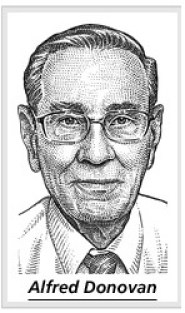 A head-cut image of Alfred Donovan (now deceased) appears courtesy of The Wall Street Journal.