
10 July 2011 By John Burke Public Affairs Correspondent
Homeowners are facing the very likely risk that energy prices could rise due to competition between the new Corrib gas supply and the Bord Gáis owned undersea gas-supply interconnectors, the state energy regulator has warned.
In a paper published last week, the regulator said that any decline in demand for gas from the Bord Gáis interconnectors could be expected to fall following the addition of supply sources, but it also warned that this might lead to higher prices for consumers.
When a new supply comes On stream, there will be a large diversion of capacity bookings away from the interconnectors to the new supply source, as it is fully expected that the new supply source will be marginally cheaper,” the Commission for Energy Regulation (CER) paper said.
However, the CER warned that falling interconnector bookings could have a significant effect on the interconnector subsidy paid to Bord Gáis, as the lower the bookings go, the higher the tariff goes in return.
The paper set out a range of options to prepare for the change in demand from interconnectors to other sources of gas supply, following an earlier request for submissions from interested bodies.
In addressing the importance of a proper regulatory framework to resolve emerging issues with different gas supplies, it said any increase [in the tariff] would allow producers to price up their gas to consumers, allowing gas companies to gain further margins, thus putting an even bigger burden on the final customers.
If the current interconnector tariff structure is not altered, it is very likely that all consumers – gas and, indirectly, electricity – will be impacted by higher gas costs,” CER said.
In its submission to CER, the Irish Offshore Operators Association, which also represents Shell EP Ireland, the company behind the Corrib gas field, questioned what it said was CERs de facto decision that the interconnectors had a high value in terms of security of supply.
The association argued that Bord Gáiss decision to construct the second of the two existing interconnectors in 2000 was commercial, reiterating its long-held view that any decline in demand for interconnector supply should be borne primarily by the state utility company.
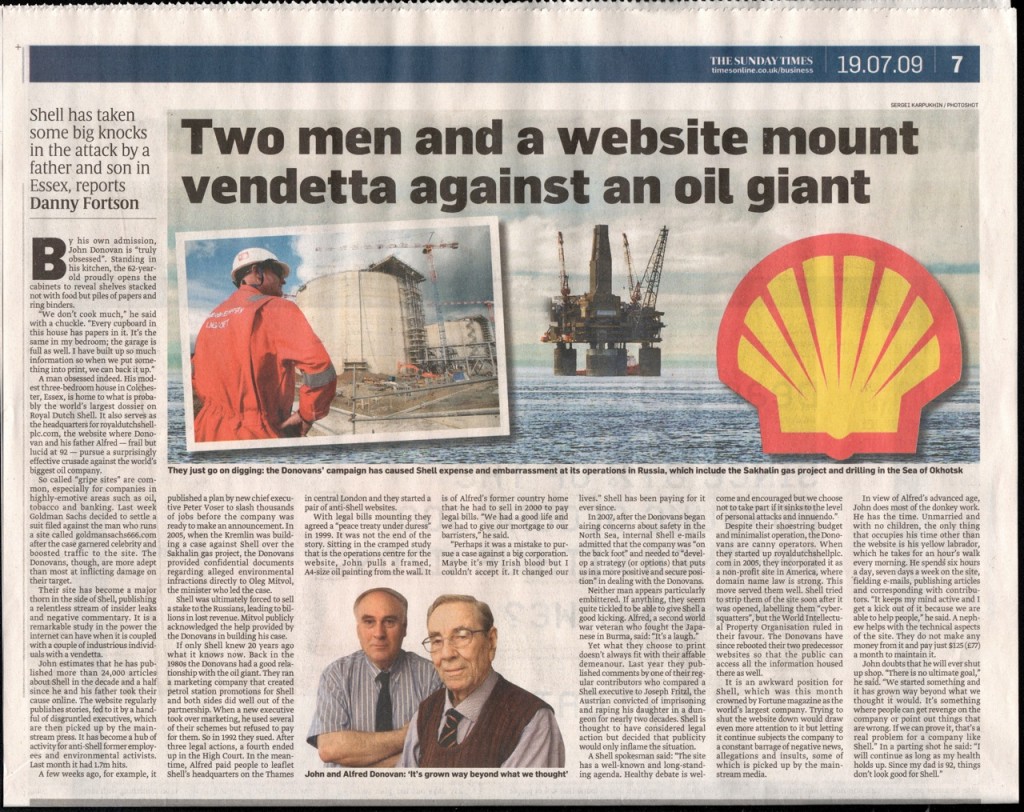
This website and sisters royaldutchshellplc.com, shellnazihistory.com, royaldutchshell.website, johndonovan.website, and shellnews.net, are owned by John Donovan. There is also a Wikipedia segment.


 Royal Dutch Shell conspired directly with Hitler, financed the Nazi Party, was anti-Semitic and sold out its own Dutch Jewish employees to the Nazis. Shell had a close relationship with the Nazis during and after the reign of Sir Henri Deterding, an ardent Nazi, and the founder and decades long leader of the Royal Dutch Shell Group. His burial ceremony, which had all the trappings of a state funeral, was held at his private estate in Mecklenburg, Germany. The spectacle (photographs below) included a funeral procession led by a horse drawn funeral hearse with senior Nazis officials and senior Royal Dutch Shell directors in attendance, Nazi salutes at the graveside, swastika banners on display and wreaths and personal tributes from Adolf Hitler and Reichsmarschall, Hermann Goring. Deterding was an honored associate and supporter of Hitler and a personal friend of Goring.

 Deterding was the guest of Hitler during a four day summit meeting at Berchtesgaden. Sir Henri and Hitler both had ambitions on Russian oil fields. Only an honored personal guest would be rewarded with a private four day meeting at Hitler’s mountain top retreat.


 IN JULY 2007, MR BILL CAMPBELL (ABOVE, A RETIRED GROUP AUDITOR OF SHELL INTERNATIONAL SENT AN EMAIL TO EVERY UK MP AND MEMBER OF THE HOUSE OF LORDS:


 MORE DETAILS:


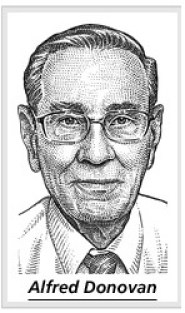 A head-cut image of Alfred Donovan (now deceased) appears courtesy of The Wall Street Journal.