
The chairman of BP has said the company remains the “obviously favourable” partner to explore the Arctic with Rosneft, despite the failure of their £10bn tie-up last month.

BP chief executive Bob Dudley (right) with Rosneft president Eduard Khudainatov during the original signing of the share-swap and joint venture deal. Photo: EPA
By Rowena Mason, Energy Correspondent
6:00AM BST 09 Jun 2011
Carl-Henric Svanberg said BP is still optimistic about reaching a deal “in some form or another” after a planned share swap and exploration deal with the Kremlin-backed oil giant fell through.
Bob Dudley, the chief executive of BP, also implied that the company’s efforts to expand in Russia are not yet quite over.
“We’ve worked very hard on this with all the parties,” he said. “From BP’s view, it’s other parties that need to reach an agreement and in the meantime we are moving on.”
The alliance was frustrated because of an exclusivity agreement governing TNK-BP, the joint venture between BP and four oligarchs in Russia.
The four billionaires obtained a court order banning BP and Rosneft from exploring the Arctic together.
The two sides agreed a peace deal last month, but negotiations over the future of TNK-BP have restarted.
It emerged on Tuesday that the four Russians are considering their legal options for fear that the British oil giant will try to sell a stake in TNK-BP to Rosneft.
Mr Dudley said: “No notifications have been sent about the sale by any party and BP is not planning to sell shares in TNK-BP.”
Rosneft has been holding talks with BP’s rival Royal Dutch Shell over potentially replacing it as a partner for exploring the Arctic.
Separately, Shell has announced plans to develop a $2.5bn (£1.5bn) project to develop its Cardamom oil and gas field in the deep-water Gulf of Mexico, the US offshore region hit by the BP oil spill last year.
The Cardamom field is located roughly 225 miles southwest of New Orleans. It is expected to produce 50,000 barrels of oil equivalent per day at its peak and more than 140m barrels of oil during its lifespan.


 Royal Dutch Shell conspired directly with Hitler, financed the Nazi Party, was anti-Semitic and sold out its own Dutch Jewish employees to the Nazis. Shell had a close relationship with the Nazis during and after the reign of Sir Henri Deterding, an ardent Nazi, and the founder and decades long leader of the Royal Dutch Shell Group. His burial ceremony, which had all the trappings of a state funeral, was held at his private estate in Mecklenburg, Germany. The spectacle (photographs below) included a funeral procession led by a horse drawn funeral hearse with senior Nazis officials and senior Royal Dutch Shell directors in attendance, Nazi salutes at the graveside, swastika banners on display and wreaths and personal tributes from Adolf Hitler and Reichsmarschall, Hermann Goring. Deterding was an honored associate and supporter of Hitler and a personal friend of Goring.

 Deterding was the guest of Hitler during a four day summit meeting at Berchtesgaden. Sir Henri and Hitler both had ambitions on Russian oil fields. Only an honored personal guest would be rewarded with a private four day meeting at Hitler’s mountain top retreat.


 IN JULY 2007, MR BILL CAMPBELL (ABOVE, A RETIRED GROUP AUDITOR OF SHELL INTERNATIONAL SENT AN EMAIL TO EVERY UK MP AND MEMBER OF THE HOUSE OF LORDS:


 MORE DETAILS:


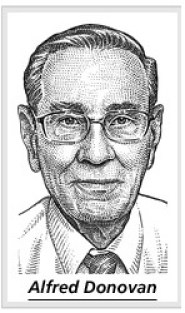 A head-cut image of Alfred Donovan (now deceased) appears courtesy of The Wall Street Journal.