
“Second Circuit Leaves Intact Ruling Limiting Jurisdiction of Alien Tort Statute Over Corporations”
Fulbright Briefing
Judith A. Archer and Sarah E. O’Connell
February 16, 2011
On February 4, 2011, the United States Court of Appeals for the Second Circuit denied en banc reconsideration of a September ruling in Kiobel v. Royal Dutch Petroleum Co., holding that the jurisdiction granted by the Alien Tort Statute (ATS) does not extend to civil actions brought against corporations. The vote of the full 10-judge panel of the Second Circuit was split 5-5, leaving intact the original ruling from September. The initial panel voted separately not to rehear the case. Kiobel v. Royal Dutch Petroleum Co., No. 06-4800-cv, 06-4876-cv, 2011 U.S. App. LEXIS 2200 (2d Cir. Feb. 4, 2011)
The ATS provides that [t]he district courts shall have original jurisdiction over any civil action by an alien for a tort only, committed in violation of the law of nations or a treaty of the United States. 28 U.S.C. § 1350. While originally the ATS was thought to cover only violations such as the law of safe passage, infringement of the rights of ambassadors and piracy, recently federal courts have seen an increase in the number of ATS filings.
Plaintiffs in recent cases have asserted claims against multinational corporations under the theory that the corporations aided and abetted human rights violations through their cooperation with governments alleged to have engaged in such violations. Nigerian-resident plaintiffs in Kiobel alleged that defendant corporations who engaged in oil exploration and production in Nigeria, aided and abetted the Nigerian government in committing human rights violations directed towards plaintiffs.
The district court dismissed some of plaintiffs claims, but allowed the claims alleging aiding and abetting arbitrary arrest and detention, crimes against humanity and torture, to go forward.
On appeal, the Second Circuit affirmed the district courts dismissal, but reversed the portion of the opinion permitting claims to go forward against the corporate defendants. Kiobel v. Royal Dutch Petroleum Co., 621 F.3d 111 (2d Cir. 2010). The majority opinion, authored by Judge Cabranes and joined by Chief Judge Jacobs, held that customary international law, namely, the universally accepted rules that the nations of the world treat as binding in their dealings with one another, determines the district courts jurisdiction under the ATS. Because customary international law, the majority held, has been limited from its inception to natural persons rather than juridical persons such as corporations, jurisdiction under the ATS does not extend to civil actions brought against corporations.
The Kiobel majority opinion does not limit suits against individual perpetrators of violations of customary international law, including employees and directors of corporations. Judge Leval, concurring only in the result, argued that the majoritys opinion dealt a substantial blow to international law and its fundamental undertaking to protect fundamental human rights.
This issue may well end up in the Supreme Court, since the Eleventh Circuit has reached the contrary result from the Second Circuit, holding in two separate opinions that corporations may be held liable under the ATS. Sinaltrainal v. Coca-Cola, 578 F.3d 1252, 1263 (11th Cir. 2009); Romero v. Drummond Co., Inc., 552 F.3d 1303 (11th Cir. 2008).
This article was prepared by Judith A. Archer ([email protected] or 212 318 3342) and Sarah E. O’Connell ([email protected] or 212 318 3093) from Fulbright’s Litigation Practice Group.
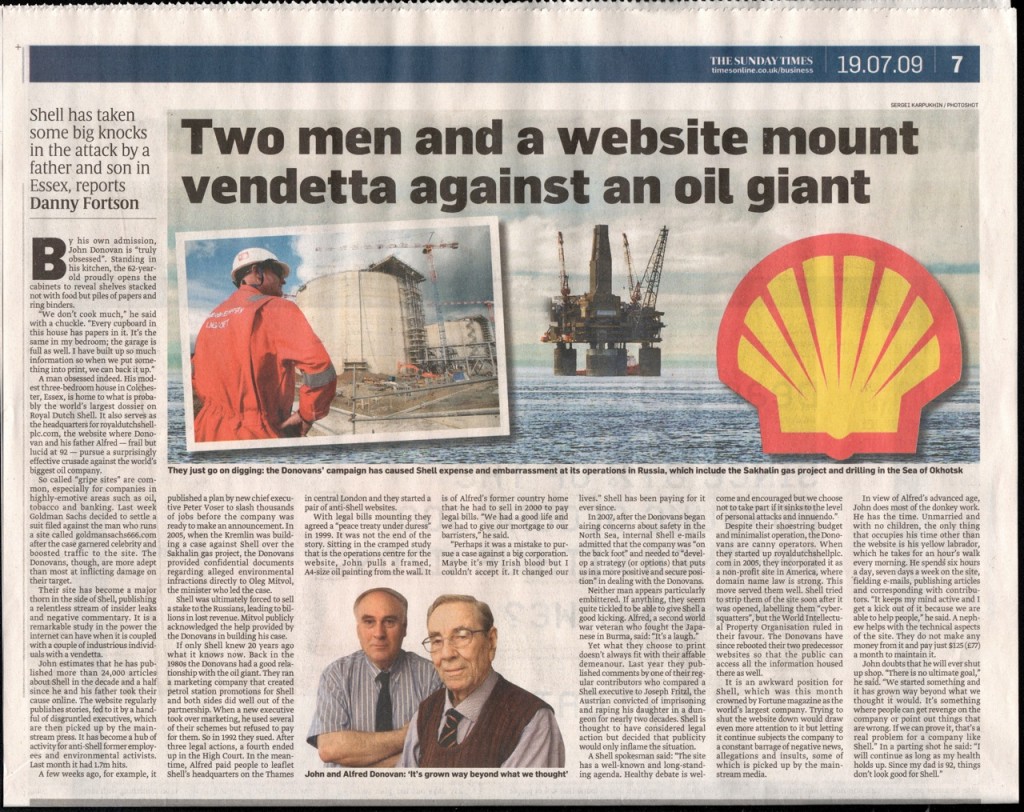
This website and sisters royaldutchshellplc.com, shellnazihistory.com, royaldutchshell.website, johndonovan.website, and shellnews.net, are owned by John Donovan. There is also a Wikipedia segment.


 Royal Dutch Shell conspired directly with Hitler, financed the Nazi Party, was anti-Semitic and sold out its own Dutch Jewish employees to the Nazis. Shell had a close relationship with the Nazis during and after the reign of Sir Henri Deterding, an ardent Nazi, and the founder and decades long leader of the Royal Dutch Shell Group. His burial ceremony, which had all the trappings of a state funeral, was held at his private estate in Mecklenburg, Germany. The spectacle (photographs below) included a funeral procession led by a horse drawn funeral hearse with senior Nazis officials and senior Royal Dutch Shell directors in attendance, Nazi salutes at the graveside, swastika banners on display and wreaths and personal tributes from Adolf Hitler and Reichsmarschall, Hermann Goring. Deterding was an honored associate and supporter of Hitler and a personal friend of Goring.

 Deterding was the guest of Hitler during a four day summit meeting at Berchtesgaden. Sir Henri and Hitler both had ambitions on Russian oil fields. Only an honored personal guest would be rewarded with a private four day meeting at Hitler’s mountain top retreat.


 IN JULY 2007, MR BILL CAMPBELL (ABOVE, A RETIRED GROUP AUDITOR OF SHELL INTERNATIONAL SENT AN EMAIL TO EVERY UK MP AND MEMBER OF THE HOUSE OF LORDS:


 MORE DETAILS:


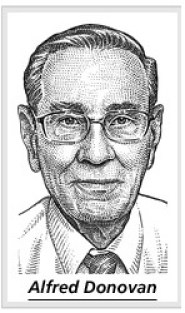 A head-cut image of Alfred Donovan (now deceased) appears courtesy of The Wall Street Journal.