
As energy heats up on Capitol Hill, executives are focused on not being squeezed out.
Almost seven weeks after the Deepwater Horizon incident that has ravaged the gulf and imperiled BP, other oil companies are beginning to feel the pinch of President Obama’s six-month moratorium on drilling. No drilling means no revenues, but also no jobs for the thousands of rig employees drilling deepwater wells. “At this point, public perception is a critical component of what we need to do,” said Roxanne Decyk, executive vice president of group government relations for Shell, speaking at an executive forum hosted by NEWSWEEK on Monday at the National Press Club. (Following are selected video clips of the event. Click here to view NEWSWEEK’s executive forum in full.)
There are two main messages that companies like Shell, which is going on the offense ahead of government action, are trying to drive. One is that safety has taken a new priority for all future drilling projects. After being told by federal regulators to halt operations in the Gulf and the Arctic, executives at Shell, Exxon Mobil, ConocoPhillips and Chevron vowed before a House subcommittee yesterday that the safety lapses uncovered in the investigation of the Deepwater Horizon explosion will be considered in ongoing drilling efforts, in many cases leading to additional “safety redundancies,” as the industry calls them, for projects already considered secure. For some companies, that could mean fortifying underwater equipment by placing a second blowout preventer on top of the first.
On Capitol Hill, where a parade of oil company executives defended their safety record this week, a growing number of lawmakers want to start that transition as soon as possible. As the Senate works to craft a comprehensive energy bill to vote on in July, there are some easy first steps. “The lowest hanging fruit is increased conservation and smart grid technology,” said Virginia Sen. Mark Warner, who also appeared on the NEWSWEEK panel. If it’s implemented right, he said, the transition to clean new energy sources could be the biggest job and wealth creator of the next decade.
Yet with the imperative of reaching 60 votes, it’s mathematically impossible for either party to chart its own course without input from the other side. The good news, according to political strategist Susan Eisenhower, president of the Eisenhower Group, is that energy and climate have enough agreeable componentslike energy efficiency, increased investment in tech research and strategic cuts in carbon emissionsto forge a deal. “Bipartisanship is often a dirty word,” Eisenhower said during the panel discussion, “but if there’s any issue in which bipartisanship is a must, it’s in the energy field.”


 Royal Dutch Shell conspired directly with Hitler, financed the Nazi Party, was anti-Semitic and sold out its own Dutch Jewish employees to the Nazis. Shell had a close relationship with the Nazis during and after the reign of Sir Henri Deterding, an ardent Nazi, and the founder and decades long leader of the Royal Dutch Shell Group. His burial ceremony, which had all the trappings of a state funeral, was held at his private estate in Mecklenburg, Germany. The spectacle (photographs below) included a funeral procession led by a horse drawn funeral hearse with senior Nazis officials and senior Royal Dutch Shell directors in attendance, Nazi salutes at the graveside, swastika banners on display and wreaths and personal tributes from Adolf Hitler and Reichsmarschall, Hermann Goring. Deterding was an honored associate and supporter of Hitler and a personal friend of Goring.

 Deterding was the guest of Hitler during a four day summit meeting at Berchtesgaden. Sir Henri and Hitler both had ambitions on Russian oil fields. Only an honored personal guest would be rewarded with a private four day meeting at Hitler’s mountain top retreat.


 IN JULY 2007, MR BILL CAMPBELL (ABOVE, A RETIRED GROUP AUDITOR OF SHELL INTERNATIONAL SENT AN EMAIL TO EVERY UK MP AND MEMBER OF THE HOUSE OF LORDS:


 MORE DETAILS:


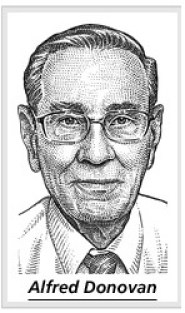 A head-cut image of Alfred Donovan (now deceased) appears courtesy of The Wall Street Journal.