
March 16, 2010
David Wighton: Business Editors commentary
He arrived with a bang and within weeks had axed 5,000 jobs. But eight months after taking over the helm at Royal Dutch Shell, is Peter Voser making progress turning around the supertanker?
Long derided as the most sluggish of the top oil companies, Shell will today try to persuade investors at its annual strategy briefing that it is back on course. There certainly are some encouraging signs. For six years, oil production has been drifting lower at an average of 3.5 per cent a year. But with a series of big projects due to give the figures a boost this year, production is expected to stabilise at about 3.2 million barrels a day in 2010. In 2011 it could start growing for the first time in almost a decade.
Mr Voser can claim only limited credit for this trend, which reflects years of investment. But his own changes are starting to have an impact, in particular a sweeping reordering of the company that has reduced costs and improved focus.
For years, Shell was plagued by delays and budget overruns on big projects. So far, his creation of a separate division, Projects and Technology, responsible for masterminding large-scale operations, seems to be working well. Compared with peers such as Exxon and BP, Shell has been slow to make such changes, but that means the potential for improvements is greater.
Mr Voser has promised at least another $1 billion in cost cuts this year and will provide further details today.
He is still grappling with huge challenges not least Shells sprawling refining and marketing operation, which is struggling in the face of the industrys most severe downturn in 20 years. The groups poor record at finding new supplies of oil and gas also remains a profound problem which Voser must address.
Still, his decision to sell some of Shells onshore Nigerian assets and bid for Arrow Energy, an Australian producer of coal-seam gas, show that he is willing to give the portfolio a good shaking. It will be years before Mr Vosers performance can be judged properly but so far so good.
This website and sisters royaldutchshellplc.com, shellnazihistory.com, royaldutchshell.website, johndonovan.website, and shellnews.net, are owned by John Donovan. There is also a Wikipedia segment.


 Royal Dutch Shell conspired directly with Hitler, financed the Nazi Party, was anti-Semitic and sold out its own Dutch Jewish employees to the Nazis. Shell had a close relationship with the Nazis during and after the reign of Sir Henri Deterding, an ardent Nazi, and the founder and decades long leader of the Royal Dutch Shell Group. His burial ceremony, which had all the trappings of a state funeral, was held at his private estate in Mecklenburg, Germany. The spectacle (photographs below) included a funeral procession led by a horse drawn funeral hearse with senior Nazis officials and senior Royal Dutch Shell directors in attendance, Nazi salutes at the graveside, swastika banners on display and wreaths and personal tributes from Adolf Hitler and Reichsmarschall, Hermann Goring. Deterding was an honored associate and supporter of Hitler and a personal friend of Goring.

 Deterding was the guest of Hitler during a four day summit meeting at Berchtesgaden. Sir Henri and Hitler both had ambitions on Russian oil fields. Only an honored personal guest would be rewarded with a private four day meeting at Hitler’s mountain top retreat.


 IN JULY 2007, MR BILL CAMPBELL (ABOVE, A RETIRED GROUP AUDITOR OF SHELL INTERNATIONAL SENT AN EMAIL TO EVERY UK MP AND MEMBER OF THE HOUSE OF LORDS:


 MORE DETAILS:


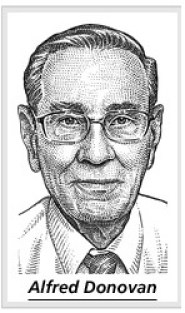 A head-cut image of Alfred Donovan (now deceased) appears courtesy of The Wall Street Journal.