THE WALL STREET JOURNAL
FEBRUARY 16, 2010
By JAMES HERRON
LONDONRoyal Dutch Shell PLC on Tuesday proposed changes to the way it pays its executive directors in an attempt to assuage concerns that led shareholders to reject its remuneration package last year.
The proposals constitute a significant step toward greater pay restraint at one of the world’s largest companies at a time when excessive awards to executives, particularly at banks, are a political hot potato.
The salaries of Shell Chief Executive Peter Voser and Finance Chief Simon Henry will be 20% lower than those paid to their predecessors and will be frozen from July 2009 until January next year, according to proposals outlined in a letter from the chairman of Shell’s remuneration committee, Hans Wijers.
However, the maximum shares the CEO could be awarded under the performance-related long-term incentive program would be increased from two times to three times salary, “thereby providing greater alignment with shareholders’ interests,” Mr. Wijers said in the letter, which has been posted on the company’s Web site.
Shell has broadened the criteria by which this performance is assessed. Formerly, the only measure of performance was comparing total shareholder return against Shell’s peer group of integrated oil companies. This has now been broadened to include earnings per share, net cash flow from operations and oil and gas production.
The main concern that led shareholders to reject last year’s pay package was that directors were awarded a share bonus under the company’s long-term incentive plan despite performance targets being missed. The new proposals would prevent the remuneration committee from doing this, the letter said, although only for 2010. “In future, there will be no use of upward discretion in the vesting of these plans without prior shareholder engagement,” said Mr. Wijers.
The proposals are the result of a “wholesale review of remuneration policy” and extensive consultations with Shell investors, following a highly unusual vote at last year’s annual general meeting, where 60% of shareholders rejected the executive directors’ remuneration package, the letter said.
“I believe there was broad support [from shareholders] for the direction we are taking,” wrote Mr. Wijers.
Write to James Herron at [email protected]
This website and sisters royaldutchshellplc.com, shellnazihistory.com, royaldutchshell.website, johndonovan.website, and shellnews.net, are owned by John Donovan. There is also a Wikipedia segment.


 Royal Dutch Shell conspired directly with Hitler, financed the Nazi Party, was anti-Semitic and sold out its own Dutch Jewish employees to the Nazis. Shell had a close relationship with the Nazis during and after the reign of Sir Henri Deterding, an ardent Nazi, and the founder and decades long leader of the Royal Dutch Shell Group. His burial ceremony, which had all the trappings of a state funeral, was held at his private estate in Mecklenburg, Germany. The spectacle (photographs below) included a funeral procession led by a horse drawn funeral hearse with senior Nazis officials and senior Royal Dutch Shell directors in attendance, Nazi salutes at the graveside, swastika banners on display and wreaths and personal tributes from Adolf Hitler and Reichsmarschall, Hermann Goring. Deterding was an honored associate and supporter of Hitler and a personal friend of Goring.

 Deterding was the guest of Hitler during a four day summit meeting at Berchtesgaden. Sir Henri and Hitler both had ambitions on Russian oil fields. Only an honored personal guest would be rewarded with a private four day meeting at Hitler’s mountain top retreat.


 IN JULY 2007, MR BILL CAMPBELL (ABOVE, A RETIRED GROUP AUDITOR OF SHELL INTERNATIONAL SENT AN EMAIL TO EVERY UK MP AND MEMBER OF THE HOUSE OF LORDS:


 MORE DETAILS:


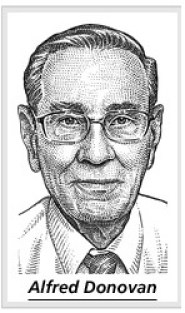 A head-cut image of Alfred Donovan (now deceased) appears courtesy of The Wall Street Journal.