By John Donovan
We have heard it all before many times. Militants attack in Nigeria. Oil prices rebound. See MarketWatch article below.
Shell is the leading oil producer in Nigeria. To the outside world it appears to be an unfortunate victim of regular attacks by militants on its employees, pipelines and installations, which drive up the price of oil. The truth is more sinister.
The militant attacks are actually welcome news for Shell because without a regular artificial crimp in the Nigerian supply, oil prices would be on a downward trend. Higher oil prices means multi-billion dollar profits and bigger executive bonuses.
Is Shell just an innocent party fortuitously benefiting from events over which it has no control, or is it possible Shell could be behind the attacks? This would appear on initial consideration to be an outrageous slur but the truth is that Shell has a track record of entering into commercial arrangements with Nigerian militants, including individuals with links to MEND, a group that has claimed responsibility for attacks on Shell. Don’t take my word for it, read this FT article, which confirms information given to us by a Shell Nigeria insider source.
By Polya Lesova, MarketWatch
Feb. 1, 2010, 10:49 a.m. EST: NEW YORK (MarketWatch) — Crude futures rose on Monday after declining last week, as a round of upbeat global economic reports lifted demand expectations, while an oil pipeline in Nigeria was damaged by an attack and rekindled concerns over supply.
Crude oil for March delivery was up 87 cents, or 1.2%, to $73.75 a barrel in electronic trading on Globex.
Earlier, the contract had fallen to an intraday low of $72.49 a barrel.
Upbeat manufacturing surveys from China, Europe and the U.S. gave a lift to commodities.
In the U.S., the Institute for Supply Management said its factory index jumped to 58.4% in January from 54.9% in December, well above expectations. The consensus forecast of estimates collected by MarketWatch was for the index to rise to 56.0%.
Meanwhile, commodities also received a boost from a slumping dollar. The dollar fell especially against the euro, as concerns over Greece’s debt problems eased and a manufacturing index for the euro zone rose strongly. The dollar index /quotes/comstock/11j!i:dxy0 (DXY 79.38, -0.07, -0.09%) , which measures the U.S. unit against a basket of six major currencies, fell 0.3% to 79.24.
Oil had received an early lift after reports that Royal Dutch Shell /quotes/comstock/23s!e:rdsb (UK:RDSB 1,690, +20.50, +1.23%) had to shut down three pumping stations in Nigeria after an oil pipeline was sabotaged.
The firm said that the Trans Ramos Pipeline was sabotaged on Saturday, leading to the spilling of oil, according to reports. The sabotage came after the Movement for the Emancipation of the Niger Delta (MEND), a Nigerian militant group, announced it was ending a three-month-old ceasefire.
MEND told Reuters on Monday that it was not “directly responsible” for the pipeline sabotage. Attacks by militants in the Niger Delta have caused a sharp reduction in Nigeria’s oil output in recent years.
“Hopes of a marked expansion in oil production in the largest African oil producing country are likely to be disappointed,” said analysts at Commerzbank AG in a note to clients.
In December and January, Nigeria’s average daily output expanded to a two-year high of more than 2 million barrels a day, but it is still lagging far behind its production capacity of 3 million barrels per day, according to Commerzbank.
Oil prices declined 2.4% last week and sank 8.3% in January, pressured by concerns over weak U.S. demand and uncertainty over China’s moves to cool down its economic growth.
Polya Lesova is reporter for MarketWatch, based in Frankfurt.
This website and sisters royaldutchshellplc.com, shellnazihistory.com, royaldutchshell.website, johndonovan.website, and shellnews.net, are owned by John Donovan. There is also a Wikipedia segment.


 Royal Dutch Shell conspired directly with Hitler, financed the Nazi Party, was anti-Semitic and sold out its own Dutch Jewish employees to the Nazis. Shell had a close relationship with the Nazis during and after the reign of Sir Henri Deterding, an ardent Nazi, and the founder and decades long leader of the Royal Dutch Shell Group. His burial ceremony, which had all the trappings of a state funeral, was held at his private estate in Mecklenburg, Germany. The spectacle (photographs below) included a funeral procession led by a horse drawn funeral hearse with senior Nazis officials and senior Royal Dutch Shell directors in attendance, Nazi salutes at the graveside, swastika banners on display and wreaths and personal tributes from Adolf Hitler and Reichsmarschall, Hermann Goring. Deterding was an honored associate and supporter of Hitler and a personal friend of Goring.

 Deterding was the guest of Hitler during a four day summit meeting at Berchtesgaden. Sir Henri and Hitler both had ambitions on Russian oil fields. Only an honored personal guest would be rewarded with a private four day meeting at Hitler’s mountain top retreat.


 IN JULY 2007, MR BILL CAMPBELL (ABOVE, A RETIRED GROUP AUDITOR OF SHELL INTERNATIONAL SENT AN EMAIL TO EVERY UK MP AND MEMBER OF THE HOUSE OF LORDS:


 MORE DETAILS:


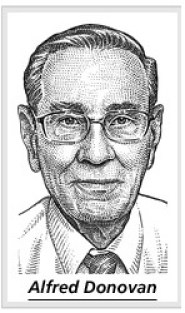 A head-cut image of Alfred Donovan (now deceased) appears courtesy of The Wall Street Journal.