Internal documents reveal impact of tobacco industry
Sarah Boseley Health editor
The Guardian, Tuesday 12 January 2010
Major corporations, led by British American Tobacco, waged a successful lobbying campaign to hamper the passing of public health legislation and weaken its impact, a group of academics claim today.
Proposals to restrict smoking in public were in BAT’s sights in the 1990s but the changes the lobbying brought about to EU policymaking have been fundamental and enduring, say the academics.
They are now being used to undermine legislation designed to protect the public against toxic chemicals, they say.
The strategy is revealed in internal documents that BAT was forced to disclose during litigation on tobacco harm in the US.
Disguised behind respectable consultancies and thinktanks, the companies succeeded in getting a form of impact assessment made mandatory for every EU policy which critics say emphasised the financial costs to business and underestimated the impact on public health.
The manoeuvering behind the scenes is revealed in a paper published by researchers from the school of health at Bath University, the Centre for International Public Policy at Edinburgh University and the London School of Hygiene and Tropical Medicine.
Their paper, published today by PLoS (Public Library of Science) Medicine, says that “BAT and its corporate allies have fundamentally altered the way in which all EU policy is made”.
They say it “increases the likelihood that the EU will produce policies that advance the interests of major corporations, including those that produce products damaging to health, rather than in the interests of its citizens”.
The internal documents show that Bat began lobbying for what it called “structured risk assessment” in the mid 1990s.
“Our analysis reveals that BAT saw RA [risk assessment] as a means of precluding the introduction of public smoking restrictions, which it saw as a growing threat in Europe,” says the paper.
“The UK consultancy firm Charles Barker appears to have then been asked to outline the advantages for BAT of embedding RA within UK and European policymaking processes and advised that BAT would need to tread carefully, lobbying through a ‘front’ organisation and enlisting ‘big industry names in support’.”
The chemical and pharmaceutical industries were mentioned as those most likely to have a common interest.
BAT took the advice. It approached a think-tank called the European Policy Centre, whose director had worked with BAT previously. The EPC then formed an organisation called the Risk Assessment Forum and approached companies to join. Among the companies that became members were Shell, Elf Aquitaine, ICI and several pharmaceutical companies, including Bayer, Johnson and Johnson, SmithKline Beecham, Solvay and Zeneca.
The British government was seen as more supportive of business than some others in Europe.
The industry, say critics, has the money to carry out complex risk assessments and their data is hard to challenge.
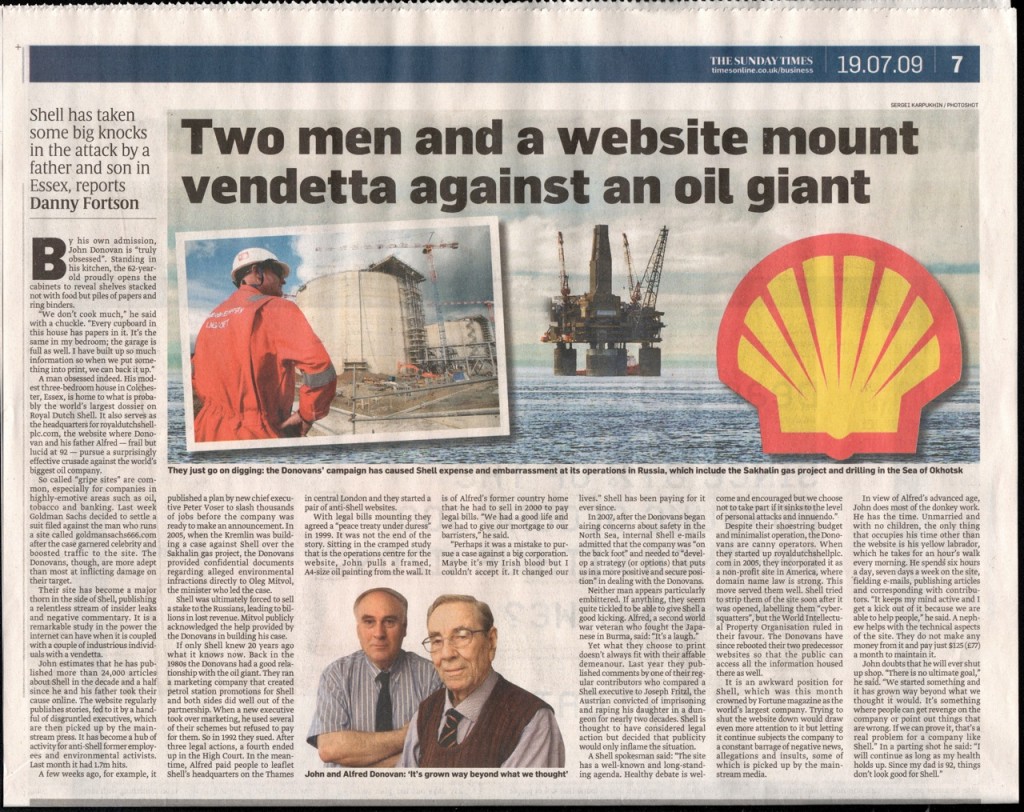
This website and sisters royaldutchshellplc.com, shellnazihistory.com, royaldutchshell.website, johndonovan.website, and shellnews.net, are owned by John Donovan. There is also a Wikipedia segment.


 Royal Dutch Shell conspired directly with Hitler, financed the Nazi Party, was anti-Semitic and sold out its own Dutch Jewish employees to the Nazis. Shell had a close relationship with the Nazis during and after the reign of Sir Henri Deterding, an ardent Nazi, and the founder and decades long leader of the Royal Dutch Shell Group. His burial ceremony, which had all the trappings of a state funeral, was held at his private estate in Mecklenburg, Germany. The spectacle (photographs below) included a funeral procession led by a horse drawn funeral hearse with senior Nazis officials and senior Royal Dutch Shell directors in attendance, Nazi salutes at the graveside, swastika banners on display and wreaths and personal tributes from Adolf Hitler and Reichsmarschall, Hermann Goring. Deterding was an honored associate and supporter of Hitler and a personal friend of Goring.

 Deterding was the guest of Hitler during a four day summit meeting at Berchtesgaden. Sir Henri and Hitler both had ambitions on Russian oil fields. Only an honored personal guest would be rewarded with a private four day meeting at Hitler’s mountain top retreat.


 IN JULY 2007, MR BILL CAMPBELL (ABOVE, A RETIRED GROUP AUDITOR OF SHELL INTERNATIONAL SENT AN EMAIL TO EVERY UK MP AND MEMBER OF THE HOUSE OF LORDS:


 MORE DETAILS:


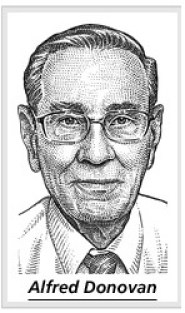 A head-cut image of Alfred Donovan (now deceased) appears courtesy of The Wall Street Journal.