Financial Times: From clash to cash
By Tom Burgis and Martin Sandbu
Published: January 7 2010 02:00 | Last updated: January 7 2010 02:00
On Commander Ebi’s baseball cap, the logo reads: “Alaska”. Little else connects the 42-year-old – who has spent the past five years in a militant camp deep in the tropical creeks of the Niger delta – with the prosperity and polar bears of the northernmost US state.
Except, that is, for oil. But while petroleum has made Alaskans among the wealthiest people in the world’s wealthiest country, Nigeria’s oil province – on which the US depends for nearly one in every 10 barrels of crude it imports – has known little but conflict, corruption and misery in the half-century since the first barrel was shipped.
Yet Nigeria’s rulers are hoping a new policy to deliver the benefits of oil to the local population – as Alaska does with its pioneering approach of distributing petrodollars in cash to citizens – might help placate an insurgency that has cut production by as much as 40 per cent.
In the delta, thousands of jobless young men extort, kidnap and blow up pipelines under the banner of resistance to a state that has failed them, and oil companies that have despoiled their lands.
A recent amnesty has lured them to surrender their arms for the present. Under government proposals designed to keep the delta from re-arming, the state would hand over 10 per cent stakes in the joint ventures that run Nigeria’s biggest energy industry to “host communities”.
Civil war, execution and militants in gunboats: a short history of Nigeria’s oil sector
1958 On eve of Nigerian independence, Shell exports first oil from delta 1971 After civil war spurred by competition for oil reserves, partial nationalisation begins of an industry that will become economy’s lifeblood 1973 Global oil crisis all but wipes out country’s emerging middle class 1995 Military rulers execute activist Ken Saro-Wiwa, who had demanded Shell cease operations, highlighting environmental damage in delta
2008 Militants attack Shell offshore platform with gunboats in campaign for delta ownership of its own oil. Nigerian production temporarily drops 10 per cent
FULL FT ARTICLE (SUBSCRIPTION)
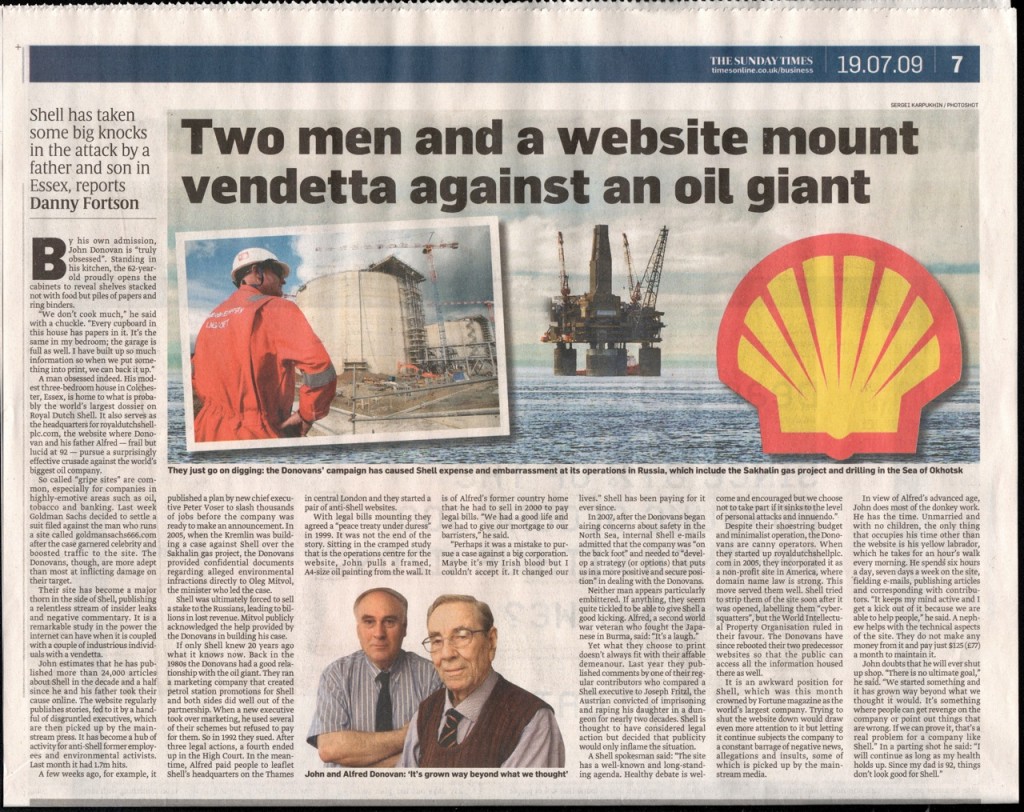
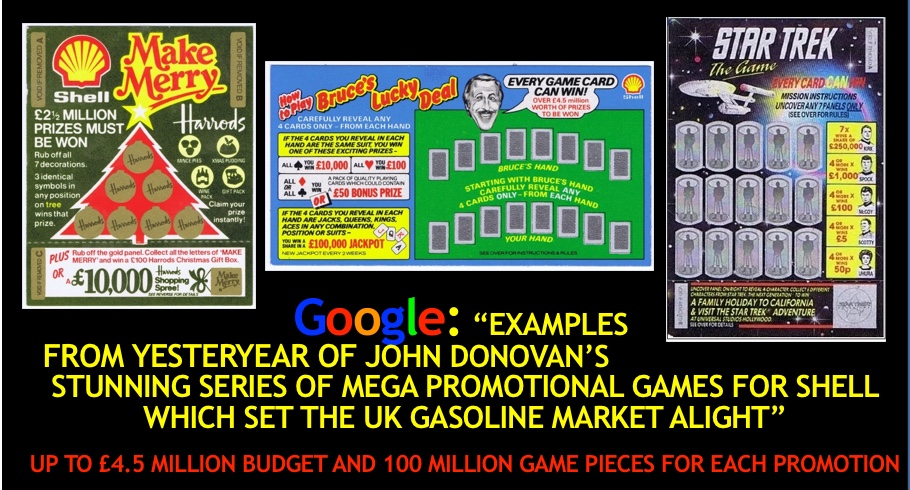
This website and sisters royaldutchshellplc.com, shellnazihistory.com, royaldutchshell.website, johndonovan.website, and shellnews.net, are owned by John Donovan. There is also a Wikipedia segment.


 Royal Dutch Shell conspired directly with Hitler, financed the Nazi Party, was anti-Semitic and sold out its own Dutch Jewish employees to the Nazis. Shell had a close relationship with the Nazis during and after the reign of Sir Henri Deterding, an ardent Nazi, and the founder and decades long leader of the Royal Dutch Shell Group. His burial ceremony, which had all the trappings of a state funeral, was held at his private estate in Mecklenburg, Germany. The spectacle (photographs below) included a funeral procession led by a horse drawn funeral hearse with senior Nazis officials and senior Royal Dutch Shell directors in attendance, Nazi salutes at the graveside, swastika banners on display and wreaths and personal tributes from Adolf Hitler and Reichsmarschall, Hermann Goring. Deterding was an honored associate and supporter of Hitler and a personal friend of Goring.

 Deterding was the guest of Hitler during a four day summit meeting at Berchtesgaden. Sir Henri and Hitler both had ambitions on Russian oil fields. Only an honored personal guest would be rewarded with a private four day meeting at Hitler’s mountain top retreat.


 IN JULY 2007, MR BILL CAMPBELL (ABOVE, A RETIRED GROUP AUDITOR OF SHELL INTERNATIONAL SENT AN EMAIL TO EVERY UK MP AND MEMBER OF THE HOUSE OF LORDS:


 MORE DETAILS:


 A head-cut image of Alfred Donovan (now deceased) appears courtesy of The Wall Street Journal.