 The Sunday Times
November 1, 2009
The era of the oil industry mega merger is over, according to the chief executive of BP.
Tony Hayward said that there is no industrial logic at all to the type of big-ticket takeovers that transformed the industry a decade ago. The industry will be defined instead by partnerships between the big companies and the new generation of state-owned rivals and governments of resource-rich countries.
We need access to new resources and we need access to new customers. Combining with another oil giant gives us neither, he said in an interview with The Sunday Times.
The industry is grappling with the decline in the Wests oil demand and the crash in the price from last years historic highs. Oil companies have launched cost-cutting programmes and speculation has increased that the industry is poised for consolidations like those that combined BP and Amoco, Exxon and Mobil, and Chevron and Texaco.
Hayward said the time for such deals had passed. There is no industrial logic for it at all. If you put ourselves and Shell together you dont add to the resource base, he said.
Instead, he is repositioning the company to take advantage of new markets in the east. BP has begun talks with Petrochina and Sinopec on the possibility of building a $7 billion (£4.2 billion) refinery in China, which would be one of the few for a large western oil group.
We have been pretty public about building our position in China. The thing that we are missing is a refinery and we are talking with the Chinese about opportunities to work with them to build one, he said.
We would end up with less than a 50% share in it and its got to be made in three or four years.
BP has also partnered with China National Petroleum Company in Iraq. On Tuesday they will sign the first big oilfield development contract there since the industry was nationalised in the 1970s. The Rumaila field accounts for half of Iraqs production.
Hayward said he was very, very confident that BP could maintain the dividend payment as he continues to squeeze costs and slim down operations.
He believes the long price of oil per barrel will hover between $60 and $90. BP is also centralising its exploration and production business in Houston.


 Royal Dutch Shell conspired directly with Hitler, financed the Nazi Party, was anti-Semitic and sold out its own Dutch Jewish employees to the Nazis. Shell had a close relationship with the Nazis during and after the reign of Sir Henri Deterding, an ardent Nazi, and the founder and decades long leader of the Royal Dutch Shell Group. His burial ceremony, which had all the trappings of a state funeral, was held at his private estate in Mecklenburg, Germany. The spectacle (photographs below) included a funeral procession led by a horse drawn funeral hearse with senior Nazis officials and senior Royal Dutch Shell directors in attendance, Nazi salutes at the graveside, swastika banners on display and wreaths and personal tributes from Adolf Hitler and Reichsmarschall, Hermann Goring. Deterding was an honored associate and supporter of Hitler and a personal friend of Goring.

 Deterding was the guest of Hitler during a four day summit meeting at Berchtesgaden. Sir Henri and Hitler both had ambitions on Russian oil fields. Only an honored personal guest would be rewarded with a private four day meeting at Hitler’s mountain top retreat.


 IN JULY 2007, MR BILL CAMPBELL (ABOVE, A RETIRED GROUP AUDITOR OF SHELL INTERNATIONAL SENT AN EMAIL TO EVERY UK MP AND MEMBER OF THE HOUSE OF LORDS:


 MORE DETAILS:


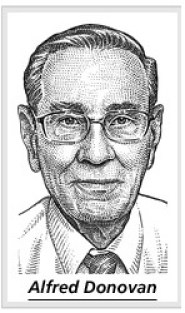 A head-cut image of Alfred Donovan (now deceased) appears courtesy of The Wall Street Journal.