
By John Donovan
On 16 August, the Financial Times published a major article about the growing use of private investigators by corporations intent on digging for information (dirt) on perceived opponents.
German state prosecutors are considering a criminal investigation of Deutsche Bank after the bank targeted Michael Bohndorf, a shareholder and vocal critic. In response, the bank employed private investigators who allegedly set a “honey trap” and engaged in “an operation that could have come from a spy novel“. The bank is also under investigation from financial and data protection watchdogs. Deutsche Bank senior executives claim they were unaware of the admitted “overzealous surveillance“.
Another German corporation, Deutsche Telecom, has admitted using “an independent security company” to monitor contacts between thousands of it employees and suppliers. It’s Chief Executive has resigned over the affair.
The FT article points out that “Germany is not alone in its corporate spying scandals.”
“In the US, Hewlett-Packard used private investigators who obtained the phone records of journalists . Recent UK revelations of methods used by detectives employed by the News of the World, the tabloid newspaper hacking into voicemail messages have highlighted ethical lapses in journalism.”
The article poses the question:
Why do companies risk such compromising allegations? An inevitable conclusion is that they believe there is something to be gained or important interests to be protected.
This question could of course be put to Royal Dutch Shell, given it’s continuing infatuation with corporate spying, including current surveillance operations in Ireland against Corrib gas project protesters. Undercover activity is perhaps to be expected bearing in mind that Shell’s head of Global Security, Ian Forbes McCredie OBE, is a former senior officer of the British Secret Service.
What some may found surprising is that Richard Wiseman, the rule-bending Chief Ethics & Compliance Officer of Royal Dutch Shell Plc also has a track record of responsibility for skulduggery, involving undercover activity against shareholder critics of the company. A perfect choice then for his new role. I have never managed to persuade Mr Wiseman to discuss Shell’s close association with the UK spy firm Hakluyt and its undercover missions for Shell in Europe and elsewhere.
Related FT articles


 Royal Dutch Shell conspired directly with Hitler, financed the Nazi Party, was anti-Semitic and sold out its own Dutch Jewish employees to the Nazis. Shell had a close relationship with the Nazis during and after the reign of Sir Henri Deterding, an ardent Nazi, and the founder and decades long leader of the Royal Dutch Shell Group. His burial ceremony, which had all the trappings of a state funeral, was held at his private estate in Mecklenburg, Germany. The spectacle (photographs below) included a funeral procession led by a horse drawn funeral hearse with senior Nazis officials and senior Royal Dutch Shell directors in attendance, Nazi salutes at the graveside, swastika banners on display and wreaths and personal tributes from Adolf Hitler and Reichsmarschall, Hermann Goring. Deterding was an honored associate and supporter of Hitler and a personal friend of Goring.

 Deterding was the guest of Hitler during a four day summit meeting at Berchtesgaden. Sir Henri and Hitler both had ambitions on Russian oil fields. Only an honored personal guest would be rewarded with a private four day meeting at Hitler’s mountain top retreat.


 IN JULY 2007, MR BILL CAMPBELL (ABOVE, A RETIRED GROUP AUDITOR OF SHELL INTERNATIONAL SENT AN EMAIL TO EVERY UK MP AND MEMBER OF THE HOUSE OF LORDS:


 MORE DETAILS:


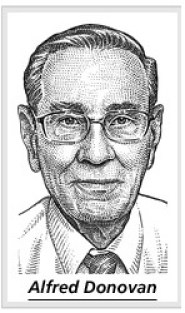 A head-cut image of Alfred Donovan (now deceased) appears courtesy of The Wall Street Journal.