
TNK-BP row ‘is bad for Russia’ says British Foreign Office
By Russell Hotten, Industry Editor
The British Foreign Office has weighed into the row over the forced departure from Russia of Robert Dudley, chief executive of BP’s joint venture in the country, describing the dispute as “bad news” for the Russian economy and calling on President Dmitry Medvedev to uphold the rule of law.
The comments came as the fall-out from the power struggle at TNK-BP, Russia’s third biggest oil company, hit share prices on the Moscow stock markets when investors lost confidence in the country as a place to do business. In a damning verdict, one analyst wrote yesterday: “The last train carrying the optimists out of Russian equities has just left the station.”
Prime Minister Gordon Brown and Foreign Secretary David Miliband have tried to lobby behind the scenes, fearing any public criticism might inflame existing bad relations between Moscow and London after the Alexander Litvinenko poisoning row.
But yesterday the FO criticised BP’s partners in TNK-BP – a consortium called Alfa-Access-Renova (AAR) – and elements in Moscow. “The way shareholders have manipulated elements of the Russian state bureaucracy and the way this has been allowed to continue is very disappointing,” said an FO spokesman.
He continued: “TNK-BP is a major and productive global energy producer at a time when experienced energy professionals, and energy itself, are both in short supply. Robert Dudley’s departure, and the consequent effect on TNK-BP’s output, can therefore only be bad news both for the Russian economy and for the global energy industry.” TNK-BP accounts for 25pc of BP’s global oil output.
He said that President Medvedev had told Mr Brown during this month’s G8 summit in Japan that the dispute should be resolved legally. “We will continue to stress to the Russian government the importance of a resolution between the shareholders in full accordance with the rule of law,” the FO said.
BP alleges that AAR – controlled by billionaires Mikhail Fridman, Viktor Vekselberg, and Leonid Blavatnik – is trying to seize control of the 50-50 joint venture and has used “sustained harassment” to force Mr Dudley out. AAR’s chief executive, Stan Polovets, denies the allegation, but claims Mr Dudley should be removed because he ran the joint venture for the benefit of BP, not all the shareholders.
Mr Dudley, a US citizen, left Russia on Thursday for a secret location, where he will try to run TNK-BP remotely, a strategy Mr Fridman said was “ridiculous”. By the end of this month, nearly all TNK-BP’s foreign staff will have left Russia because they have not had their visas renewed.
In Moscow, share prices reacted badly to news of Mr Dudley’s exit, and also to criticism of a large Russian steel and coal company, Mechel, by prime minister Vladimir Putin who has called for an anti-trust investigation into pricing policy. Mechel shares fell by a third. Russia’s benchmark MICEX index closed down 5.5pc, while the RTS Index lost 5.6pc.
“Sentiment is moving against Russia,” said James Fenkner, managing partner at Red Star Asset Management in Moscow. A fund manager in London said: “There is no longer an investment case for Russia.”
Domino effect
 |
Investors began to bail out of Russian-focused shares in London as concerns grew about the ability of Western companies to do business in the country.
Peter Hambro Mining, the gold miner founded by the eponymous entrepreneur, slipped 40p to £10.76.
Aricom, another miner that is run by Mr Hambros son Jay, tumbled 8½ to 48½p.
Highland Gold, which is backed by Chelsea owner Roman Abramovich, slid 11 to 157p.
Oil explorer Imperial Energy fell 76 to 972p and JP Morgan Russian Securities, a retail investment trust focused on Russia, shed 6½ to 147½p.
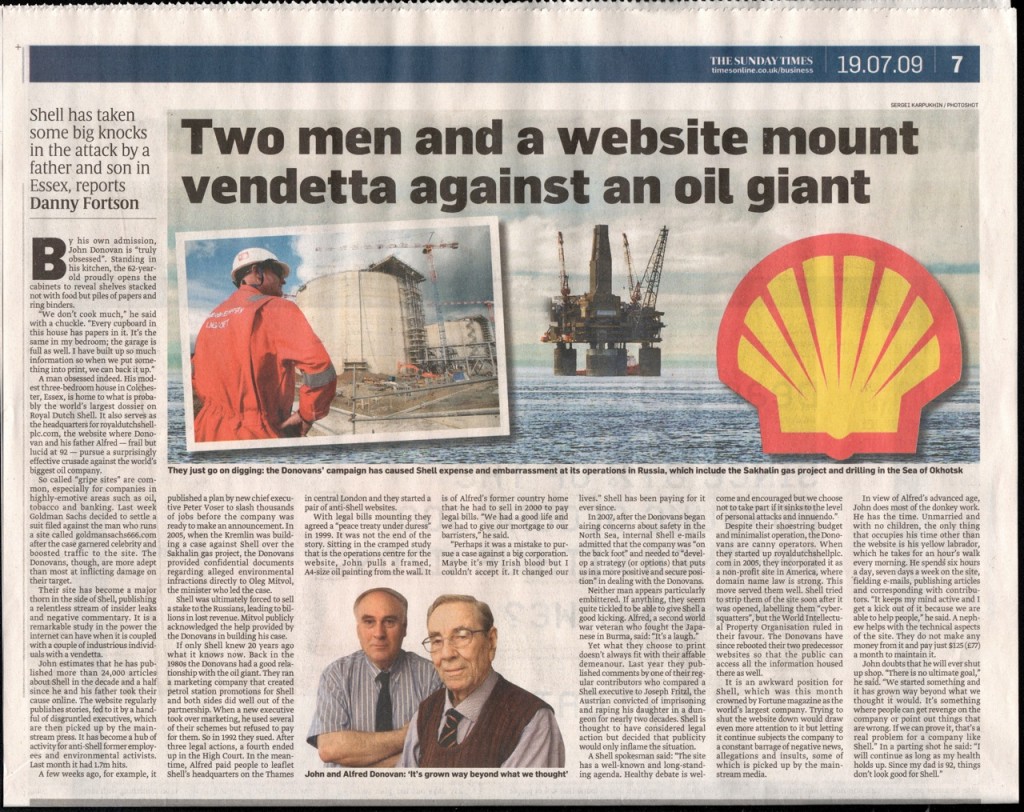
This website and sisters royaldutchshellplc.com, shellnazihistory.com, royaldutchshell.website, johndonovan.website, and shellnews.net, are owned by John Donovan. There is also a Wikipedia segment.


 Royal Dutch Shell conspired directly with Hitler, financed the Nazi Party, was anti-Semitic and sold out its own Dutch Jewish employees to the Nazis. Shell had a close relationship with the Nazis during and after the reign of Sir Henri Deterding, an ardent Nazi, and the founder and decades long leader of the Royal Dutch Shell Group. His burial ceremony, which had all the trappings of a state funeral, was held at his private estate in Mecklenburg, Germany. The spectacle (photographs below) included a funeral procession led by a horse drawn funeral hearse with senior Nazis officials and senior Royal Dutch Shell directors in attendance, Nazi salutes at the graveside, swastika banners on display and wreaths and personal tributes from Adolf Hitler and Reichsmarschall, Hermann Goring. Deterding was an honored associate and supporter of Hitler and a personal friend of Goring.

 Deterding was the guest of Hitler during a four day summit meeting at Berchtesgaden. Sir Henri and Hitler both had ambitions on Russian oil fields. Only an honored personal guest would be rewarded with a private four day meeting at Hitler’s mountain top retreat.


 IN JULY 2007, MR BILL CAMPBELL (ABOVE, A RETIRED GROUP AUDITOR OF SHELL INTERNATIONAL SENT AN EMAIL TO EVERY UK MP AND MEMBER OF THE HOUSE OF LORDS:


 MORE DETAILS:


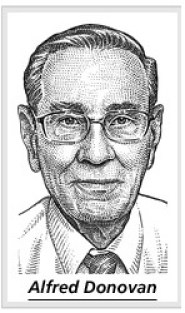 A head-cut image of Alfred Donovan (now deceased) appears courtesy of The Wall Street Journal.