THE WALL STREET JOURNAL EUROPE
July 10, 2008
Shell
Royal Dutch Shell‘s failure to win the $10 billion contract to develop the Shah natural-gas field in Abu Dhabi is a major blow to the company’s position as the leading natural-gas producer in the Middle East. The thrashing follows a string of other contract losses at the hands of U.S. rivals that have become increasingly aggressive in grabbing resources. As the race for new energy assets heats up around the globe, Shell needs to step up its game.
The Anglo-Dutch giant has been operating in Abu Dhabi for nearly 70 years — far longer than any of its competitors in the region. It helped set up and even owns part of the national natural-gas company, Gasco. So when the emirate announced that it would be seeking a partner to help it exploit its massive offshore natural-gas field, Shell was seen as the obvious choice.
Two other bidders entered the process, Occidental Petroleum and ConocoPhillips. Both are formidable operators but have little history operating in the Middle East. So it came as a surprise that ConocoPhillips won the contract.
While the terms of the deal weren’t released — as is the case with most energy deals in the region — Conoco is believed to have promised to give a greater share of the profits to the state than Shell. Conoco’s boss, Jim Mulva, has made an aggressive push to secure natural-gas resources by purchasing major companies like Burlington Resources and using political and financial connections to muscle into deals in Russia and elsewhere.
Notwithstanding Conoco’s strengths, Shell had every reason to win the Abu Dhabi contract. Besides the obvious political connections that Shell has in the region, the company has the advantage of scale over Conoco, as it is the largest operator and marketer of liquefied natural gas in the world. But in the past two years, it seems to have lost its edge in the region, as U.S. rivals have taken lucrative deals in Qatar and Oman.
While Shell is right to maintain discipline and avoid jobs that would be unprofitable, it may need to exercise greater flexibility going forward and give a bit more in terms of price. If it fails to do so, it could find itself on the outside of some of the last major energy fields left for private-sector energy companies.
–Michael Prest, Una Galani and Cyrus Sanati


 Royal Dutch Shell conspired directly with Hitler, financed the Nazi Party, was anti-Semitic and sold out its own Dutch Jewish employees to the Nazis. Shell had a close relationship with the Nazis during and after the reign of Sir Henri Deterding, an ardent Nazi, and the founder and decades long leader of the Royal Dutch Shell Group. His burial ceremony, which had all the trappings of a state funeral, was held at his private estate in Mecklenburg, Germany. The spectacle (photographs below) included a funeral procession led by a horse drawn funeral hearse with senior Nazis officials and senior Royal Dutch Shell directors in attendance, Nazi salutes at the graveside, swastika banners on display and wreaths and personal tributes from Adolf Hitler and Reichsmarschall, Hermann Goring. Deterding was an honored associate and supporter of Hitler and a personal friend of Goring.

 Deterding was the guest of Hitler during a four day summit meeting at Berchtesgaden. Sir Henri and Hitler both had ambitions on Russian oil fields. Only an honored personal guest would be rewarded with a private four day meeting at Hitler’s mountain top retreat.


 IN JULY 2007, MR BILL CAMPBELL (ABOVE, A RETIRED GROUP AUDITOR OF SHELL INTERNATIONAL SENT AN EMAIL TO EVERY UK MP AND MEMBER OF THE HOUSE OF LORDS:


 MORE DETAILS:


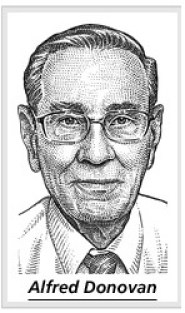 A head-cut image of Alfred Donovan (now deceased) appears courtesy of The Wall Street Journal.