
France looks at ways to curb ‘fat cat’ salaries across the EU
By John Lichfield
Saturday, 31 May 2008
Pressure is building in the European Union for common rules to discourage, or punish, excessive payments to top business executives.
France, which takes over the presidency of the EU on 1 July, will ask finance ministers to consider a European directive to curb disproportionate bonuses or golden handshakes to company bosses. The Dutch government has already introduced a draft national law to punish what it describes as “unjustifiable” payments to business leaders. The French finance minister, Christine Lagarde, said companies must put their own house in order or face a rash of national, or EU, legislation to clamp down on “excesses”.
French officials said Paris felt that, without such an EU-wide curb, large companies or highly paid executives would evade national curbs by exercising their right to move from one EU country to another.
Jean-Claude Juncker, Luxembourg’s Prime Minister, and president of the “Eurogroup” the countries using the Euro recently described steep increases in executive pay as a “social scourge”. He said EU governments should consider ways of punishing disproportionate bonuses and high severance payments with windfall taxes.
The economic problems generated by the global credit squeeze and high oil prices have made executive pay a hot issue in all European countries. Even some right-of-centre governments such as those in France, Luxembourg and Germany complain that self-indulgent business leaders are making it difficult to argue for low annual pay deals for lower-level employees.
The French business magazine, L’Expansion, reported on Wednesday that payments to the chief executives of France’s top companies, including salaries, share options and dividends, increased by 58 per cent last year to £128m.
A French law forcing companies to be more transparent about executive pay has had a perverse effect. Instead of discouraging big payments, it has encouraged French bosses to demand parity with their highest-paid colleagues and rivals. Mme Lagarde, herself a former top business executive in Chicago, said such high payments to the bosses of failing French companies was “perfectly scandalous”, adding: “There is absolutely no problem when people succeed; let them earn lots of money.”
Businesses, and employer’s federations, must take action soon to curb unwarranted payouts or “there will be popular pressure for laws, or European directives to intervene”, she went on. “A principle of fairness is at stake.” How could governments urge low pay rises at a time of falling living standards if executives were awarding themselves 58 per cent increases in their remuneration packages?
President Nicolas Sarkozy has already spoken out against large “golden parachutes” to failed business leaders. Although often presented in Britain and the US as a kind of French Mrs Thatcher, he has called for the “moralisation of capitalism”, something closer to the late President Charles de Gaulle’s statist and social approach to business.
The Dutch finance minister, Wouter Bos, has proposed a draft law that would impose a 30 per cent tax on companies giving high bonuses or severance payments to top employees. The proposed “fat cat tax” has provoked anguished protests from large Dutch companies, who say that it will ruin their ability to compete on the European, and international, market. Some companies, including Royal Dutch Shell, have warned that they might move their headquarters to another country.
Mr Bos, the leader of the Dutch labour party, is unrepentant. “It’s something everyone in Europe is concerned about, especially now the economic downturn is starting to bite,” he said. “You can’t expect employees to tighten their belts while those at the top are being paid ever-bigger bonuses, which are often not even linked to their performance. Public support for entrepreneurs will plummet if this continues.”


 Royal Dutch Shell conspired directly with Hitler, financed the Nazi Party, was anti-Semitic and sold out its own Dutch Jewish employees to the Nazis. Shell had a close relationship with the Nazis during and after the reign of Sir Henri Deterding, an ardent Nazi, and the founder and decades long leader of the Royal Dutch Shell Group. His burial ceremony, which had all the trappings of a state funeral, was held at his private estate in Mecklenburg, Germany. The spectacle (photographs below) included a funeral procession led by a horse drawn funeral hearse with senior Nazis officials and senior Royal Dutch Shell directors in attendance, Nazi salutes at the graveside, swastika banners on display and wreaths and personal tributes from Adolf Hitler and Reichsmarschall, Hermann Goring. Deterding was an honored associate and supporter of Hitler and a personal friend of Goring.

 Deterding was the guest of Hitler during a four day summit meeting at Berchtesgaden. Sir Henri and Hitler both had ambitions on Russian oil fields. Only an honored personal guest would be rewarded with a private four day meeting at Hitler’s mountain top retreat.


 IN JULY 2007, MR BILL CAMPBELL (ABOVE, A RETIRED GROUP AUDITOR OF SHELL INTERNATIONAL SENT AN EMAIL TO EVERY UK MP AND MEMBER OF THE HOUSE OF LORDS:


 MORE DETAILS:


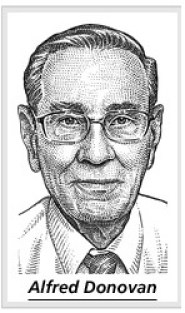 A head-cut image of Alfred Donovan (now deceased) appears courtesy of The Wall Street Journal.