
BP backs CEO over Russian oil venture row
By Jonathan Russell
BP has thrown its weight behind the chief executive of its troubled Russian joint venture TNK-BP following disagreements with Russian shareholders.
The dispute between TNK-BP chief executive Robert Dudley and Russian shareholders Viktor Vekselberg, Mikhail Fridman and Len Blavatnik centres around comments Mr Dudley made to a Russian newspaper over the weekend where he admitted the parties had disagreed over strategy, including the sale of Russian investments and expansion abroad.
The Russian shareholders are understood to be looking for rapid overseas expansion including markets where BP already has a presence. Although Mr Dudley has said he is not adverse to expansion into low risk countries it is thought he does not support higher risk countries such as those in the Middle East
However a spokesman for BP said: “BP fully supports Bob Dudley’s position as president and CEO of TNK-BP. Mr Dudley is a highly experienced and outstanding industry executive who has consistently managed the business in the interests of all its shareholders and BP has absolute confidence in him.”
Prior to the current row two of the three Russian billionaire shareholders, Viktor Vekselberg and Mikhail Fridman are understood to have complained about Mr Dudley to BP chief executive Tony Hayward. Reports of the meeting mentioned calls for Mr Dudley to be replaced by Mr Vekselberg. The demand was rejected by Mr Hayward.
Russian deputy prime minister Igor Sechin also waded into the dispute yesterday advising the shareholders to solve their differences themselves. He said it would not be appropriate for the Russian government to take an official position.
Despite the statement it is widely believed that the Russian government wants to take control of at least part of the TNK-BP operation by merging it with one of the big Russian national oil companies.
TNK-BP was recently forced to give up a major Siberian gas project to Russian state gas company Gazprom and has been raided by Russian security services, signs, according to industry experts, of pressure being brought to bear by the Russian government. All shareholders have stated publicly they do not want to sell down their share in the joint venture.
TNK-BP, Russia’s third-largest oil company, produces nearly 2m barrels of oil a day, almost half BP’s entire global output.
http://www.telegraph.co.uk/money/main.jhtml?xml=/money/2008/05/28/cnbp128.xml
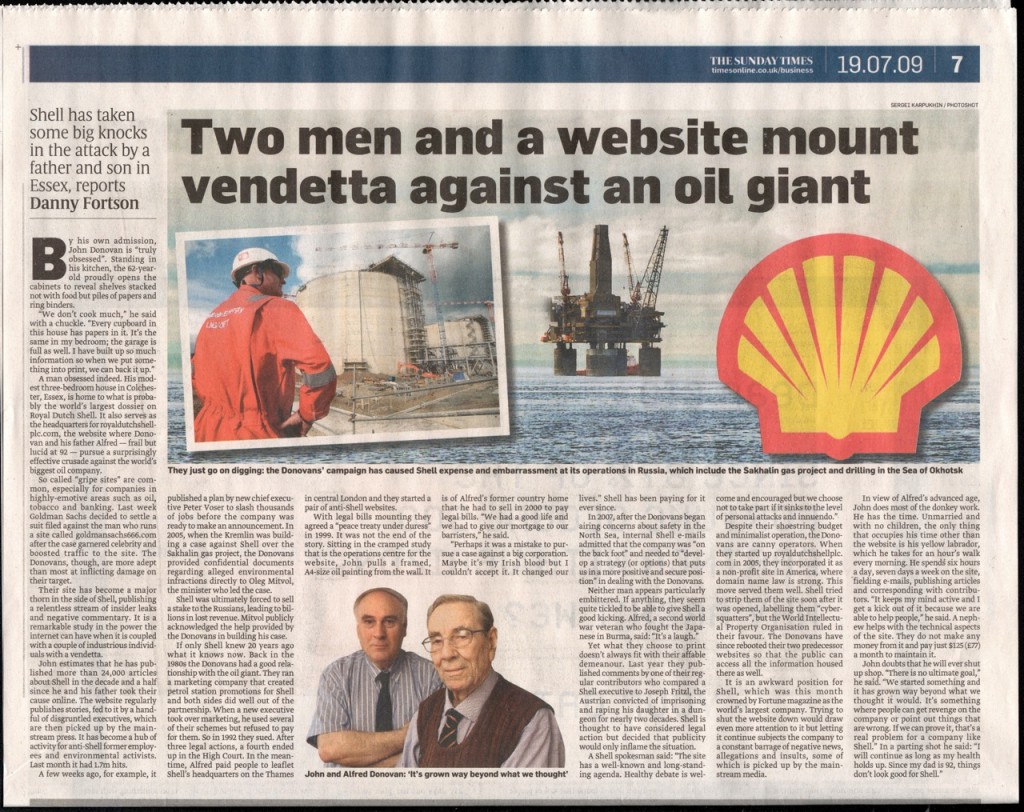
This website and sisters royaldutchshellplc.com, shellnazihistory.com, royaldutchshell.website, johndonovan.website, and shellnews.net, are owned by John Donovan. There is also a Wikipedia segment.


 Royal Dutch Shell conspired directly with Hitler, financed the Nazi Party, was anti-Semitic and sold out its own Dutch Jewish employees to the Nazis. Shell had a close relationship with the Nazis during and after the reign of Sir Henri Deterding, an ardent Nazi, and the founder and decades long leader of the Royal Dutch Shell Group. His burial ceremony, which had all the trappings of a state funeral, was held at his private estate in Mecklenburg, Germany. The spectacle (photographs below) included a funeral procession led by a horse drawn funeral hearse with senior Nazis officials and senior Royal Dutch Shell directors in attendance, Nazi salutes at the graveside, swastika banners on display and wreaths and personal tributes from Adolf Hitler and Reichsmarschall, Hermann Goring. Deterding was an honored associate and supporter of Hitler and a personal friend of Goring.

 Deterding was the guest of Hitler during a four day summit meeting at Berchtesgaden. Sir Henri and Hitler both had ambitions on Russian oil fields. Only an honored personal guest would be rewarded with a private four day meeting at Hitler’s mountain top retreat.


 IN JULY 2007, MR BILL CAMPBELL (ABOVE, A RETIRED GROUP AUDITOR OF SHELL INTERNATIONAL SENT AN EMAIL TO EVERY UK MP AND MEMBER OF THE HOUSE OF LORDS:


 MORE DETAILS:


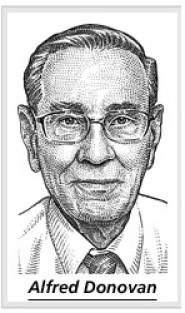 A head-cut image of Alfred Donovan (now deceased) appears courtesy of The Wall Street Journal.