
A technician inspects a pipeline valve at the U.S. Strategic Petroleum Reserves Bryan Mound site near Freeport, Tex.
The New York Times: Congressional Pressure Prevails as U.S. Halts Filling of Oil Reserve
Bowing to pressure from Congress, the Energy Department said Friday that it would temporarily suspend a program to fill the nations strategic oil stocks. But the move, which some analysts and politicians had hoped would help break the rally in oil prices, failed to sway the market. Crude oil prices hit another record Friday.
The decision on the oil stocks came the same day that Saudi Arabia announced a modest increase of 300,000 barrels a day in its oil production as President Bush visited the oil-rich kingdom.
But oil traders dismissed the news from Washington and Riyadh and focused instead on the continuing tensions between growing energy demand and limited supply growth.
Youre getting more oil on the market so youd think this would be a reason for prices to pull back down, Thomas Bentz, a senior energy analyst at BNP Paribas in New York, said. But sometimes the market doesnt react to fundamentals, especially when its in a bullish mode.
Crude oil futures rose to a record of $126.29 a barrel, up $2.17, on the New York Mercantile Exchange on Friday.
The decision by the White House was not entirely a surprise. Three days ago, both the Senate and the House of Representatives voted overwhelmingly to force the administration to freeze its policy of adding oil to the nations emergency stockpiles, known as thestrategic petroleum reserve, or S.P.R.
The high cost of oil has pushed up gasoline and diesel prices to record highs in recent weeks, straining household budgets at a time the economy is also slowing. That has increased the pressure on Congress and the White House, especially as the Memorial Day weekend approaches, to do something about rising costs.
The administration planned to add 76,000 barrels a day into the oil reserves from August to December, or a total of 13 million barrels. The reserve, which was last used afterHurricane Katrina struck the Gulf Coast in 2005, has 702.7 million barrels of oil stored in the underground salt caverns in Louisiana and Texas.
The White House portrayed filling the reserve to its capacity of 727 million barrels a day as a security issue, and a response against sudden disruptions in supplies.
But the policy has come under mounting criticism in Congress, including some from Republican allies of the president, who have found it difficult to justify taking oil off the market at a time of mounting prices. The speed with which politicians have jumped on this policy is a measure of how anxious people feel about mounting energy costs.
But many analysts cautioned the decision was unlikely to have much of an impact on oil or gasoline prices. Neither gasoline, which now averages $3.79 a gallon nationwide, and diesel, which sells at $4.48 a gallon, are likely to fall this summer.
Those who suggested it was going to have a dramatic effect are going to be disappointed, said Lawrence J. Goldstein, an economist at the Energy Policy Research Foundation. It wont have a material visible impact on the market but it is still the appropriate thing to do at this time.
Still, the decision was welcomed by politician of both sides of the aisle, who also cautioned it would have a little effect on prices.
No one can make the case that filling the reserve makes sense when oil prices are rising the way they are, said Senator Jeff Bingaman, a Democrat from New Mexico, who is the chairman of the Senate Energy and Natural Resources Committee. Suspending the S.P.R. fill will keep the government from competing for oil in the marketplace and driving up fuel costs across America.
Senator Olympia Snowe, Republican of Maine, said that freezing shipments to the S.P.R. is a sensible approach, but it is a baby step forward in addressing our nations energy crisis.


 Royal Dutch Shell conspired directly with Hitler, financed the Nazi Party, was anti-Semitic and sold out its own Dutch Jewish employees to the Nazis. Shell had a close relationship with the Nazis during and after the reign of Sir Henri Deterding, an ardent Nazi, and the founder and decades long leader of the Royal Dutch Shell Group. His burial ceremony, which had all the trappings of a state funeral, was held at his private estate in Mecklenburg, Germany. The spectacle (photographs below) included a funeral procession led by a horse drawn funeral hearse with senior Nazis officials and senior Royal Dutch Shell directors in attendance, Nazi salutes at the graveside, swastika banners on display and wreaths and personal tributes from Adolf Hitler and Reichsmarschall, Hermann Goring. Deterding was an honored associate and supporter of Hitler and a personal friend of Goring.

 Deterding was the guest of Hitler during a four day summit meeting at Berchtesgaden. Sir Henri and Hitler both had ambitions on Russian oil fields. Only an honored personal guest would be rewarded with a private four day meeting at Hitler’s mountain top retreat.


 IN JULY 2007, MR BILL CAMPBELL (ABOVE, A RETIRED GROUP AUDITOR OF SHELL INTERNATIONAL SENT AN EMAIL TO EVERY UK MP AND MEMBER OF THE HOUSE OF LORDS:


 MORE DETAILS:


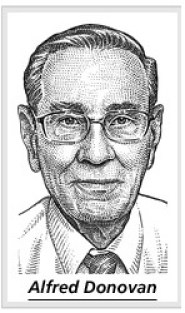 A head-cut image of Alfred Donovan (now deceased) appears courtesy of The Wall Street Journal.