Financial Times: EnCana break-up
Published: May 13 2008 03:00 | Last updated: May 13 2008 03:00
Note to oil executives: expect a slew of calls from investment bankers touting multiple iterations of the “EnCana case study”. The 8 per cent jump in the Canadian oil and gas group’s stock price on news it is to split itself in two will make sure of that.
EnCana’s move is smart and well-timed, raising the classic “sum-of-the-parts” argument to push for a higher stock price. It is not really the case that EnCana’s current structure obscures its operations. Rather, as separate North American gas and oil sands development businesses, it can market itself to distinct sets of investors. Those with a penchant for gas, for example, will welcome not having to read up on the complexities of mining and refining oil sands, and associated exposure to the threat of tighter carbon dioxide legislation. Moreover, high-cost oil sands operations are much more exposed to any drop in the price of crude – and, on the flip side, leveraged to continuing price strength.
EnCana, with an enterprise value approaching C$80bn, is also creating two smaller mouthfuls. Resources close to home look ever more tempting to western energy companies at a time of rising resource nationalism – only this weekend, Royal Dutch Shell pulled out of an Iranian gas project. As an alternative, the energy groups’ balance sheets can be put to work on developing unconventional fields in North America, such as gas shale and tar sands, which promise big reserves but require huge upfront investment.
ConocoPhillips, already in a joint venture with EnCana’s oil sands operations, is one potential suitor for that division but it might face competition from BP or Shell. On the other side, ExxonMobil has been quietly expanding in unconventional gas resources. Besides pressing EnCana’s peers to follow suit, bankers will be happily touting the two new companies as takeover targets.
Copyright The Financial Times Limited 2008
This website and sisters royaldutchshellplc.com, shellnazihistory.com, royaldutchshell.website, johndonovan.website, and shellnews.net, are owned by John Donovan. There is also a Wikipedia segment.


 Royal Dutch Shell conspired directly with Hitler, financed the Nazi Party, was anti-Semitic and sold out its own Dutch Jewish employees to the Nazis. Shell had a close relationship with the Nazis during and after the reign of Sir Henri Deterding, an ardent Nazi, and the founder and decades long leader of the Royal Dutch Shell Group. His burial ceremony, which had all the trappings of a state funeral, was held at his private estate in Mecklenburg, Germany. The spectacle (photographs below) included a funeral procession led by a horse drawn funeral hearse with senior Nazis officials and senior Royal Dutch Shell directors in attendance, Nazi salutes at the graveside, swastika banners on display and wreaths and personal tributes from Adolf Hitler and Reichsmarschall, Hermann Goring. Deterding was an honored associate and supporter of Hitler and a personal friend of Goring.

 Deterding was the guest of Hitler during a four day summit meeting at Berchtesgaden. Sir Henri and Hitler both had ambitions on Russian oil fields. Only an honored personal guest would be rewarded with a private four day meeting at Hitler’s mountain top retreat.


 IN JULY 2007, MR BILL CAMPBELL (ABOVE, A RETIRED GROUP AUDITOR OF SHELL INTERNATIONAL SENT AN EMAIL TO EVERY UK MP AND MEMBER OF THE HOUSE OF LORDS:


 MORE DETAILS:


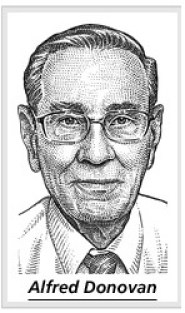 A head-cut image of Alfred Donovan (now deceased) appears courtesy of The Wall Street Journal.