The Wall Street Journal: Oil Futures Test $120, Pull Back
May 6, 2008; Page C14
Four months after first hitting triple digits, oil breached $120 a barrel for the first time in a rally of unexpected intensity.
Light, sweet crude for June delivery settled just shy of that amount at $119.97 a barrel, 39 cents below the record peak of $120.36 a barrel hit earlier.

Strong global demand, concerns about supply shortages — most recently fueled by production outages in Nigeria — and a weak dollar have been the principal driving forces behind rallying oil prices. These factors helped prices first touch $80 a barrel in September, $90 in October, $100 in January and $110 in March.
Crude has also gained from relatively low official interest rates in the U.S., which have sparked concerns about inflation and pushed prices of a host of commodities higher. Even the prospect of the Federal Reserve pausing in its cycle of lowering interest rates hasn’t cooled prices. Even with some fundamental pillars of support, the speed of the crude rally has continued to surprise many market participants, generating a bullish momentum that has become hard to counter.
“It’s difficult to be short crude oil right now,” said James Crandell, an energy-research analyst at Lehman Brothers Holdings Inc. in New York. “It’s like picking up dimes in front of a steamroller.”
While global supply-and-demand is relatively tight, it is no worse than six months ago, suggesting — according to some analysts — that benchmark crude prices are inflated and on the brink of a fall. But prices have so far breezed past most price predictions and may blow higher — some suggest a target level of $140 a barrel — before petering out.
Rising consumption from China and other developing nations, coming at a time when major producers from Russia to Mexico are struggling to hold output steady, has bolstered crude’s gains.
With the market perceiving spare capacity as tight, supply threats carry greater weight. This is evident in the sharp reaction in recent weeks to supply disruptions in Nigeria, where rebels in its oil-rich southern region have been having an impact on production for months already. On Sunday the militant Movement for the Emancipation of the Niger Delta said it had attacked a Royal Dutch ShellPLC oil-production facility in Nigeria. A threatened strike at a key French port and the Nigeria outage were among the factors that helped oil breach $120.
Analysts said the market will be watching the situation in Nigeria, where the former leader of MEND, Henry Okah, is to go on trial this week. Nigeria has been the fourth-largest supplier to the U.S. in recent months, accounting for more than 10% of imports by the world’s biggest oil consumer.
Eventually, higher prices may water down global demand. Walter Zimmermann, a technical analyst at brokerage ICAP/United Energy in Jersey City, N.J., says the price charts he watches indicate oil could rise further, in the extreme case to about $140 a barrel. But by late next year prices could be back to $80 a barrel, he says.
In other commodity markets:
COPPER: Futures hit an all-time high on the Comex division of the New York Mercantile Exchange largely because of buying triggered when life-of-contract highs and record highs were topped, analysts said. Supportive influences included a strike against the Corporacion Nacional Del Cobre De Chile, or Codelco — owners of the world’s largest copper mine — and stronger crude oil. After the day session ended, contract workers at four of Codelco’s five divisions accepted the government’s offer to end their 20-day strike, a union leader said. Nearby May copper rose 12.05 cents to $3.9785 a pound and hit a Comex spot-month record of $4.2700. Most-active July rose 12.70 cents to $3.9475 per pound.
CORN: Prices dropped, pressured by bearish technical-chart patterns and thoughts that farmers made more progress planting corn than previously expected. Traders and analysts also say the political backlash against ethanol could be a factor in selling activity. May corn at the Chicago Board of Trade fell 20 cents to $5.820 a bushel.
–David Bird contributed to this article.
Write to Gregory Meyer at [email protected] and Brian Baskin at[email protected]
This website and sisters royaldutchshellplc.com, shellnazihistory.com, royaldutchshell.website, johndonovan.website, and shellnews.net, are owned by John Donovan. There is also a Wikipedia segment.


 Royal Dutch Shell conspired directly with Hitler, financed the Nazi Party, was anti-Semitic and sold out its own Dutch Jewish employees to the Nazis. Shell had a close relationship with the Nazis during and after the reign of Sir Henri Deterding, an ardent Nazi, and the founder and decades long leader of the Royal Dutch Shell Group. His burial ceremony, which had all the trappings of a state funeral, was held at his private estate in Mecklenburg, Germany. The spectacle (photographs below) included a funeral procession led by a horse drawn funeral hearse with senior Nazis officials and senior Royal Dutch Shell directors in attendance, Nazi salutes at the graveside, swastika banners on display and wreaths and personal tributes from Adolf Hitler and Reichsmarschall, Hermann Goring. Deterding was an honored associate and supporter of Hitler and a personal friend of Goring.

 Deterding was the guest of Hitler during a four day summit meeting at Berchtesgaden. Sir Henri and Hitler both had ambitions on Russian oil fields. Only an honored personal guest would be rewarded with a private four day meeting at Hitler’s mountain top retreat.


 IN JULY 2007, MR BILL CAMPBELL (ABOVE, A RETIRED GROUP AUDITOR OF SHELL INTERNATIONAL SENT AN EMAIL TO EVERY UK MP AND MEMBER OF THE HOUSE OF LORDS:


 MORE DETAILS:


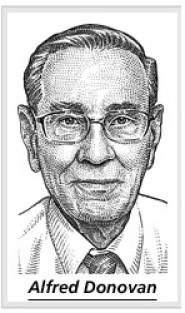 A head-cut image of Alfred Donovan (now deceased) appears courtesy of The Wall Street Journal.